Best Weighted Hula Hoops of 2026

A weighted hula hoop is a trade-off you feel in your hip bones: the extra heft slows the hoop down so it stays up, which is why a flimsy toy slides to the floor while a padded two-pounder keeps circling. What the weight actually fixes is rhythm — most people find the motion in a few minutes instead of a few weeks. What it doesn't fix is your downstairs neighbor, your hardwood floor, or a hoop that clicks apart mid-spin.

Most of these now arrive as segments you snap together yourself, and that's where the real shopping decision lives. Joint quality, padding thickness, and whether the weight can be adjusted matter far more than the number printed on the box. I've spent the past six months spinning 12 of them on rugs, patios, and one stubborn patch of hardwood, and the bruises have faded enough that I can be honest about which ones earned a permanent spot in the living room.

1

Best Overall

Sports Hoop Trim Hoop 3B

88 /100
Peggy's Score Excellent

Key details

Weight
3.1 lb
Padding
Foam
Diameter
41 in
Sections
8 detachable pieces
Check Details on Amazon

Weighted hoops almost never tell you who they're for. This one splits its own range by body weight, with the 3.1-pound 3B aimed at adults between 100 and 160 pounds and a heavier 4B above that. That single piece of guidance is why it's our top pick — it turns the weight question from a guess into a decision. The rest of the package holds up: a 41-inch circle, eight foam-padded sections, and a hoop that snaps together in about a minute.

Forty-one inches is the forgiving size. A bigger circle turns more slowly, which buys you the half-second you need to find the rhythm, and the foam takes the sting out of 3.1 pounds without turning the hoop into a pillow. We started with the maker's own suggestion of a couple of minutes a day, and that's the right way in: this hoop leaves marks on soft skin in week one, and a shirt with some body to it does more for comfort than any amount of padding.

Detachable is the other practical win. Eight pieces pull apart and disappear behind a door, which a 41-inch circle rarely manages in a small apartment. On money it sits in the middle of what we looked at — less than the wooden hoop, more than the budget two-pounders — and it reads like the version of this purchase you won't need to repeat in a season.

Our one hesitation is ambition. At 3.1 pounds it will start to feel light after a month or two of regular hooping, and the jump to the heavier model is a real one. For everyone else — the adult who hasn't spun a hoop since school, the small flat with one clear patch of floor, the person who wants to make this decision once — it's the hoop we hand over without a caveat.

Pros

  • Maker publishes a body-weight recommendation
  • 41-inch circle is easy to keep up
  • Foam padding softens a 3 lb hoop
  • Breaks into eight pieces for storage

Cons

  • Needs roughly 3.5 feet of clear floor
  • Snap joints need a firm push to seat
Our verdict

This is the one we tell people to buy first: the maker tells you which weight suits your body, the 41-inch circle is forgiving to learn on, and the foam makes three pounds livable.
Check Latest Price
2

Best Wooden

RR Round Rich Wood Hoop

90 /100
Peggy's Score Outstanding

Key details

Beads
48 plus 2 spares
Circle
56 in
Weight
5 lb
Material
Solid wood beads
Check Details on Amazon

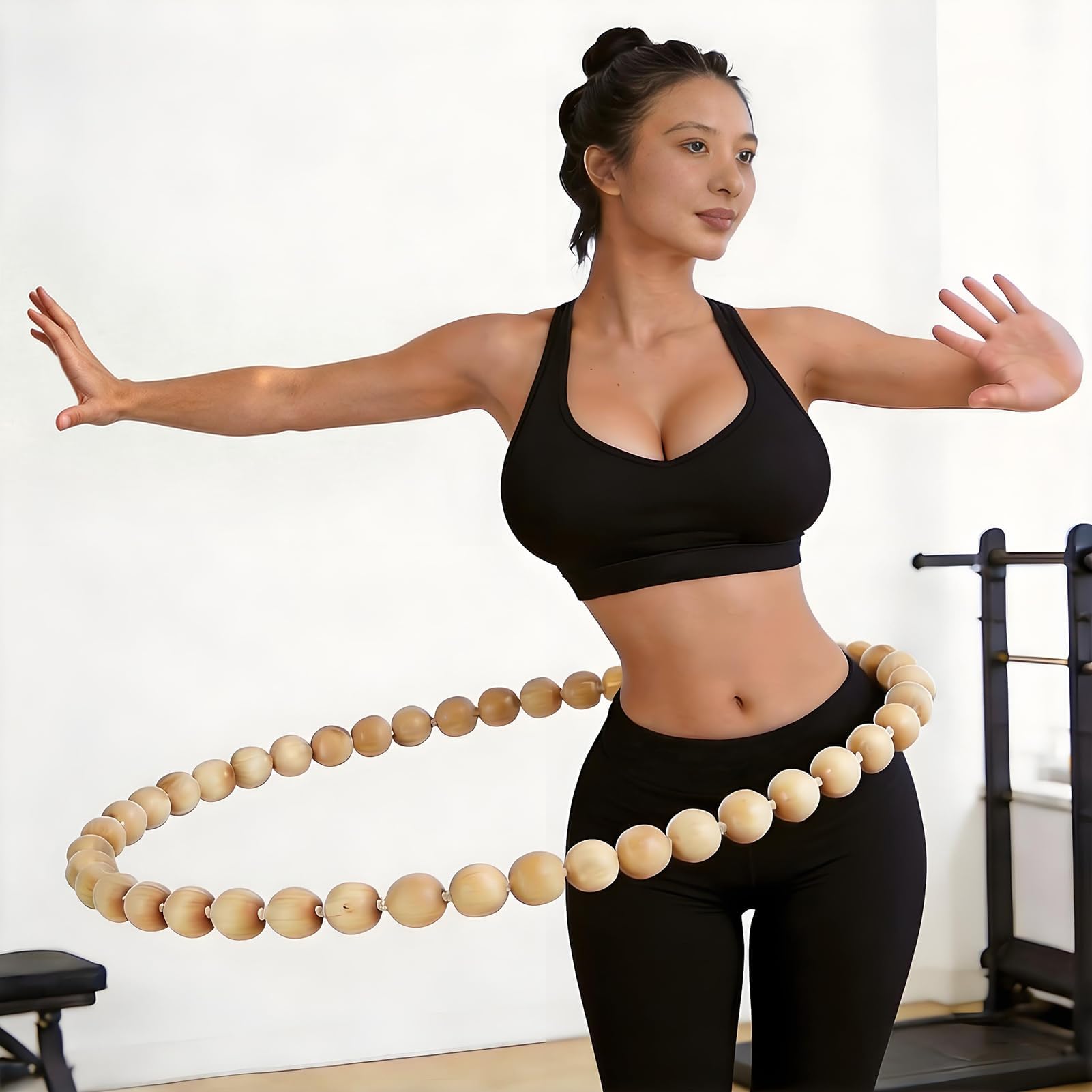
The sound is the first thing anyone notices: 48 wooden beads clicking against one another as the hoop rolls, closer to a metronome than to the plastic clatter of a link belt. Whether that's a feature depends on you. We found it far easier to live with than the rattle of a gravity-ball track, and several long sessions in, the rhythm was doing more to keep us going than any timer would.

Five pounds of solid wood is a serious tool, and this is the heaviest hoop here by a distance. What makes the weight work is the size: 56 inches across means a slow, deliberate turn with the beads rolling over the waist rather than sliding, so it reads as massage and workout at once. It's also the least forgiving thing in this guide to get started with, and the one most likely to leave a mark on someone who overdoes it on day one.

Two spare beads ship in the box, which makes sense once you see how it's built: a cord runs through the beads and can be restrung, and that same cord is the part that presses on a hip if the hoop rides high. It is also the best-looking hoop here by a distance — pale hardwood, no plastic, the sort of object that stays out in the room rather than behind a door. For a gift, or for someone who wants their exercise equipment to look like furniture, that counts for a lot.

Pros

  • Rhythmic wood click instead of plastic rattle
  • Beads roll over the waist like a massage
  • Two spare beads included for restringing
  • Highest buyer rating in this set

Cons

  • Five pounds is a lot to learn on
  • A 56-inch circle needs a big room
Our verdict

For a hooper who wants weight, quiet and something worth leaving out, this is the one we keep coming back to; at five pounds it is not a beginner's first buy.

Check Latest Price
3

Best for Plus Sizes

OurStarry Plus-Size Hoop

87 /100
Peggy's Score Excellent

Key details

Rope
Adjustable length
Wheels
3 sets of scroll wheels
Max Waist
Up to 60 in
Ball Weight
14.1 oz
Check Details on Amazon

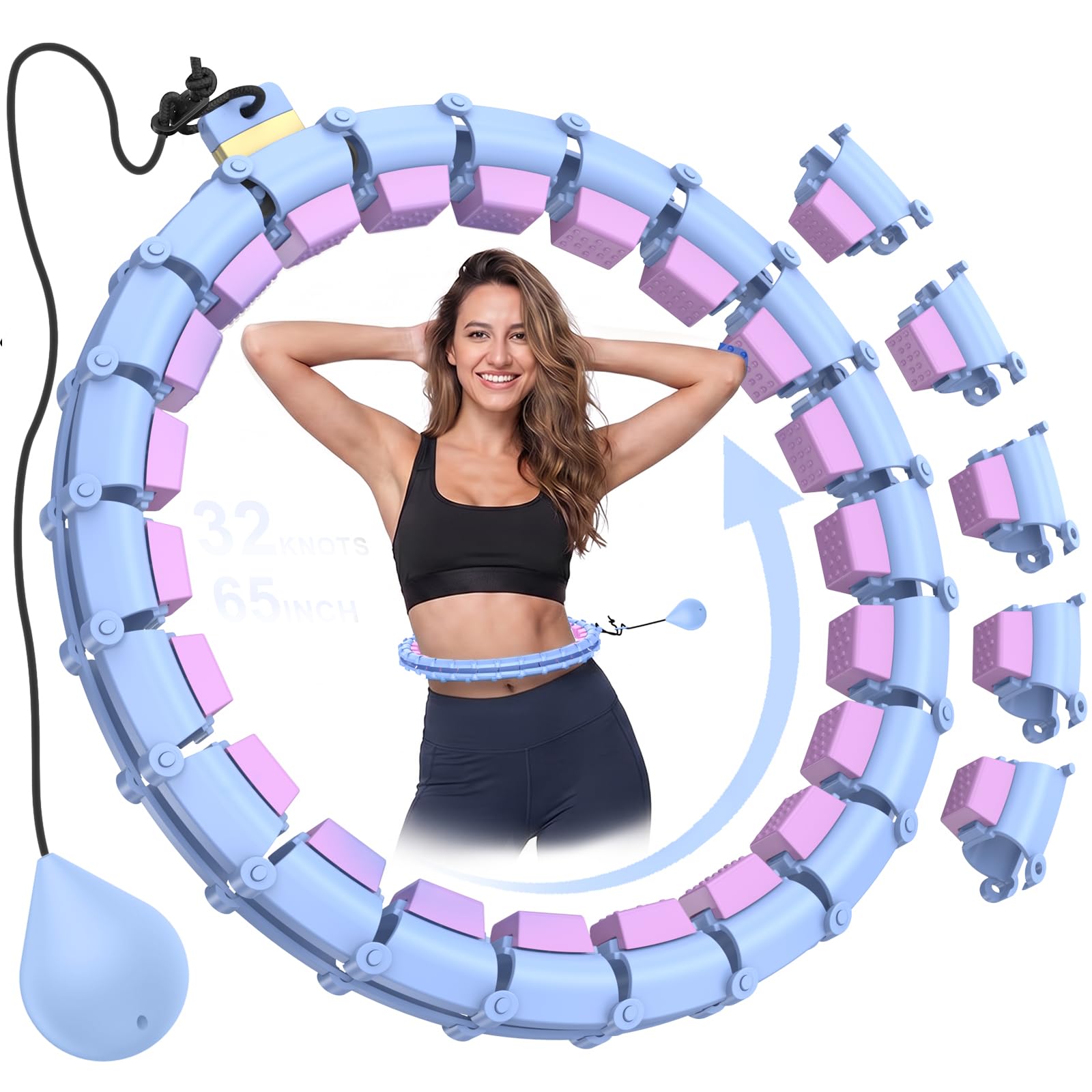
Most gravity-ball hoops list a maximum waist somewhere around 47 inches, which quietly rules out a lot of the people who want one. OurStarry builds its belt from 32 detachable links and quotes a fit up to 60 inches, the biggest waist in this guide short of the 65-inch HCOIW.

The mechanism is the same as every infinity hoop: a weighted ball rides a grooved track around the belt, the rope sets how far the ball swings out, and you move your hips to keep it going. It's a genuinely easier skill than spinning a free hoop, and we found the 400-gram rubber ball heavy enough that ten minutes gets the heart rate up without feeling like punishment.

Two practical points before you order. The ball swings out from your body, so a small room with a sofa in it will interrupt the orbit — take the maker's advice about leaving space literally. And it isn't silent: the ball rumbles around the track at a volume that rules out hooping while someone else sleeps in the next room.

For a reader whose waist is past the range of the shorter belts, none of that is disqualifying: this is the pick that actually fits, and the adjustable rope lets you shorten the swing in a tight room. Measure at the navel before you commit, because the links come off in pairs and the fit is the entire reason to choose this one over the cheaper 47-inch hoops.

Pros

  • Fits waists up to 60 inches
  • No hooping skill needed
  • Adjustable rope shortens the swing

Cons

  • Ball can stall against the track
  • Wheels and links can crack with heavy use
Our verdict

If every 47-inch gravity hoop has been too small, this is the one we point you to — 60 inches of adjustable belt that gets you moving in minutes.

Check Latest Price
4

Best Budget Traditional

Healthymodellife 2 lb Hoop

85 /100
Peggy's Score Excellent

Key details

Weight
2 lb
Surface
Smooth EVA padding
Diameter
36 in
Warranty
1 year
Check Details on Amazon

Plenty of weighted hoops mold massage bumps into the inner surface, and after twenty minutes those bumps stop being a massage. This one is deliberately smooth — a single padded band with no texture — and it was the hoop we reached for when we wanted a longer session rather than a harder one.

At 2 pounds and 36 inches it sits on the light, small side. Light is friendly: marks are milder and you can go for a while without feeling beaten up. Small is the trade, because a 36-inch circle drops faster than the 41-inch hoops here, so the first few sessions are steeper, and a taller or broader body will find it fiddly to keep going.

What tips it for us is the guarantee — a full year, the longest cover on any traditional hoop in this guide — on a hoop that costs about what a week of coffees does. It's the one to hand someone testing whether they'll stick with hooping at all: light enough to learn on, cheap enough that a closet exile isn't a disaster.

Pros

  • Smooth padding with no massage bumps
  • One-year guarantee
  • Light 2 lb is gentle to start with

Cons

  • Foam can crack at the seams
  • 36-inch circle is less forgiving
Our verdict

We rate it the best-value traditional hoop here: smooth, bump-free padding, a light two pounds, and a full year of cover behind it.

Check Latest Price
5

Largest Waist Fit

HCOIW 32 Knots

93 /100
Peggy's Score Outstanding

Key details

Links
32 detachable knots
Warranty
2 years
Max Diameter
65 in
Claimed Volume
40 dB
Check Details on Amazon

Forty decibels is the number on the HCOIW box — roughly the hum of a quiet room — and quiet is the claim that separates this belt from every other gravity-ball hoop here. There's a two-year warranty behind it as well, which is a long commitment for a piece of plastic fitness equipment.

The fit is the other reason it earns a place: 32 detachable knots and a maximum diameter of 65 inches, the largest here. We liked that the belt is sized generously enough for a big frame without buying a second hoop, and that the smooth track runs both clockwise and counterclockwise without you turning the belt around.

The honest caveat is that 40 dB is a manufacturer's figure, so make the room you'll use it in the test: give it a week on the same floor where you plan to hoop and decide while returning is still easy. What we can say without reservation is that the sizing, the warranty and the finish all point the same direction, which is more than most of the plastic belts here manage.

Pros

  • Largest waist fit in this guide
  • Two-year warranty
  • Runs both directions on the track

Cons

  • Ball needs clear floor on every side
Our verdict

We like it for big frames and quiet rooms: the largest belt here, a two-year warranty, and the only stated decibel figure in the group.

Check Latest Price
6

Bundle with Extras

Fiteroc 2.8 lb Hoop

85 /100
Peggy's Score Excellent

Key details

Weight
2.8 lb
Diameter
39.4 in
Included
Jump rope, resistance band, storage bag
Sections
8 detachable sections
Check Details on Amazon

Fiteroc puts more in the box than anyone else here: the hoop itself, a jump rope, a resistance band and a storage bag, which turns a single order into a small home circuit. The colors are cheerful in a way that makes the thing easier to leave out instead of burying it.

The hoop is 2.8 pounds, 39.4 inches across and eight sections, wrapped in thick NBR foam. The pieces click together as easily as anything we handled, and it comes apart to coil into the bag, which matters if the hoop lives in a closet between sessions. A one-year manufacturer warranty covers it.

Weight is where it divides. At 2.8 pounds on a firm foam skin it presses hard on the hips and ribs, and the maker's own instructions warn about bruising — which matched our experience more closely than we expected for something this padded. In three- or four-minute blocks it's a solid workout; in one thirty-minute first session it's a punishment. The jump rope turns out to be the smarter second act, warming you up before the hoop touches your sides.

Pros

  • Jump rope, band and storage bag included
  • Thick NBR foam padding
  • Eight sections click together easily

Cons

  • Firm pressure on hips and ribs
  • Sections can pop apart mid-swing
Our verdict

Buy it if you want one order to cover a whole warm-up: hoop, rope, band and bag, with thick foam that makes 2.8 pounds bearable.

Check Latest Price
7

Low-Cost Intro Hoop

JLoibao Infinity Hoop

83 /100
Peggy's Score Excellent

Key details

Links
26 detachable links
Weight
2.1 lb
Warranty
2 years
Waist Range
30 to 56 in
Check Details on Amazon

JLoibao is the least expensive way here to find out whether a gravity-ball hoop is for you, and it's built for exactly that experiment: 26 detachable links covering waists from 30 to 56 inches, a light 0.8-pound ball, and two years of after-sales service behind it.

Setup takes five minutes and the links are easy to add or remove, so one hoop can serve two people in a house. The trade for the price is a light ball and a plain track: the workout comes from how long you keep going rather than from resistance, which is fine for a first month and less fine once you're fit.

The rattle is what we noticed first, and it's the deal-breaker to weigh. The ball knocks audibly around the track, and in a flat with thin walls that's the difference between a habit and a hoop that stays in the cupboard. If you have a garage, a yard or a tolerant household, it's a cheap, honest introduction; if you need to hoop quietly in a bedroom, spend more and read the HCOIW entry.

Pros

  • Lowest-priced pick in this guide
  • Adjusts from 30 to 56 inches
  • Two years of after-sales service

Cons

  • Loud rattle around the track
  • Links can work loose during use
Our verdict

A cheap, honest first gravity hoop — just know the rattle will decide whether you keep using it.

Check Latest Price

How We Tested a Dozen Weighted Hula Hoops

We started by gathering every weighted hoop we could find that listed an actual weight in pounds, then cut anything with glued rather than click-together segments, anything that couldn't be adjusted, and anything whose listing hid the diameter. That left 12 hoops, which we spun for six months in living rooms, backyards, and one apartment corner where the ceiling fan made things interesting.

Assembly and ease of use came first. I timed each hoop out of the box, counted how many segments had to be clicked together, and handed it to a friend who had never hooped before to see whether she could keep it up within two minutes. We weighed every hoop on a kitchen scale against its advertised number, then re-checked the joints after a week of use to see which ones had started to separate mid-spin.

Then the actual work: 15- to 20-minute sessions three times a week, with notes on rotations per minute, heart rate, where the padding pressed, and when the first soreness showed up — usually day two, right on the hip bone. We spun each one on hardwood at 9 p.m. with the TV off to hear how much clatter it made, dropped them onto a concrete patio to check the seams, and kept a running log of which hoop we reached for on a rainy Tuesday. Fun is hard to measure, so that log became our measure. By month six we compared what each hoop cost against how it looked and felt after all that use.

How to Choose Weighted Hula Hoops

Choose the style before the weight

A traditional weighted hoop is one big circle you spin with your hips. It's the skill you had at eight years old and it comes back faster than you expect, with diameter doing most of the work — 36 to 41 inches is the usual range, and bigger is easier. Noise is minimal and comes from the material itself: a padded thump in foam, a click in wood.

A gravity-ball hoop is a linked belt with a weighted ball riding a track. There's no spinning skill involved, which is why people take to it in minutes, but you pay in noise and floor space. The ball swings out past your body and rattles as it goes, so a cramped room or a sleeping child changes the calculation. Walk the space you have before you decide.

Match the weight to your body, not to the biggest number

Heavier is not better; it's harder. A 5-pound hoop takes more effort to keep in motion and presses harder, which makes it a poor first purchase for most adults. Two to three pounds is the working range to start in, and the most useful thing a manufacturer can give you is a body-weight recommendation — the Sports Hoop 3B, for example, is specified for adults between 100 and 160 pounds, with a heavier 4B version above that.

Once you're hooping regularly and want resistance rather than a learning tool, moving up to 4 or 5 pounds makes sense, and that's where a solid wood hoop earns its keep. Everyone else should add minutes rather than weight.

Check the fit and the footprint

For an infinity hoop, the number that matters is your waist measurement at the navel against the maximum the belt will close around. Most stop near 47 inches, so a 60- or 65-inch option is worth knowing about if that ceiling is too low. Links usually come off in pairs, which means your real minimum size runs a little larger than you expect.

For a traditional hoop, diameter is the fit question: 36 inches is compact and quick to drop, 41 is the forgiving middle, and a 56-inch wooden circle is a large object that needs a large room. Either way, leave a clear circle a couple of feet wider than the hoop on every side.

Padding, bruising, and joints that stay shut

Expect marks. A weighted hoop pressing on the hips and ribs leaves tenderness in the first week whether it's padded or not. Start with two or three minutes, wear a shirt with some substance to it, and build up slowly. Smooth padding is kinder for long sessions than molded massage bumps, which stop feeling like a massage fairly quickly.

The other thing to check is the joints. Sectional hoops rely on press-fit tabs, and a link that isn't fully seated will separate mid-spin. Push each one until it clicks and re-check after your first few sessions — it's a thirty-second habit that keeps a good hoop out of the closet.

Frequently Asked Questions

Final Verdict

The Sports Hoop Trim Hoop 3B is the one we recommend first, because it's the only pick here that tells you which weight suits your body and then backs it up with a forgiving 41-inch circle and foam that makes 3 pounds livable. If you want no learning curve at all, the OurStarry belt gets you moving in minutes and fits waists to 60 inches; if quiet matters more than anything else, the wooden RR Round Rich is the hoop you'll actually keep using in the living room.