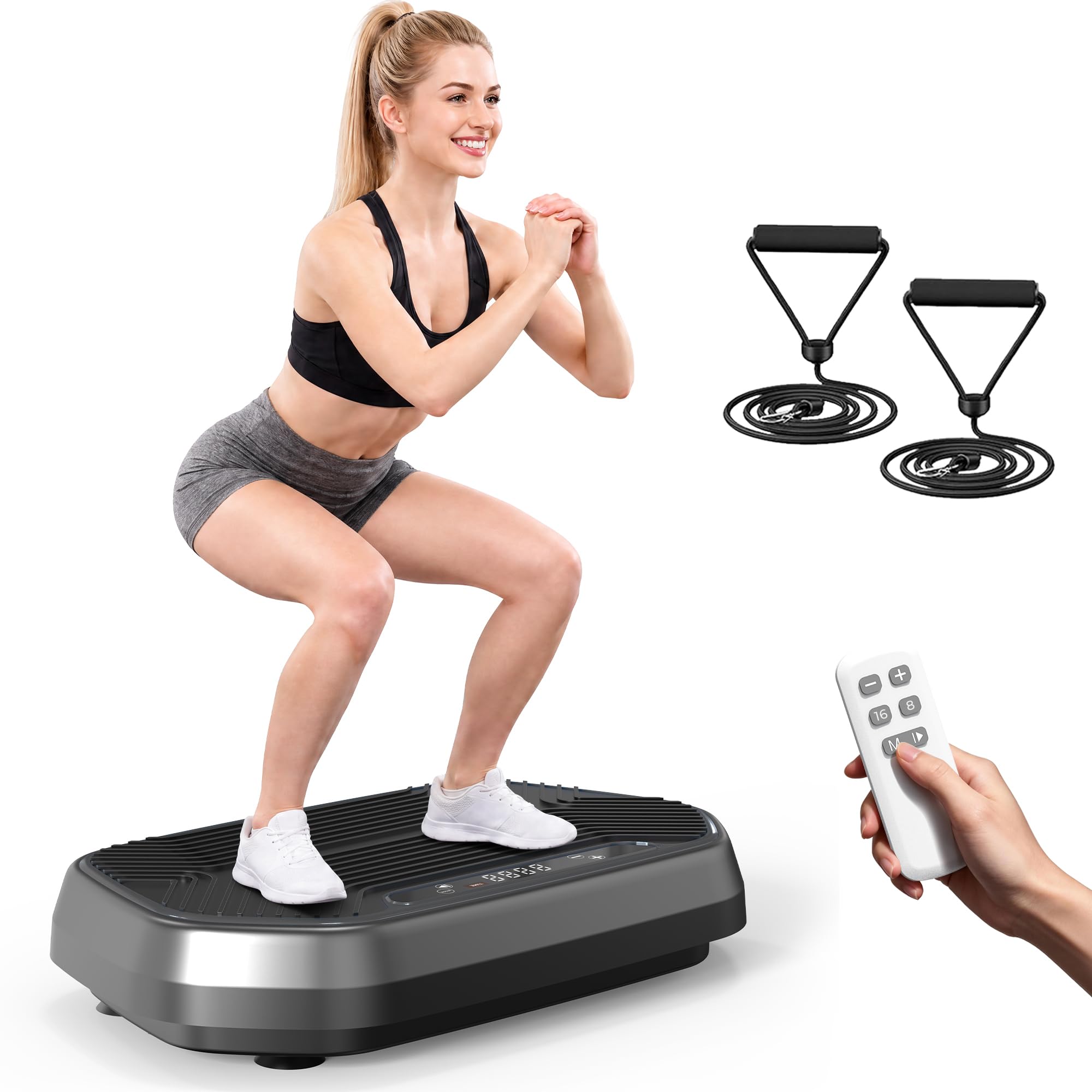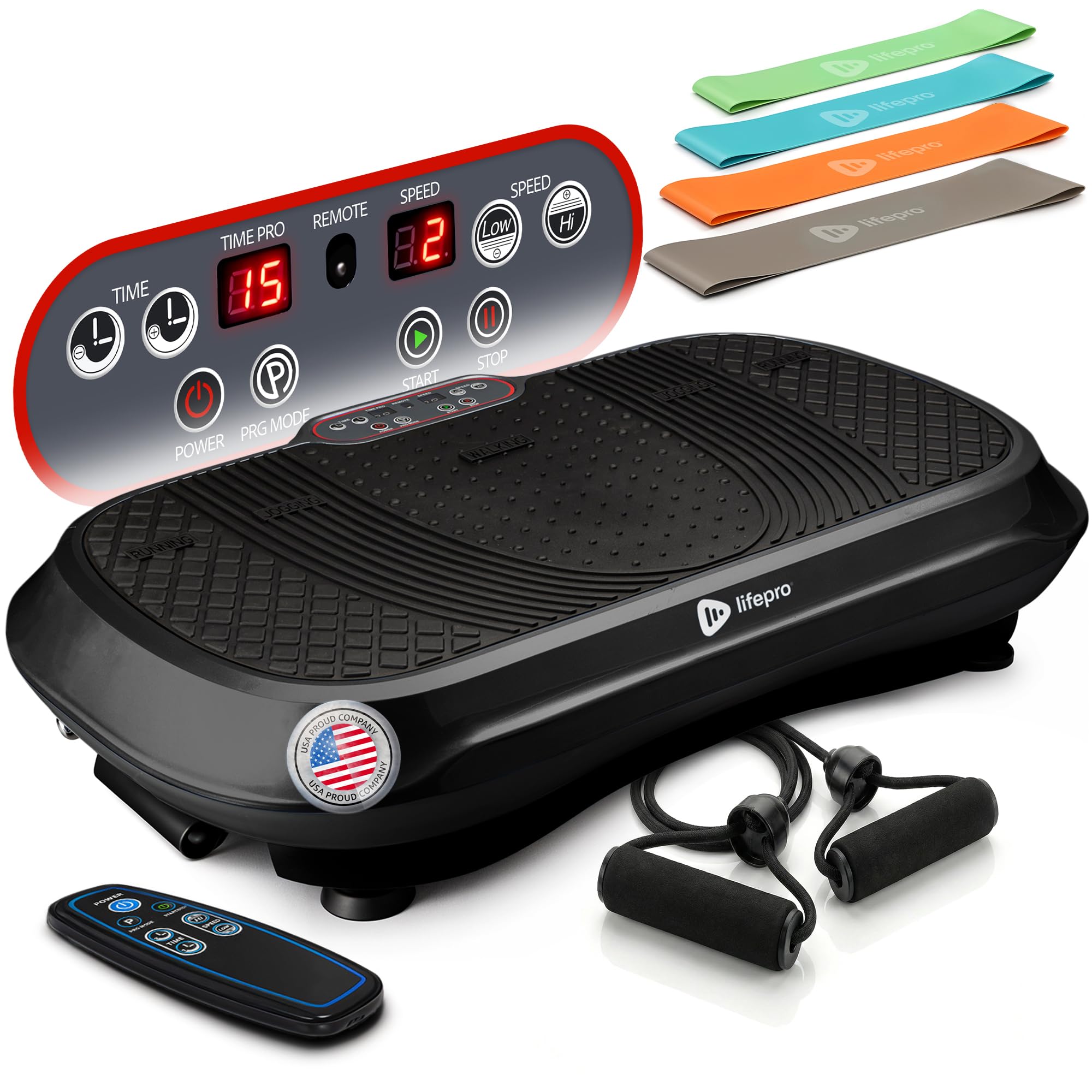
Best Vibration Plates of 2026

A vibration plate can look like a late-night infomercial prop until you actually stand on one. The real question isn’t whether it shakes—it’s whether the settings are useful, the platform feels stable underfoot, and the machine is quiet enough that you’ll keep using it with the TV on or before anyone else is awake. A good plate gives you a low-effort way to add movement to your day, loosen stiff feet and calves, and get a little circulation going without turning your living room into a gym.

I’ve spent the past eight months stepping onto 11 different plates, usually barefoot for 10-minute sessions between meetings or after a long walk. The keepers had clear controls, a remote that worked from the couch, and a hum I could live with; the fussy, wobbly, or overpriced ones sat untouched. Below are the plates that felt genuinely useful, comfortable enough to use daily, and worth the money—whether you’re chasing pain relief, better circulation, or just a more enjoyable way to move at home.

1

Best Overall

Lifepro Waver

93 /100
Peggy's Score Outstanding

Key details

Item Weight
27 lb
Platform Size
27 x 15 x 6 inches
Speed Settings
99
Max User Weight
330 lb
Check Details on Amazon

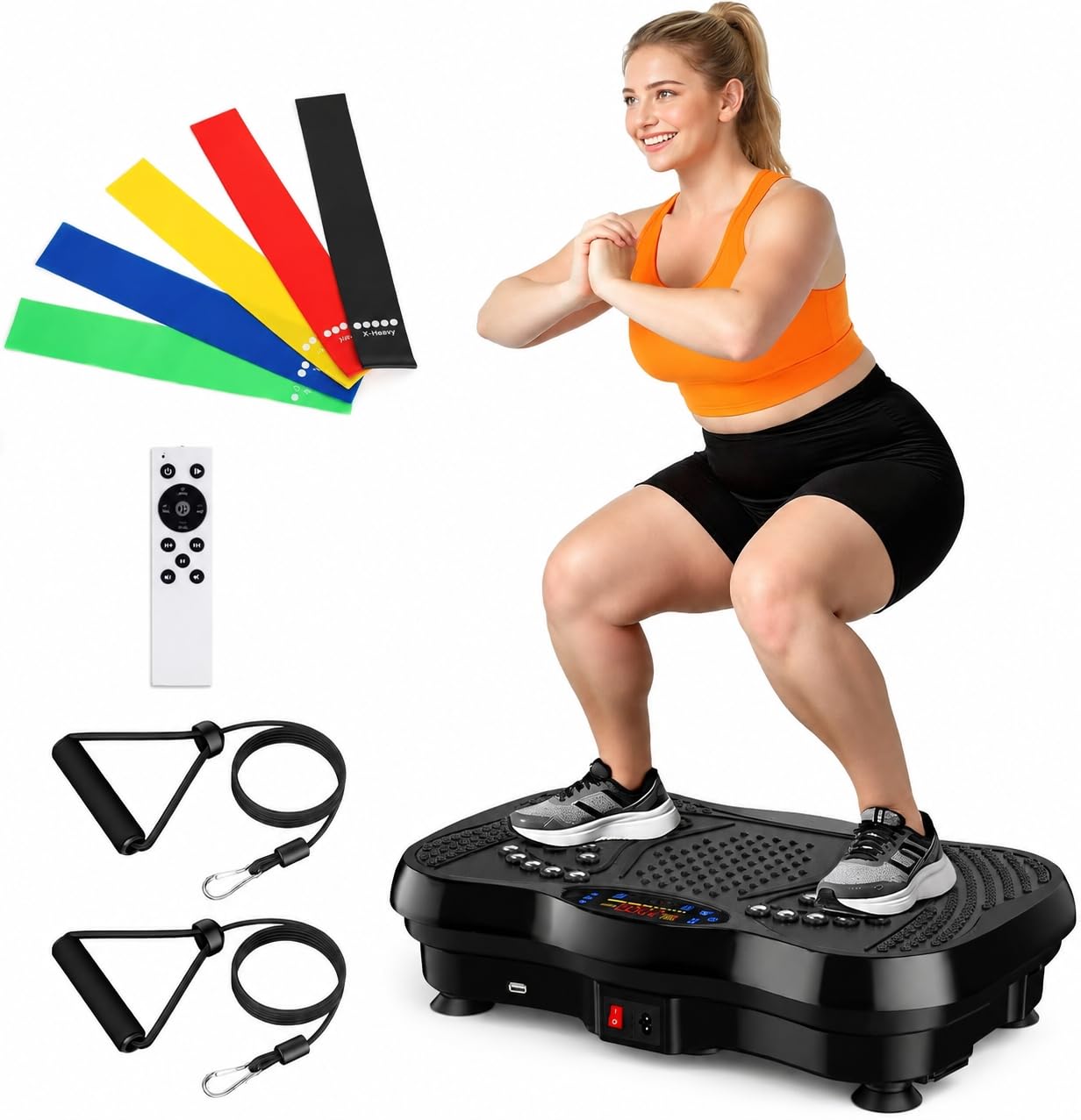
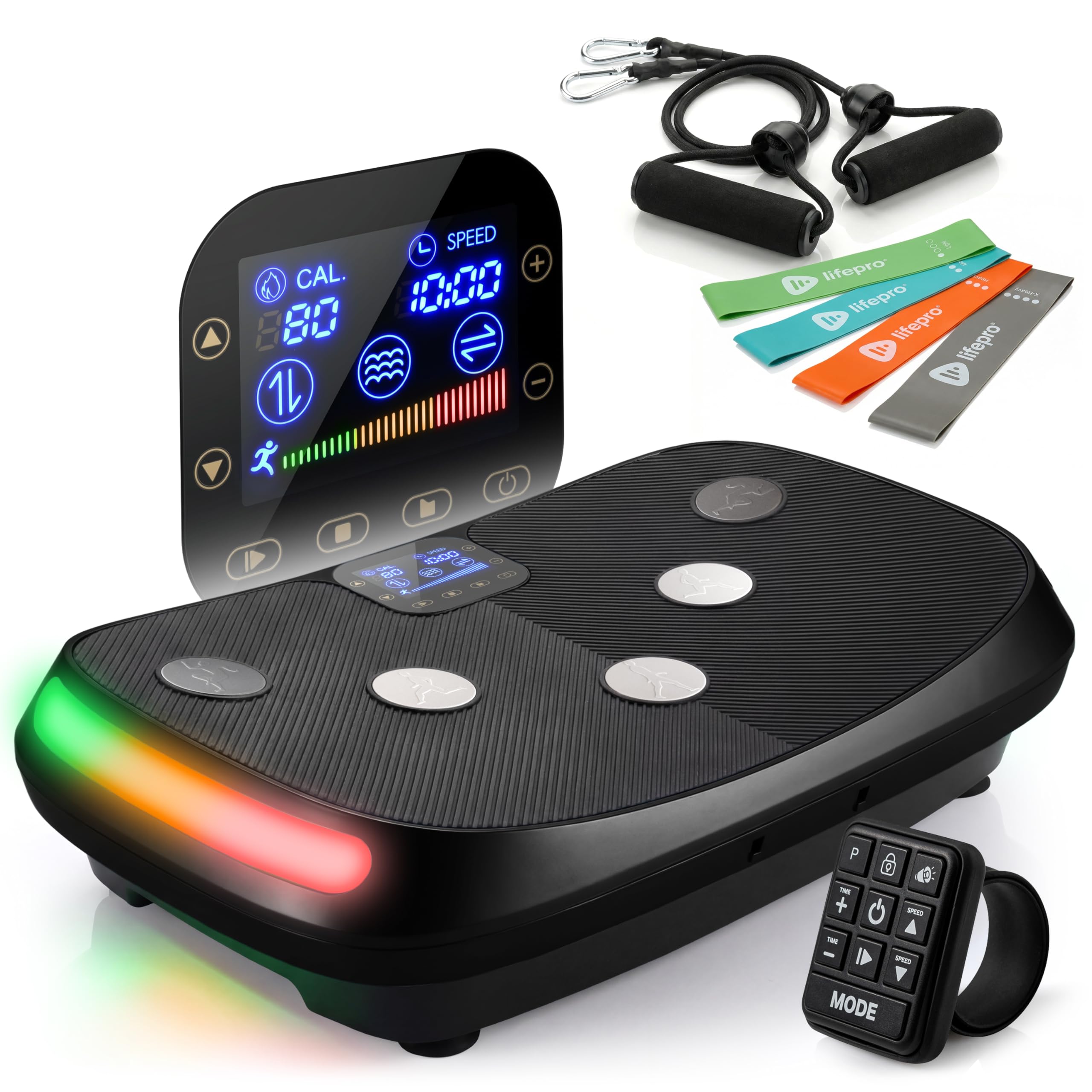
Oscillation is the word that separates this plate from most of the cheaper ones here. Rather than buzzing straight up and down, the Waver rocks the platform side to side, like a slow, wide seesaw under your feet. It is a gentler sensation than a vertical shaker, and it is an easier one to stay on for ten or fifteen minutes while the news is on.

We rate it the best all-round plate in this group because it asks the least of you. There are 99 speeds, a stack of preset programs, a remote and a control panel, and a 27-by-15-inch deck rated to 330 pounds, which is long enough for a tall user to stand with feet fore and aft instead of pinched together. Two handled resistance bands and a set of mini bands come in the box, turning a passive ten minutes into something closer to a light workout when you want that. At 27 pounds it sits planted on the floor and still slides under a sofa when guests arrive.

The trade-off is floor space rather than performance. A 27-inch deck makes this furniture, not something you tuck into a cupboard, and the compact plates here take up a fraction of the room. The motion divides people too: if you want the hard, high-frequency buzz that leaves your legs humming, this is milder than that.

Lifepro backs the Waver with lifetime support rather than a fixed warranty window, which counts for more on a motorized plate than it does on a pair of shoes. A three-year-old deck with a dead motor is a phone call instead of a purchase.

Pros

  • Rocks side to side instead of buzzing vertically
  • 99 speeds plus preset programs
  • 27-by-15-inch deck rated to 330 pounds
  • Resistance bands and mini bands included

Cons

  • 27-inch deck needs a permanent floor spot
Our verdict

We recommend the Waver as the plate most people should buy: a forgiving rocking motion, 99 speeds, a 330-pound deck with room to stand properly, and bands in the box.
Check Latest Price
2

Best Premium

Lifepro Rumblex 4D

93 /100
Peggy's Score Outstanding

Key details

Platform Size
30.7 x 17.8 x 7.7 inches
Training Modes
7
Frequency Range
4–40 Hz
Max User Weight
330 lb
Check Details on Amazon

Three motors is the short answer to why this machine costs what it does. It combines oscillating, pulsating and lateral movement across a 4-40 Hz range with up to 12 mm of amplitude, plus seven training modes and three intensities. Only the people who will change modes mid-session get their money out of that, but for them nothing else on this page comes close.

The day-to-day experience is more varied than any single-motor plate can manage. Sometimes it is a slow rock, sometimes a fast lateral shimmy, and that change in sensation is what keeps a ten-minute session from turning into background noise. The 30.7-by-17.8-inch curved deck is the widest standing surface in this group, which makes staggered stances and squats feel far less precarious.

The curve takes a session or two to trust. A flat deck lets you forget your feet; this one keeps you mildly aware of them, which is either the point or an irritation depending on why you bought it. The handled bands help in the first week while you find your balance.

The box is unusually complete, with two handled bands, four mini bands and an exercise mat, so there is no accessory shopping to do afterwards. The slap-on wristband remote is the detail we appreciated most: you can drop the speed without stepping off or hunting for a handset.

Pros

  • Three motors across a 4-40 Hz range
  • Widest standing area here at 30.7 inches
  • Hands-free wristband remote
  • Bands, mini bands and a mat included

Cons

  • Heaviest and most expensive machine here
Our verdict

Buy the Rumblex if you want the most adjustable plate here and will actually use the modes; three motors and a wide curved deck make it the closest thing to a studio machine.

Check Latest Price
3

Best for Heavier Users

Merach CV40

90 /100
Peggy's Score Outstanding

Key details

Amplitude
13 mm
Speed Levels
10
Platform Size
28.4 x 15 x 6.3 inches
Max User Weight
440 lb
Check Details on Amazon

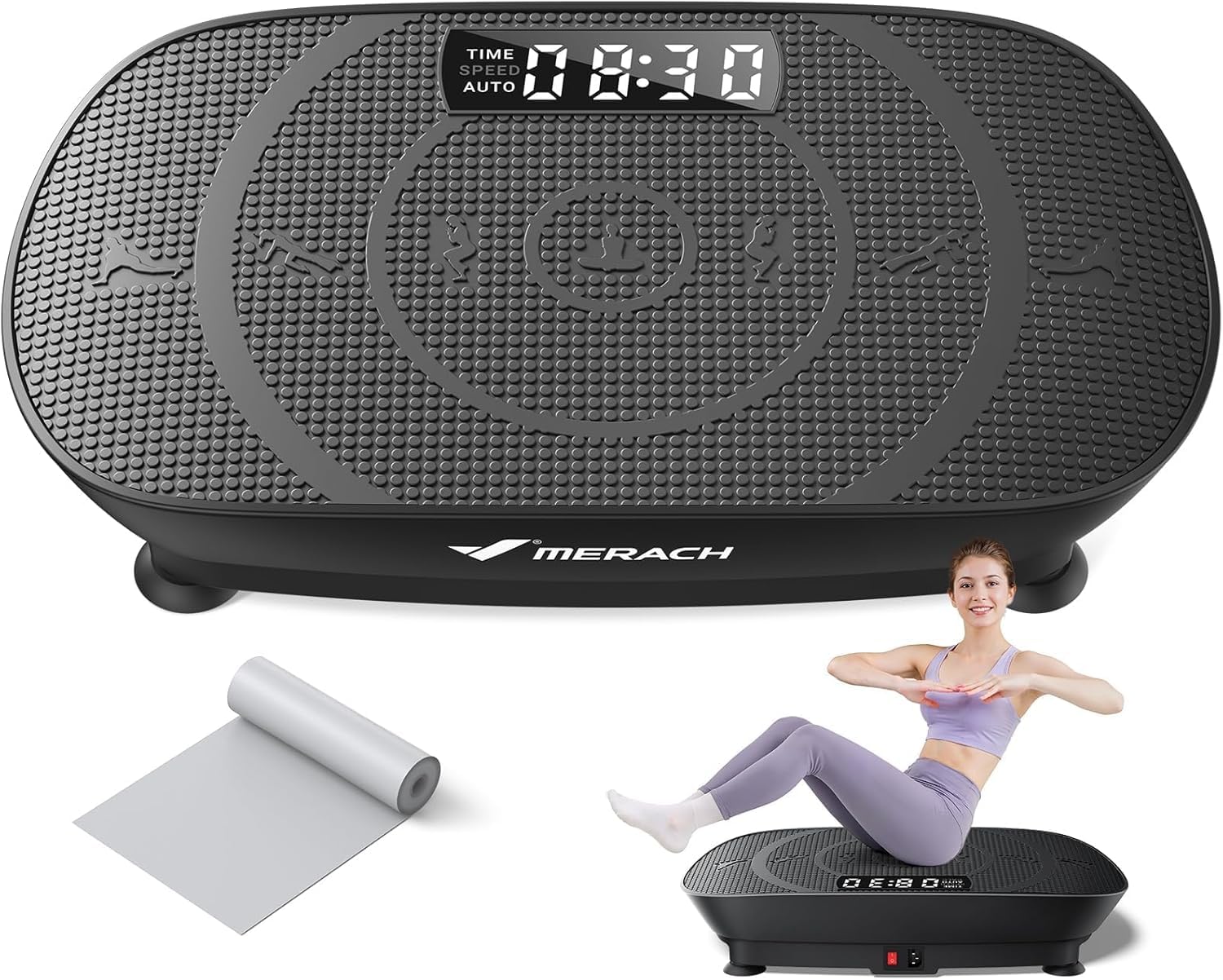
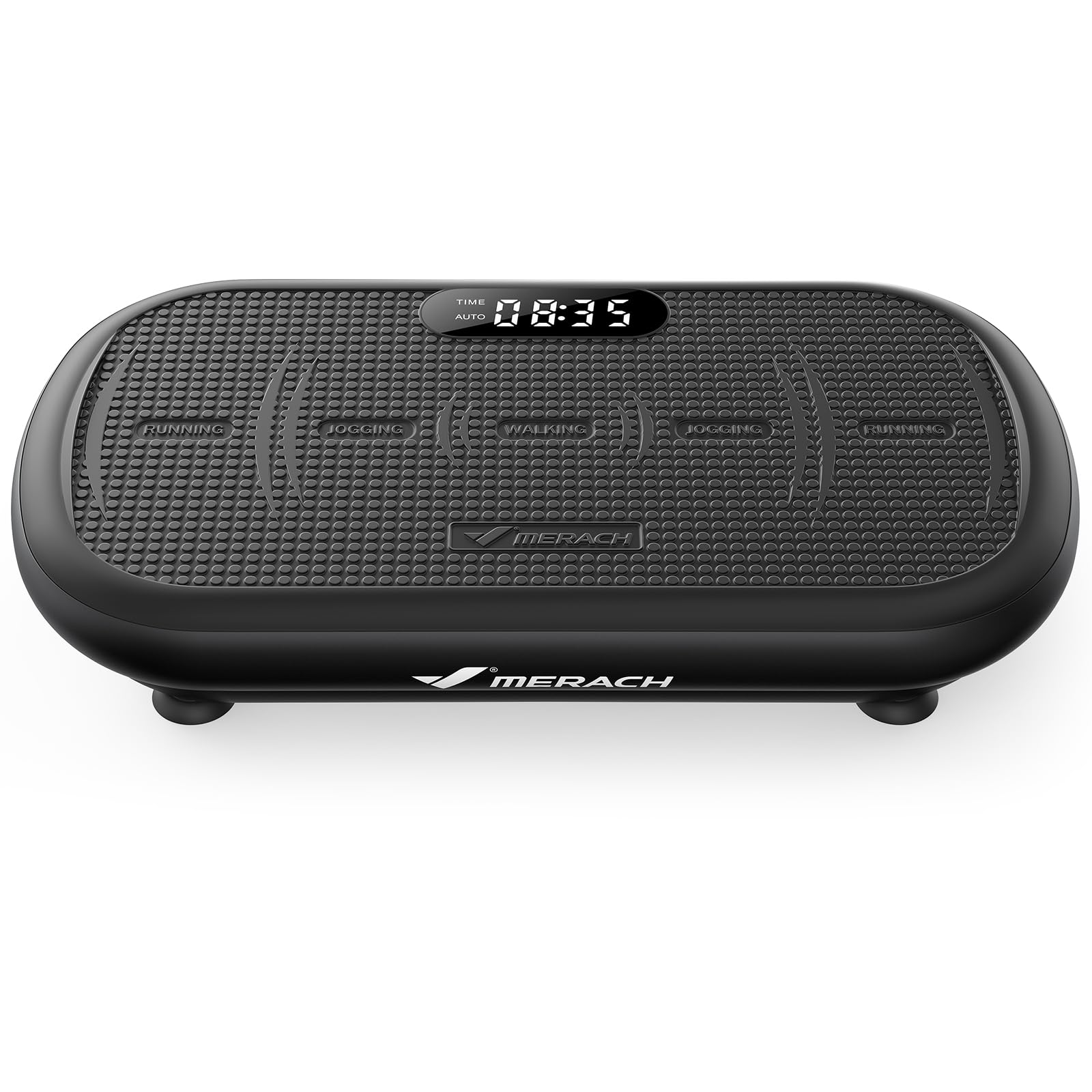
If you are over roughly 250 pounds, most plates in this group will hold you and feel like they are working hard to do it. The CV40 is rated to 440 pounds, second only to one plate here, and it pairs that with a 13 mm amplitude, the biggest throw in this group. The result is a deck that stays planted under a heavier body instead of skittering.

What we like beyond the number: a silicone pedal surface that grips bare feet, a 28.4-inch deck long enough for a staggered stance, and Bluetooth with built-in speakers so the music comes out of the plate instead of a phone on the floor. A 200-watt motor and ten speed modes cover everything from a gentle warm-up to a firm session.

The remote is the weak link. On some units the deck will not take a speed change without the handset, so a failed remote is not an inconvenience, it is the controls. Run it from the console in the first week and check the handset against the deck's own buttons, so you find out while the return window is still open.

One more thing worth knowing: the plate turns itself on when you step up and pauses after 30 seconds of inactivity. That reads as a gimmick on the product page and it is not one in practice, because you stop thinking about a power button entirely.

Pros

  • 440-pound rating, second-highest here
  • 13 mm amplitude, the largest in this group
  • Silicone pedal grips bare feet
  • Bluetooth speakers built into the deck

Cons

  • Knocking noise can develop at top speeds
Our verdict

For bigger users, the CV40 is the plate we point to: a 440-pound rating, the largest amplitude here, and a deck that stays steady when you shift your weight.

Check Latest Price
4

Best Value

GLYLF Vibration Plate

92 /100
Peggy's Score Outstanding

Key details

Audio
Bluetooth speaker
Speed Levels
130
Max User Weight
450 lb
Preset Programs
5
Check Details on Amazon

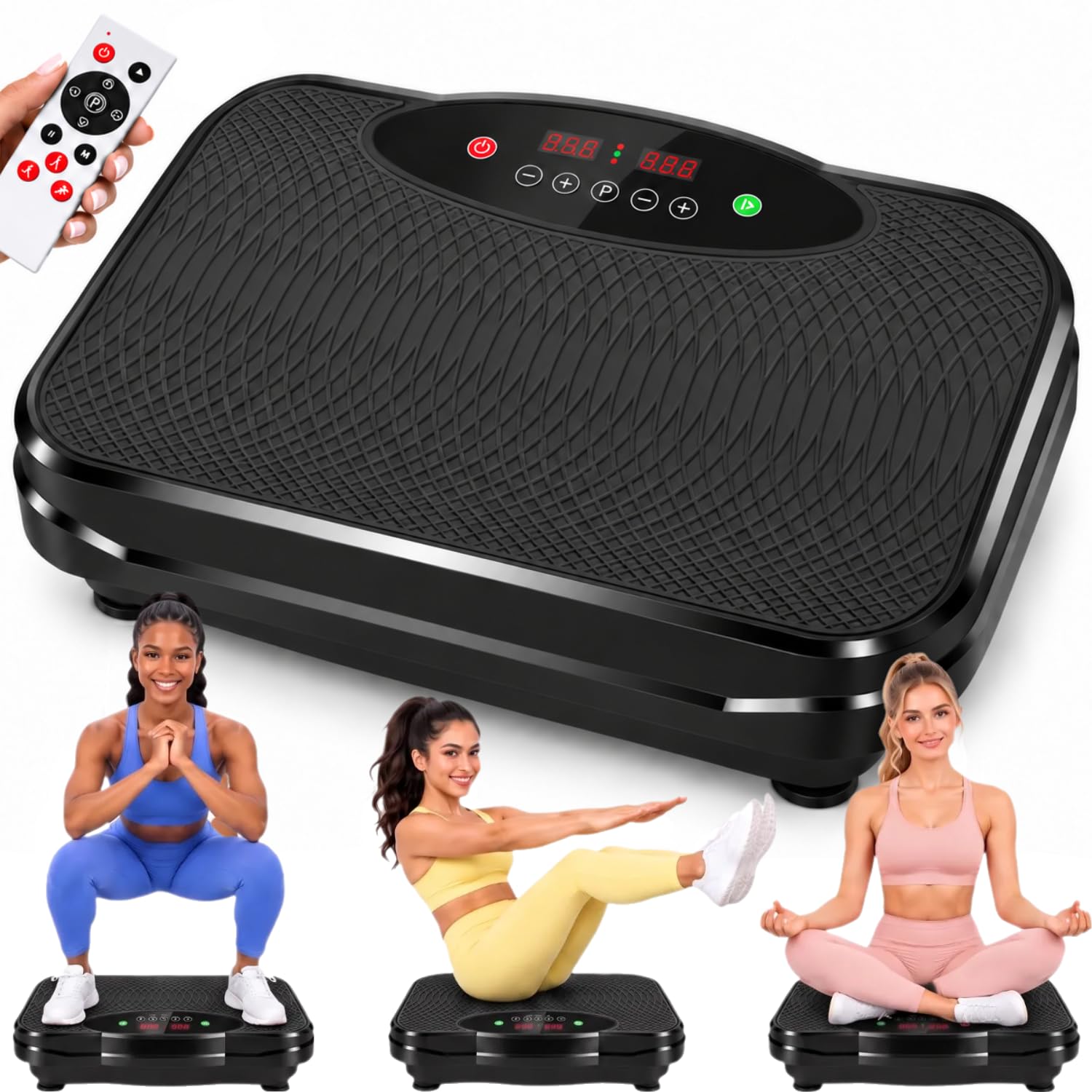
A 450-pound weight rating is the highest of anything here, and it arrives on a plate that costs about what the budget models do. That is why the GLYLF is our value pick: heavier users get a deck that is not straining under them, and lighter users get headroom they will never touch.

The controls are the interesting part. There are 130 speed levels, which sounds absurd until you realise the point is a very gentle bottom end: the first few levels are a flutter you can stand on while reading, and you can creep up a step at a time. Five preset programs handle the days you do not want to think, and Bluetooth lets you play music through the plate.

Nothing needs assembling and nothing needs pairing before you can step on, which is why this is the one that gets used on the days you cannot be bothered. Ten minutes while the coffee brews is the whole interaction, the kind of habit that survives past February. The suction cups do their job on a hard floor, and the plate stays where you put it.

Pros

  • 450-pound rating, the highest in this group
  • 130 speed levels with a very gentle low end
  • Five preset programs and Bluetooth audio
  • Suction cups hold it steady on hard floors

Cons

  • One-year warranty, shorter than some plates here
Our verdict

The GLYLF is our value pick: a 450-pound rating and 130 speed levels, including a genuinely gentle bottom end, for about what the cheapest plates here cost.

Check Latest Price
5

Best for Small Rooms

Merach CV30 Pro

88 /100
Peggy's Score Excellent

Key details

Amplitude
11 mm
Speed Levels
10
Platform Size
23.2 x 12.8 x 4.7 inches
Max User Weight
400 lb
Check Details on Amazon

At 4.7 inches tall, this is the plate that disappears. It slides under a bed or a sofa, stands on its side in a closet, and does not announce itself in a living room the way the curved 30-inch machines do. If the reason a vibration plate never happened at your house was that there was nowhere to put one, that is the problem it solves.

It is also the least compromised of the small plates. A 400-pound rating and 11 mm of amplitude are serious numbers for a deck this size, and the 23.2-by-12.8-inch platform is long enough for a staggered stance with room to spare. Bluetooth audio, a resistance band and a 12-month warranty round out the package.

Our reservation is noise, and it is a real one for apartment dwellers: the whine is fine at low speeds and gets into the room at the top of the ten. If the plate lives above someone else's ceiling, run it during the day. That is the only thing keeping this from being the obvious answer for a flat.

Setup is a power cord and, if you want music, a pairing. Otherwise the routine is: slide it out, step on, pick a speed and stand there. For a machine whose whole job is to be easy enough to use while distracted, that is the right amount of ceremony.

Pros

  • 4.7 inches tall, slides under furniture
  • 400-pound rating on a 23-inch deck
  • 11 mm amplitude
  • Bluetooth audio and a resistance band included

Cons

  • Remote often stops working
  • Some units quit within about a year
Our verdict

For small rooms the CV30 Pro is the pick: a 4.7-inch body that slides under furniture, with a 400-pound rating and 11 mm amplitude that bigger plates barely beat.

Check Latest Price
6

Best Budget

Mawuye Vibration Plate

89 /100
Peggy's Score Excellent

Key details

Controls
Remote and LED display
Item Weight
15.4 lb
Speed Levels
99
Max User Weight
280 lb
Check Details on Amazon

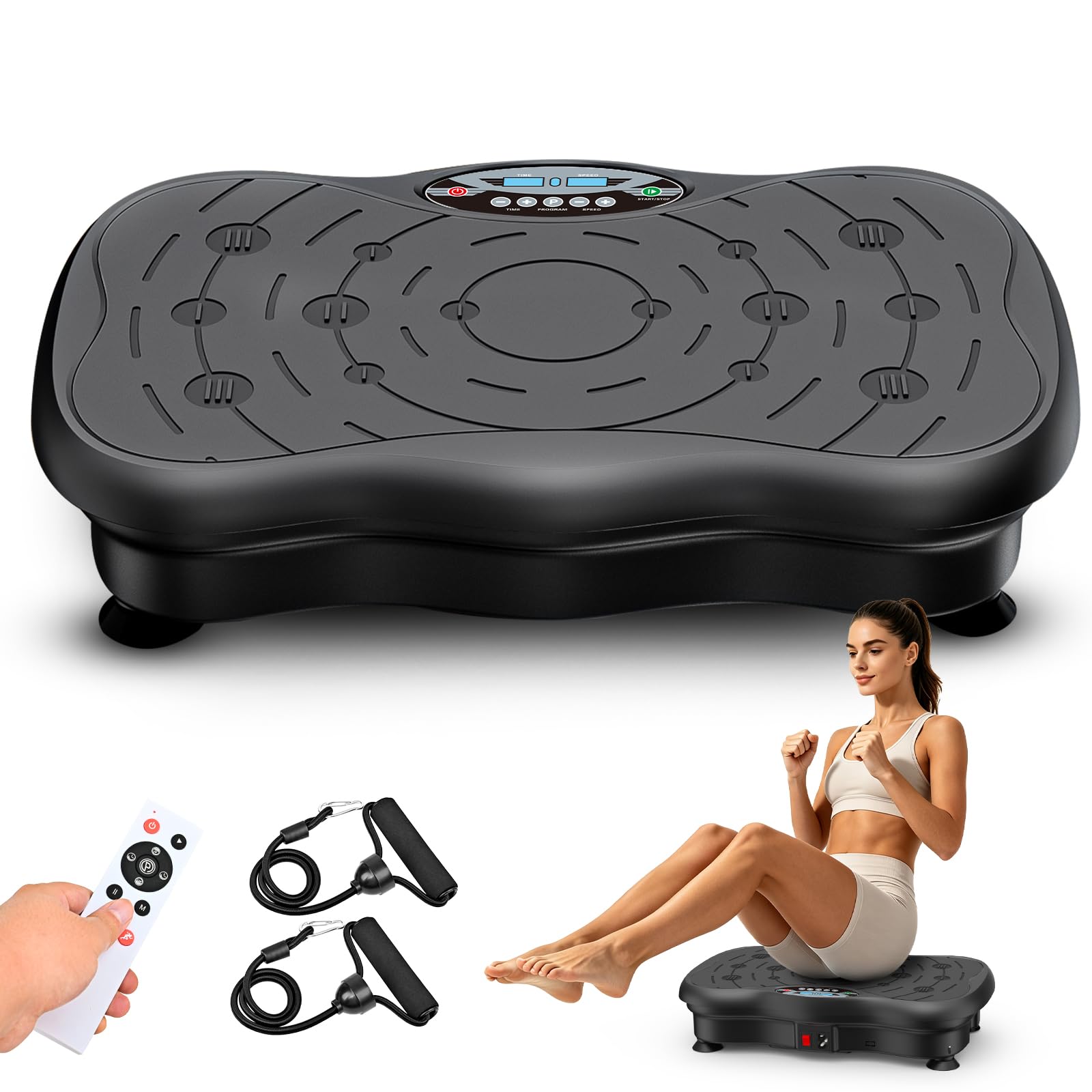
Here is the honest case for the Mawuye: it is the least expensive plate here, it weighs 7 kg, and it does the basic job. Ninety-nine speeds, a remote, an LED readout, four suction cups and a 280-pound rating. If you are curious about vibration plates and not ready to spend real money finding out whether you will use one, this is the low-risk experiment.

The 280-pound rating is the lowest in this group, and the plate itself is light, so a heavier user will feel the difference in how planted it is. Under about 200 pounds that will not bother you, and the deck is small enough to stand in front of the television without rearranging the furniture.

For all that, the thing works, and the people who get on with it are the ones using it as a circulation break rather than a workout machine: ten minutes before bed, shoes off, feet flat. Plug it in the day it arrives rather than the week you plan to start, because a small number show up dead and the return window is your friend.

Eighteen months from now, if you are still standing on it daily, the extra money for a Lifepro will look like the better deal. You will know that because you started here.

Pros

  • Cheapest plate in this group
  • 99 speeds and a remote
  • 7 kg, easy to move room to room
  • Small enough to leave in front of the TV

Cons

  • Squeaks and gets loud at higher speeds
Our verdict

The Mawuye is the plate to try if you are not sure the habit will stick: 99 speeds, a 280-pound rating and 7 kg of machine for the least money here.

Check Latest Price
7

Tight Spaces

CITXMOTI Vibration Plate

89 /100
Peggy's Score Excellent

Key details

Item Weight
11 lb
Speed Levels
120
Platform Size
16.2 x 13 x 4.2 inches
Max User Weight
400 lb
Check Details on Amazon

Sixteen inches by thirteen is a small standing area, and that is the whole story of this plate. It has the smallest deck in this group, small enough for a desk side or the floor of a cupboard, and you will feel the edges the first time you shift your weight. Standing still, it is fine. Anything wider, and you are standing on the rim.

There is more machine inside than the footprint suggests: a 400-pound rating, 120 speed levels, five presets, a half-horsepower motor and an 11-pound body. For seated use, with a chair pulled up and both feet flat on the deck, the small surface stops mattering at all.

Setup is genuinely plug-and-play, and the suction cups underneath keep it from wandering on a hard floor. A year of warranty, 30-day returns and lifetime support sit behind it, which is more backup than the price suggests.

Set it in front of the sofa, sit down, feet flat, and ten minutes passes during an episode. That is the use this plate is built for, and at 11 pounds you can move it out of the way with one hand when the episode ends.

Pros

  • Smallest footprint here at 16 by 13 inches
  • 400-pound rating despite the size
  • 120 speed levels and five presets
  • 11 pounds, easy to move one-handed

Cons

  • Remote works intermittently
Our verdict

The CITXMOTI suits tight rooms and seated sessions: a 16-inch deck with a 400-pound rating, 120 speeds and 11 pounds you can move one-handed.

Check Latest Price
8

First Serious Plate

Kalietel Vibration Plate

92 /100
Peggy's Score Outstanding

Key details

Warranty
2 years
Speed Levels
20
Max User Weight
350 lb
Preset Programs
9
Check Details on Amazon

Two years of warranty is the longest commitment anyone makes in this group, and it sits on a plate priced with the budget models. That tells you how Kalietel expects this to be used: not as a gadget you try for a month and shelve.

The rest of the package reads midrange. Twenty speed levels, nine preset programs, a 350-pound rating, two resistance bands, a remote and a Bluetooth speaker. Twenty levels is a coarser dial than the 99-step plates here, but the bottom of the range is gentle enough to start on and the presets do the fiddling for you.

The bands are the part that earns its place. Clip them on and a passive ten minutes becomes rows and presses, which is more than most of the plates here offer out of the box. Bluetooth audio is the feature you will forget about after the first week.

At just under 20 pounds it is still light enough to move between rooms, and the surface is comfortable under bare feet for a full session. For a first serious plate that will not need replacing the moment you get keen, that is the right trade.

Pros

  • Two-year warranty, the longest here
  • 350-pound rating and nine presets
  • Two resistance bands included
  • Under 20 pounds, easy to move

Cons

No notable drawbacks to flag.

Our verdict

The Kalietel is the sensible first plate: a two-year warranty, a 350-pound rating and bands in the box, with enough adjustability to keep going after the novelty fades.

Check Latest Price

How We Tested 11 Vibration Plates at Home

We started by reading owner reviews and spec sheets, filtering for adjustable speed and amplitude, a remote, and a footprint that could live in a normal room without taking over. From that pool we chose 11 plates across the price range and used them over the same eight-month stretch, rotating them through the same routines so the comparison stayed fair.

Every plate got 10-minute barefoot sessions in the morning, another after a long walk, and a few while I watched TV. I stepped on and off to judge stability, cycled through every preset, and tried the remote from the couch and across the room to see whether it responded immediately or needed a clear line of sight. I also paid attention to the things that decide whether a plate gets used: whether the controls made sense without the manual, how quickly it changed settings, and whether I actually wanted to come back the next day.

For noise, I ran each plate at its lowest and highest settings in a quiet room, took phone decibel readings at arm’s length, and had my partner listen from the next room to confirm whether it registered as a hum or a racket. After sessions I noted whether my feet felt warm and my calves looser, which was a decent stand-in for the circulation and pain-relief claims shoppers ask about. We compared what came in the box—remote, resistance bands, mat, instructions—against the price, and flagged plates that felt hollow or wobbly versus sturdy and well finished.

How to Choose Vibration Plates

Start With the Floor, Not the Motor

Every plate here needs a home, and the difference between a machine you use and one you trip over is usually a few inches of storage. A full-size deck like the Lifepro Waver's 27-by-15-inch platform wants a corner of a room; the CITXMOTI's 16-by-13-inch deck can sit beside a desk or on a cupboard floor. Measure the spot before you order, and be honest about whether you will leave it out, because the plates people use daily are the ones already on the floor.

Compact means what it says, too: a smaller deck and a tighter stance, not a machine that folds away. If you want to do squats or lunges on the plate rather than just stand, buy length.

Check the Weight Rating First

Ratings in this group run from 280 to 450 pounds, and the number does two jobs. It tells you the machine is safe for you, and it hints at how planted it will feel: a 450-pound deck like the GLYLF's does not flex under a 180-pound user, while a plate rated close to your own weight tends to feel busier underfoot. Leave a margin of at least 50 pounds if you can.

What the rating does not tell you is build quality. A 400-pound plate can still arrive with a remote that quits in the second month, which is why the next section matters as much as this one.

Speed Levels, Amplitude and What Changes the Feel

Ninety-nine speeds sounds like a selling point until you have stepped through them. The number that matters is at the bottom of the range: is level one gentle enough to stand on for ten minutes? The motion matters more. Oscillating plates like the Waver rock side to side, while the Merach CV40 and CV30 Pro push vertically with 13 and 11 mm of amplitude, which is a firmer, buzzier sensation. If your knees or hips are the reason you are buying, start low and stay there for a week.

Remotes, Noise and What Goes Wrong

Two things fail on these machines, and neither is the motor. The first is the remote: on several plates the deck will not take a speed change without the handset, which turns a cheap failure into a dead machine. Press every button on the console the day it arrives, not the week you plan to start.

The second is noise. A plate that whines or knocks at speed is fine in a garage and miserable in a second-floor flat, so if you share a floor or a wall, buy for the quiet end of the range and keep the top speeds for daytime.

What a Plate Will and Won't Do

A vibration plate is not a workout in the sense a treadmill is, and the fat-burning language on these listings is marketing. What it is: a low-effort way to stand and move on a day you would otherwise sit, which is why people keep them in the living room rather than the garage. If you want more than that, clip on the resistance bands or do squats on the deck. If you want a reason to get up at four in the afternoon, the plate earns its space.

Frequently Asked Questions

Final Verdict

The Lifepro Waver earns the top spot because it is the plate most people can live with: an oscillating motion that is easier to stay on than a hard vertical buzz, 99 speeds, a 330-pound deck long enough for a proper stance, and resistance bands in the box. Step up to the Merach CV40 if you are over 250 pounds, since its 440-pound rating and 13 mm amplitude give the firmest, most planted ride here.

And if you would rather find out whether the habit sticks before spending real money, the GLYLF gives you a 450-pound deck for about what the cheapest plates on this page cost.