Best Pilates Balls of 2026

The first time a physical therapist handed me a small, soft ball and told me to press it between my knees, I assumed it was a warm-up. Ten minutes later my lower back had quieted down: a pilates ball isn't about bouncing, it's about giving your muscles something honest to push against while your spine stays supported. That only works if the ball is the right size for your frame and actually holds its air.

I've kept one behind the couch for years, and I've learned that a labeled size means very little once a ball is under-inflated — plenty of people do their 55-centimeter exercises on something closer to 45. Over three months, my team inflated, sat on, squeezed, and rolled 16 balls across hardwood, carpet, and a dining chair pressed into desk duty. The differences showed up fast: grip, how long they held pressure, whether a pump came in the box. Start with the size that matches your height, then put it to work.

1

Best Overall

ProBody Pilates 9-Inch Ball

91 /100
Peggy's Score Outstanding

Key details

Weight
3.2 oz
Diameter
9 inches
Material
Latex-free PVC
In The Box
Two straws, spare plug, exercise sheet
Check Details on Amazon

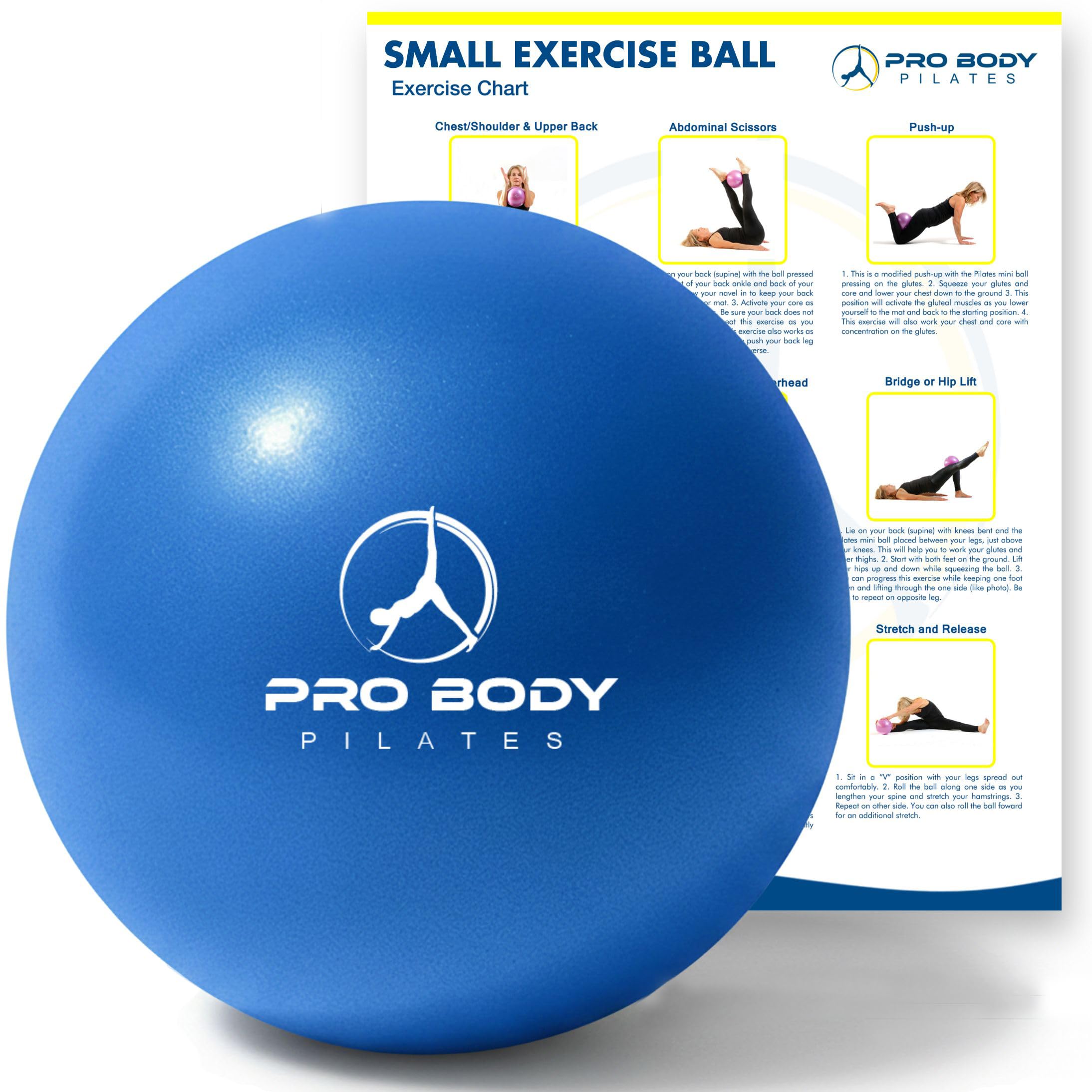
Nine inches is the number that decides whether one of these balls works, and it's why this one is our default. Wedged between adult knees at the top of a bridge, or under the lower back for a slow crunch, a 9-inch ball fills the space without you having to chase it. Go smaller and you spend the set gripping instead of bracing; go bigger and the angle changes. ProBody builds to exactly that diameter in latex-free PVC, at 3.2 ounces, which is light enough to disappear into a kit bag.

The box is more useful than most: two inflation straws, a spare plug and a printed sheet of exercises. The spare plug sounds like filler until the first one rolls under the couch, and then it's the difference between a working ball and a deflated piece of clutter. Inflation is breath-powered and takes a couple of tries, since some air escapes while you seat the plug, but nothing about it is difficult.

Air is the soft spot in this category, and this ball shares it. The shell feels forgiving at full inflation and holds through a session, then slowly softens over the following days; top it up before class rather than mid-set and it behaves. The surface is tackier than most here, which is exactly what keeps it from sliding across a wood floor mid-squeeze.

For anyone who wants one ball to cover mat work, barre and a therapist's home exercises, that combination of the standard diameter, the spares and a mid-pack price makes this the one we point people to first. Take the Trideer if you want the same job for less, or the THERABAND if softness matters more to you than firmness.

Pros

  • Correct 9-inch diameter for between-knees work
  • Two straws and a spare plug included
  • Grippy, forgiving latex-free PVC shell
  • Printed exercise sheet in the box

Cons

  • Tacky PVC can leave a mark on finished wood
Our verdict

The 9-inch ball we recommend first: right-sized for knees, back and wall work, with spare plugs and straws so it stays in service.
Check Latest Price
2

Best Value

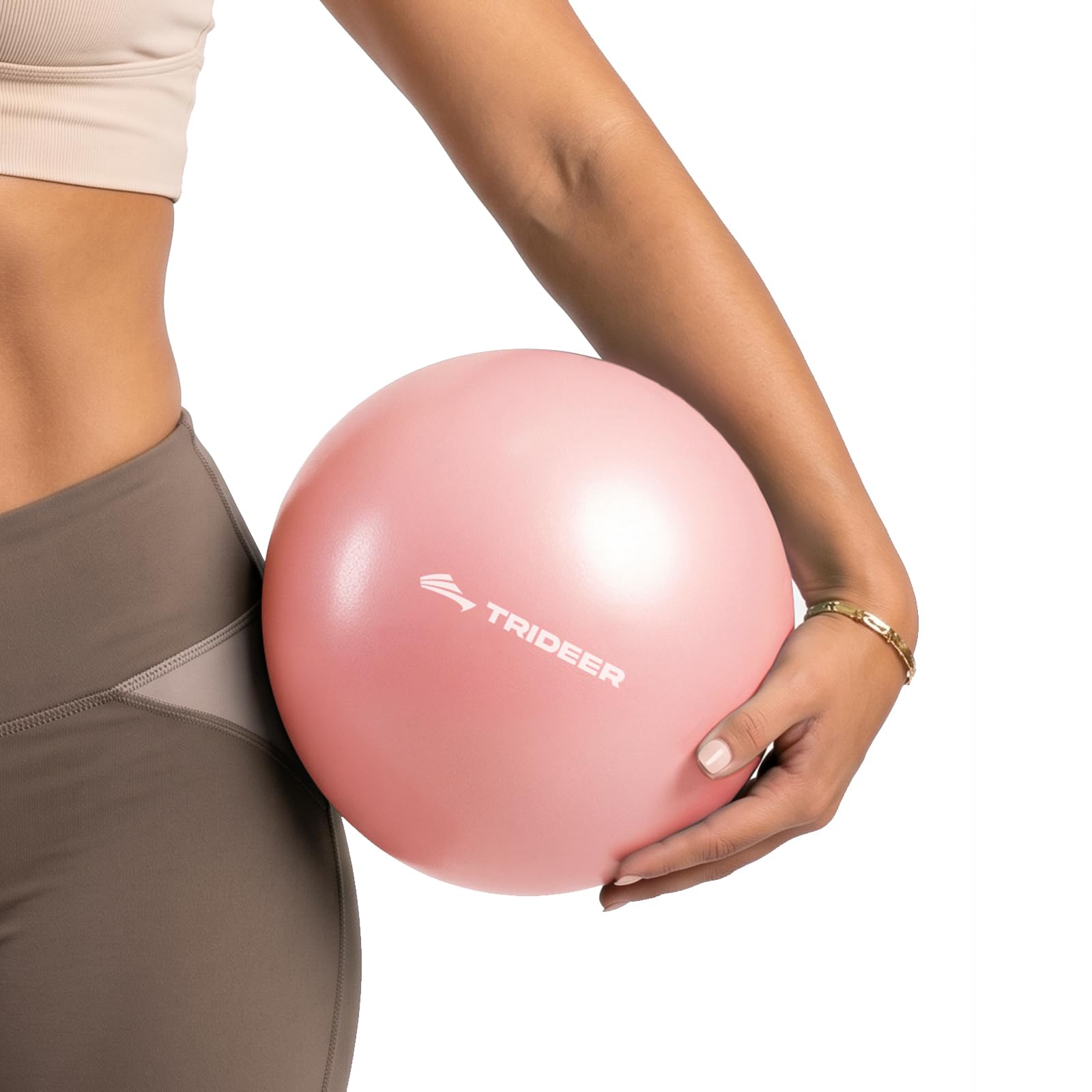
Trideer 9-Inch Pilates Ball

91 /100
Peggy's Score Outstanding

Key details

Weight
5 oz
Diameter
9 inches (23 cm)
Warranty
1 year
In The Box
Two straws, two plugs, plug remover
Check Details on Amazon

Trideer is the only one here that tells you up front the ball will feel soft for the first week and need topping up while the PVC stretches. That's the most useful sentence on any of these pages, because it's true of every ball in the group; this one just says so. Budget for a break-in week and you'll be happier with whatever you buy.

The kit is the reason to pick this one: two straws, two plugs and a plug remover. That last piece is the small stroke of sense, because seating the plug is the one genuinely fiddly moment in inflating a mini ball, and a tool that grips it beats a fingernail. At 9 inches and 5 ounces it's a standard ball, textured enough to hold a mat, and it comes with a 12-month warranty.

The thing to plan around is size at full pressure: pumped hard, it reads broader than the 9-inch ball you may be replacing, which widens the angle of a between-the-knees squeeze. Leave it a little under-filled if that matters to you. Otherwise it's the least fussy ball here for the money.

Pros

  • Two straws, two plugs and a plug remover
  • Textured, grippy skin for hard floors
  • 12-month warranty
  • Clear break-in guidance for the first week

Cons

  • Sticky surface can leave residue on furniture
Our verdict

Spare straws, spare plugs and a plug remover for a budget price — the 9-inch ball to buy if you want the full kit for very little.

Check Latest Price
3

Best for Physical Therapy

THERABAND Mini Ball

92 /100
Peggy's Score Outstanding

Key details

Surface
Lightly textured
Diameter
9 inches
Firmness
Stays soft when full
In The Box
Exercise booklet
Check Details on Amazon

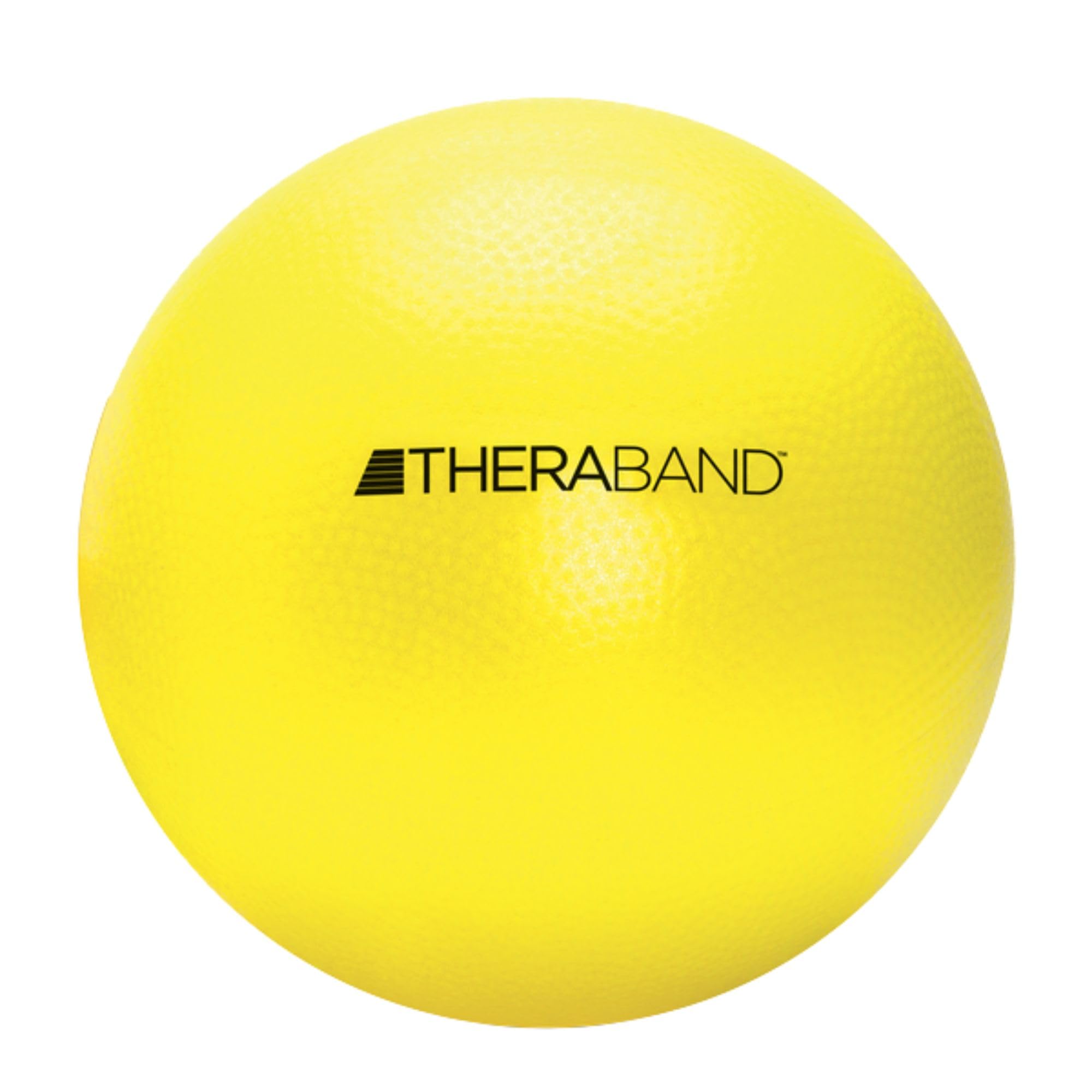
Most mini balls go hard when you fill them; THERABAND's stays elastic and slightly squishy even fully inflated, which is the whole point under a lower back or between the knees, where you want a little give rather than a rock. That's the clinic feel, and this is the closest thing in the group to the ball a therapist hands you: 9 inches, a lightly textured skin that stays put on a mat, and a booklet of abdominal, upper-body and shoulder exercises in the box.

Air behaves the way it does across the category, so expect to add a breath or two between sessions, especially in the first week while the PVC stretches. If a therapist has given you a home program and the ball needs to match the one in the clinic, this is the match. If what you want is maximum resistance in a squeeze, a firmer ball gives you more to push against.

Pros

  • Stays soft and elastic at full inflation
  • Lightly textured, non-slip skin
  • Exercise booklet included

Cons

  • Pricier than most of the group
  • Soft shell gives less to push against
Our verdict

Our pick for therapy-style work: soft, grippy and still squishy at full inflation, with an exercise booklet to follow at home.

Check Latest Price
4

Best Soft Feel

TOGU Redondo Ball

93 /100
Peggy's Score Outstanding

Key details

Weight
6.7 oz
Diameter
22 cm
Material
Foamed PVC
Weight Limit
250 lb
Check Details on Amazon

TOGU's Redondo is the odd one out here, and the difference is the material: foamed PVC rather than a plain inflatable shell, so it feels closer to a firm sponge than a beach ball.

At 22 cm and 190 g it's a shade under the 9-inch standard in diameter, and the shell is rated to 250 pounds, far more than this kind of work will ever ask of it. It's built to be the softest ball in this group, and the foam is why.

What the foam buys you is range. It's soft enough to lie over for a stretch or work against a tight spot, springy enough to bounce and catch for coordination drills, and stable enough for balance work where a hard ball would feel twitchy.

That range is worth paying for if your ball work is posture, balance and leaning over the thing rather than maximum-effort squeezing; this is the one in the group we reach for after a long desk day. If you mostly squeeze for adductor and core work, a firmer, cheaper ball does more for you.

Pros

  • Foamed PVC feels soft, not bouncy
  • Rated to 250 pounds
  • Suits stretching, massage and catch drills

Cons

  • Most expensive ball in this group
Our verdict

A spongier ball for posture, balance and lying-over work, rated to 250 pounds — the premium choice here for feel rather than resistance.

Check Latest Price
5

Home Mat Work

Slim Panda Pilates Ball

91 /100
Peggy's Score Outstanding

Key details

Diameter
9 inches
Warranty
1 year
Inflation
Stainless steel straw
In The Box
Straw, plug, printed guide
Check Details on Amazon

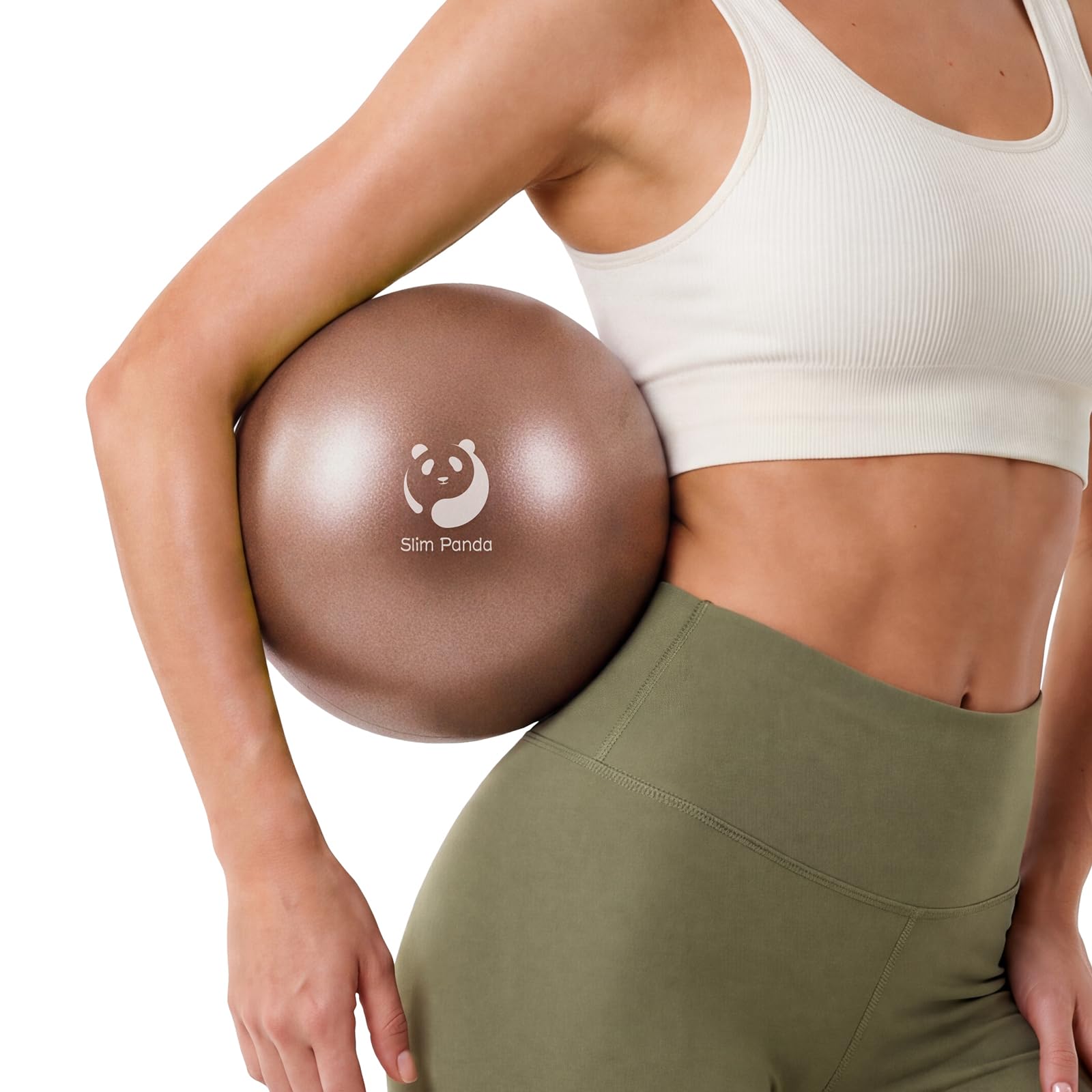
The champagne gold finish is what you notice first, but the stainless steel straw is what matters: it's rigid where the plastic tubes most of these ship with will crimp, so the last few breaths go into the ball instead of bending the straw shut. A printed guide, a plug and a one-year warranty round out the box.

Nine inches, a non-slip outer coat and a ball that behaves on a hard floor: at a budget price it covers everything the standard diameter asks for. The instructions ask for about a day's rest after the first inflation before heavy use, which is worth knowing if you're buying the night before a class. It's the pick here if you want something nicer than the cheapest ball without paying clinic-brand money.

Pros

  • Stainless steel straw won't crimp
  • Non-slip outer coat on a 9-inch ball
  • Printed guide and one-year warranty

Cons

  • Softens between sessions and needs topping up
Our verdict

A budget 9-inch ball with a metal straw and a printed guide — the sensible cheap buy for a home mat or a class bag.

Check Latest Price
6

Grip on Floors

APEXUP 9-Inch Pilates Ball

88 /100
Peggy's Score Excellent

Key details

Surface
Honeycomb grip texture
Diameter
9 inches
In The Box
Two straws, plug
Check Details on Amazon

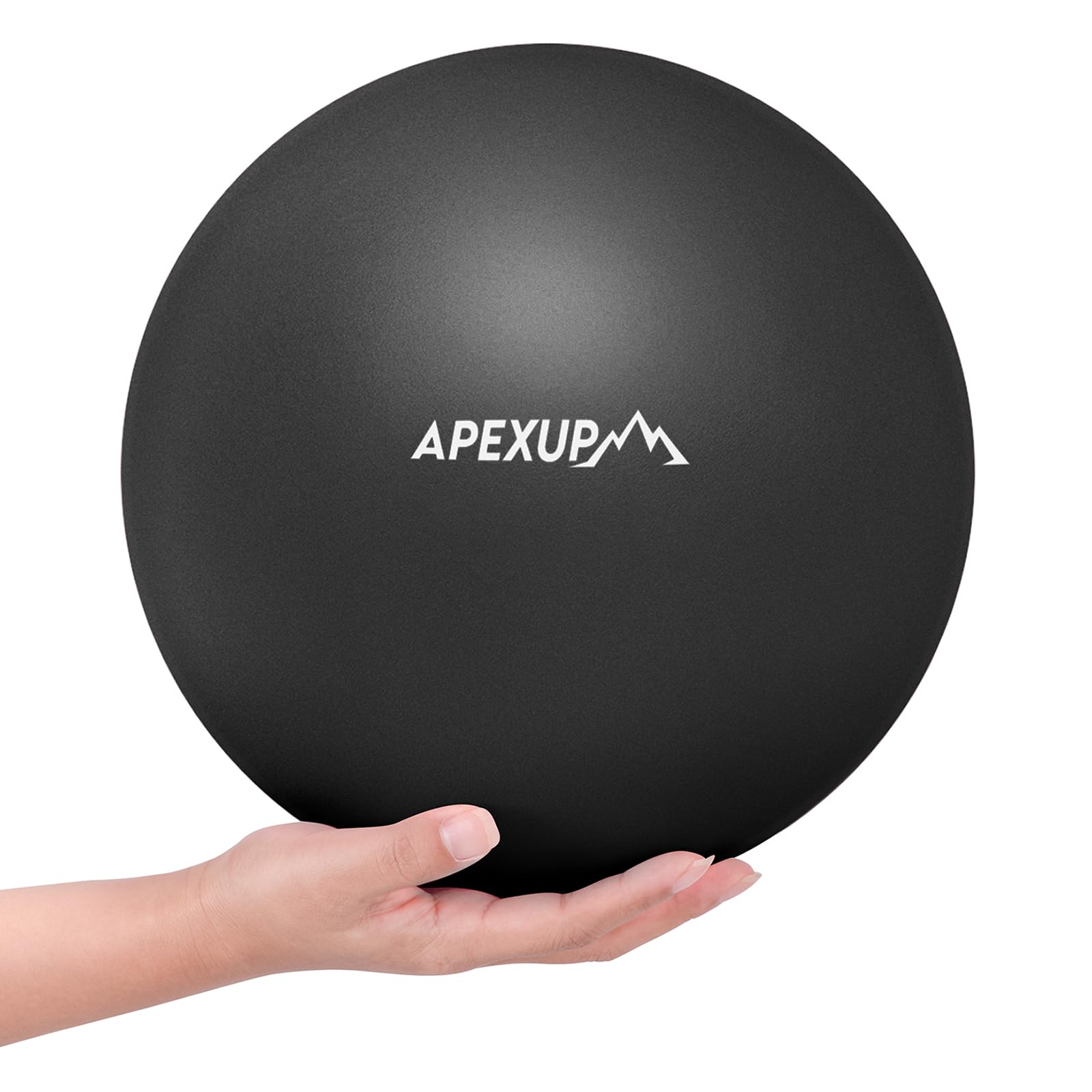
The honeycomb pattern molded into the shell is what makes this ball feel different under a foot: a matte, pebbled surface that stays put on a wood floor or a mat instead of skating away mid-bridge.

Otherwise it's a straightforward 9-inch PVC ball: two inflatable straws and a plug in the box, a fill that takes seconds rather than minutes, and a soft shell that gives a little when you press it.

Where it lands for us is just behind the Trideer. Both are budget 9-inch balls with a grippy skin, and the Trideer brings more in the box. The APEXUP still earns its place because the texture is the most secure of the cheaper balls here, so if slipping has been the problem with the ball you have now, this is the one to try.

Pros

  • Honeycomb texture grips hard floors
  • Quick to inflate with the included straws
  • Standard 9-inch diameter

Cons

  • Runs slightly over 9 inches once firm
Our verdict

A 9-inch ball with the surest grip texture among the cheaper picks — worth it if your current ball slides on hard floors.

Check Latest Price
7

Back Support

KEEP Exercise Ball

87 /100
Peggy's Score Excellent

Key details

Weight
9.52 oz
Diameter
9.8 inches (25 cm)
Construction
Honeycomb foam, thick wall
Check Details on Amazon

At 9.8 inches this is the biggest ball in the group, and that one number changes what it's for. It's built as a wider platform for back and posture work, and it's the best platform for that job here; what it isn't is a standard between-the-knees ball, because at that diameter your knees start further apart than most mat cues assume. If you've been squeezing a 9-inch ball for adductor work, this isn't the replacement.

The construction is the other reason it stands apart: a honeycomb microporous foam structure inside a thickened PVC wall, with a matte finish that keeps friction up. At 0.27 kg it's still light enough to move around the room one-handed, and the burst-resistant build suits a ball that lives on the floor where a pet or a stray dumbbell can find it.

Plan on topping it up a few times in the first week while the PVC settles, same story as the rest of these. The pump that comes with it is small and takes some effort; a foot pump with a needle adapter makes the job quicker.

Pros

  • 9.8-inch platform for back work
  • Honeycomb wall with a matte, grippy finish
  • Weighs only 0.27 kg

Cons

  • Stiff to fill with the small included pump
Our verdict

A bigger ball for back and posture work — the widest, most stable platform here, and the one to buy if you lean on it more than you squeeze it.

Check Latest Price
8

Hand and Knee

CIZEBO Pilates Ball

89 /100
Peggy's Score Excellent

Key details

Plug
Not required
Diameter
6 inches
Warranty
1 year
Inflation
Needle air pump
Check Details on Amazon

No plug to chase. A needle pump pushes air in and the valve closes behind it, which solves the genuinely annoying part of straw-inflated balls: losing half of what you just blew in while you fumble the stopper into the hole.

The 6-inch size is the other half of the story. It fits in one hand, tucks behind a knee and works under a heel for the small-range moves a class or a therapist asks for. The walls feel thick for a ball this small, and the pump stores with its needle in place.

Six inches is also the catch. If your class cues a 9-inch ball for between-the-knees or under-the-back work, this one is too small and you'll feel the difference by the second set. For hand-held squeezes, behind-the-knee holds and heel raises, the smaller diameter is exactly right, which is why it's here as a specialist rather than a default.

Pros

  • Needle pump, no plug to seat
  • 6-inch size for hand and knee work
  • Thick walls for a small ball

Cons

  • Pump needle is the fragile part
Our verdict

A 6-inch, pump-inflated ball for behind-the-knee, hand and heel work — the specialist pick where a full 9-inch ball is too big.

Check Latest Price

How We Tested Pilates Balls

We started with every ball we could find that listed a stated diameter, made some claim about burst resistance, and cost under about $40. From there we cut anything that shipped without a pump and anything whose size contradicted itself between the product listing and the box, which left us with 16 balls that we inflated ourselves and lived with for three months.

Each ball got inflated with its own pump on day one. We timed how long that took, checked whether the plug seated flush enough that a hip wouldn't catch on it, and measured the diameter against a wall with a tape once it was full. Most ran a centimeter or two under the size on the label, which matters more than shoppers expect. Every ball went back on the tape weekly for twelve weeks; the ones that lost noticeable firmness inside a week got flagged, because a ball that's quietly going soft changes every exercise you do on it.

The rest of the testing happened on a living-room floor, not a lab bench. We worked through a 20-minute stability routine in bare feet and again in socks, on hardwood and on low carpet, and noted which balls skidded out from under us and which stayed put against a wall during inner-thigh squeezes. The balls got used as desk chairs, wedged between the knees, and tucked under the lower back for extensions. Two testers — one just over five feet, one over six — traded off to see which sizes were genuinely usable rather than nominally correct. We pressed a thumbnail into each shell to feel its thickness, rolled them over grit and hardwood to look for scuffs and punctures, and watched for the slick, powdery film that develops on cheaper surfaces and makes a ball slide.

How to Choose Pilates Balls

Start With the Diameter

Nine inches is the working standard because it fills the gap between adult knees and the space under a lower back. A 6-inch ball is a different tool: it sits in a hand, behind a knee, under a heel. Something listed near 10 inches is a wider platform for leaning back against rather than a between-the-knees ball, which is the role the KEEP fills here.

The trap in these listings is the word compact, which describes the box, not the inflated ball. A ball that arrives well off the stated diameter changes every cue in a class, so buy from the inflated measurement and, if you're torn, take 9 inches for mat work.

Air, Plugs and the First Week

Every PVC ball here slowly loses firmness, and the first week is the worst of it while the material stretches. Plan on topping it up a few times early, then every handful of sessions. None of that is a defect, but it does mean a ball bought the night before a class will feel softer than you expect.

The fiddly moment is the plug: you blow the ball up through a straw and then try to seat a stopper before the air escapes. That's why a spare plug and a plug remover earn their place in the box. A needle pump, as on the CIZEBO, sidesteps the problem completely.

Grip, Texture and Where It Lives

A non-slip skin is a real help on a wood floor and a nuisance everywhere else. The same tacky surface that stops the ball sliding will pick up dust and can leave a mark on finished wood, vinyl or leather if it sits there for days. Keep the ball in a bag or a drawer rather than on the dining table, and give it a wipe when it starts to feel tacky.

Soft or Firm?

A ball that stays squishy at full inflation, like the THERABAND or the TOGU foam ball, is kinder under a lower back and better for balance and lying-over work. A firmer shell gives you something to push against for adductor squeezes and core work, which is where the ProBody earns its keep.

Most people end up wanting one of each. Buying a single ball, match it to the move you do most often rather than the one you think you should be doing.

Frequently Asked Questions

Final Verdict

The ProBody is the ball we recommend to most people. Nine inches is the diameter that works for knees, back and wall drills, and it ships with the spares that keep a small ball in service instead of in a drawer.

If you want the clinic feel a therapist hands you, the THERABAND is softer at full inflation and comes with a program to follow. If you only want to spend as little as possible on a standard ball, the Trideer does the same job with a better set of accessories.