Best Pilates Reformers of 2026

A reformer can make Pilates the workout you look forward to rather than the mat routine you talk yourself into—provided the machine doesn't creak, wobble, or fight you on every spring change. Smooth carriage travel, adjustable resistance, and a stable frame let you focus on form instead of wondering if it will hold. The trouble is that reformers are big, heavy purchases, and the wrong one can feel rickety, sound like a haunted treadmill, or be awkward enough to move that it never leaves its corner. What you're buying is a sturdy, quiet, well-built piece of furniture that happens to be a gym.

Over eight months, my team and I lived with six reformers, assembling them, adjusting them for different bodies, and using them daily. We tracked assembly effort, whether carriages glided or ground, noise from springs and rails, and how hard it was to move when the room needed to be a room again. Value counted alongside quality and effectiveness; a cheaper reformer that squeaks or needs constant tightening isn't a bargain. The picks below earned their place.

1

Best Overall

PAETA PR07 Wooden Reformer

87 /100
Peggy's Score Excellent

Key details

Frame
Solid oak
Item Weight
140 lb
Overall Length
92 inches
User Weight Limit
500 lb
Check Details on Amazon

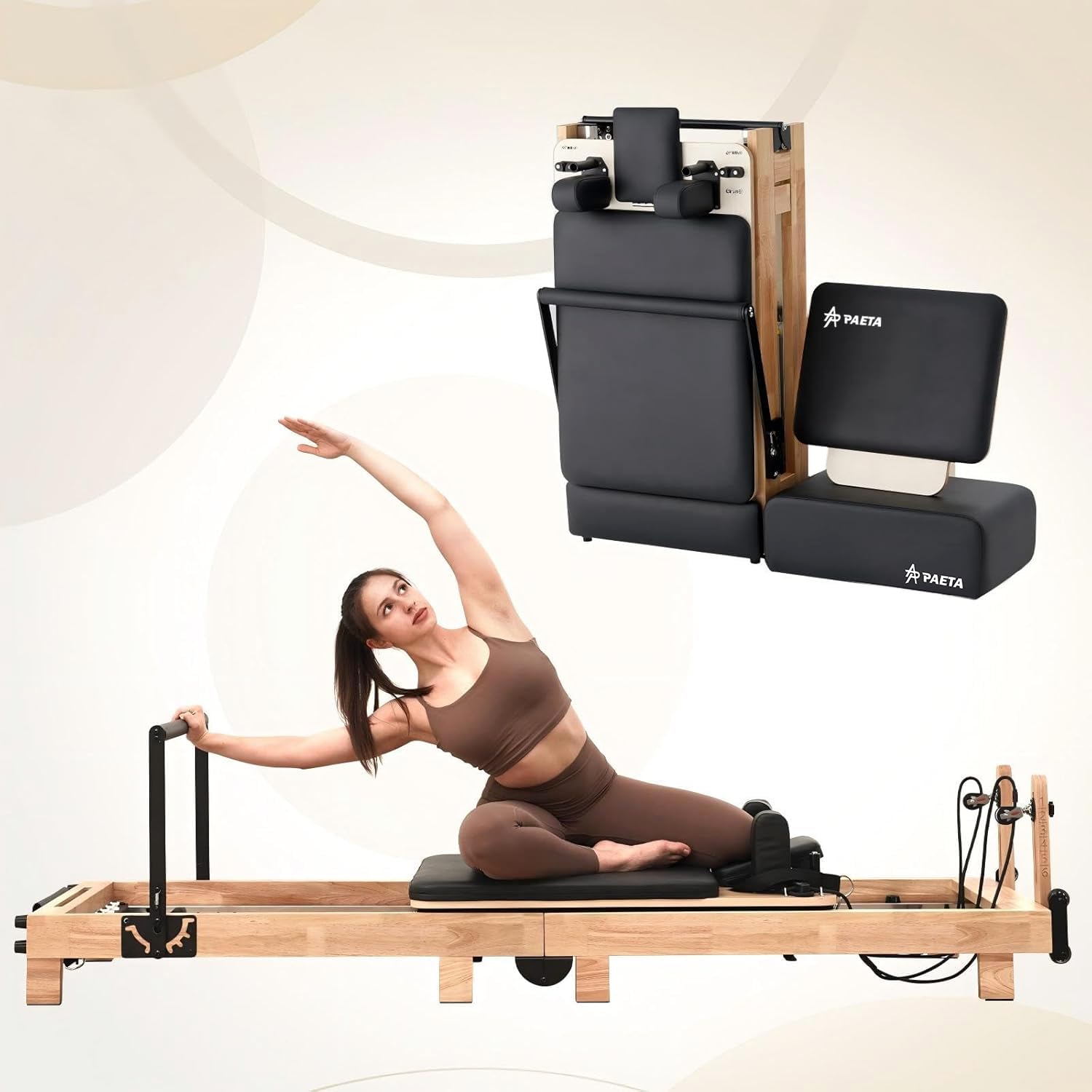
A 92-inch oak frame and a 500-pound capacity put the PAETA PR07 in studio-reformer territory, but the detail that matters most is the long carriage: it gives taller users room to extend in footwork and long-box work instead of feeling folded up. The package includes a sitting box and jump board, so you can start with more than the carriage alone. The solid oak frame looks the part, too—this is the rare home machine that doesn't read as gym equipment in a spare room.

The carriage glide is smooth, and the frame feels planted when you push resistance. We paid attention to the resistance changes because that's where budget reformers often feel sticky or uneven; the springs here respond predictably through footwork and leg work. Assembly is manageable, though the frame is heavy enough that you want to build it where it will stay.

That's why it's our top pick: it covers the core reformer repertoire, feels close to a studio machine, and comes with the box and jump board without climbing into the premium wood tier. For a dedicated home studio, it's the most straightforward recommendation in this guide.

The catch is the footprint. Ninety-two inches of rail means you need clearance at both ends, and 140 pounds is not something you tuck into a closet after every session. Give it a wall, measure the carriage travel, and the PR07 rewards you with a machine that feels more permanent than its price tier.

Pros

  • Solid oak frame with 500-pound capacity
  • Long 92-inch rail suits taller users
  • Smooth, planted carriage glide
  • Sitting box and jump board included

Cons

  • May develop spring or frame squeaks
Our verdict

We recommend the PAETA PR07 as the default home reformer: a solid oak, 500-pound-capacity machine with a long carriage and studio-style accessories for less than the premium wood options.
Check Latest Price
2

Best Folding Wood Reformer

LeisureKing Oak Folding Reformer

92 /100
Peggy's Score Outstanding

Key details

Frame
Solid oak
Folded Size
25.98×15.0 inch
Item Weight
143 lb
User Weight Limit
440 lb
Check Details on Amazon

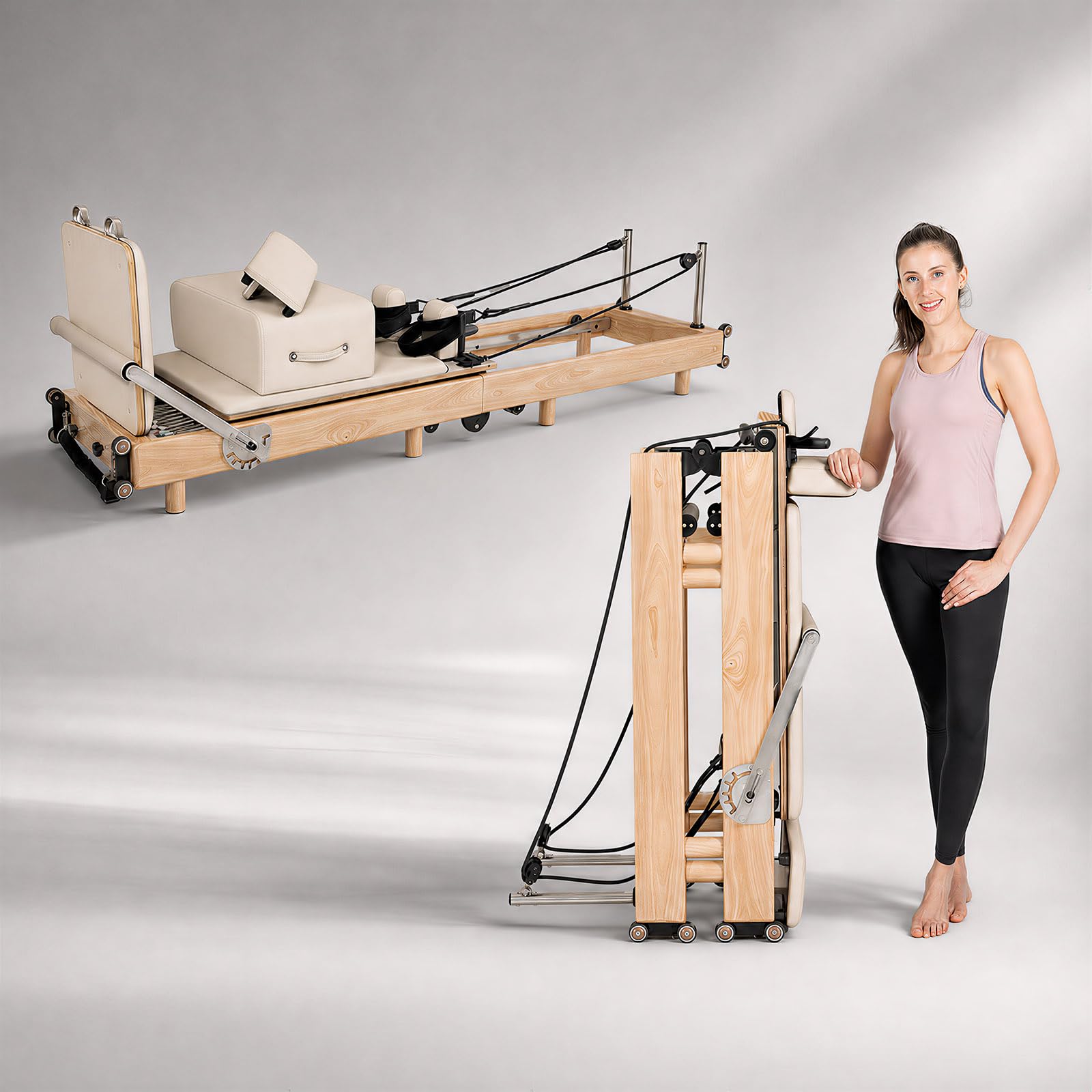
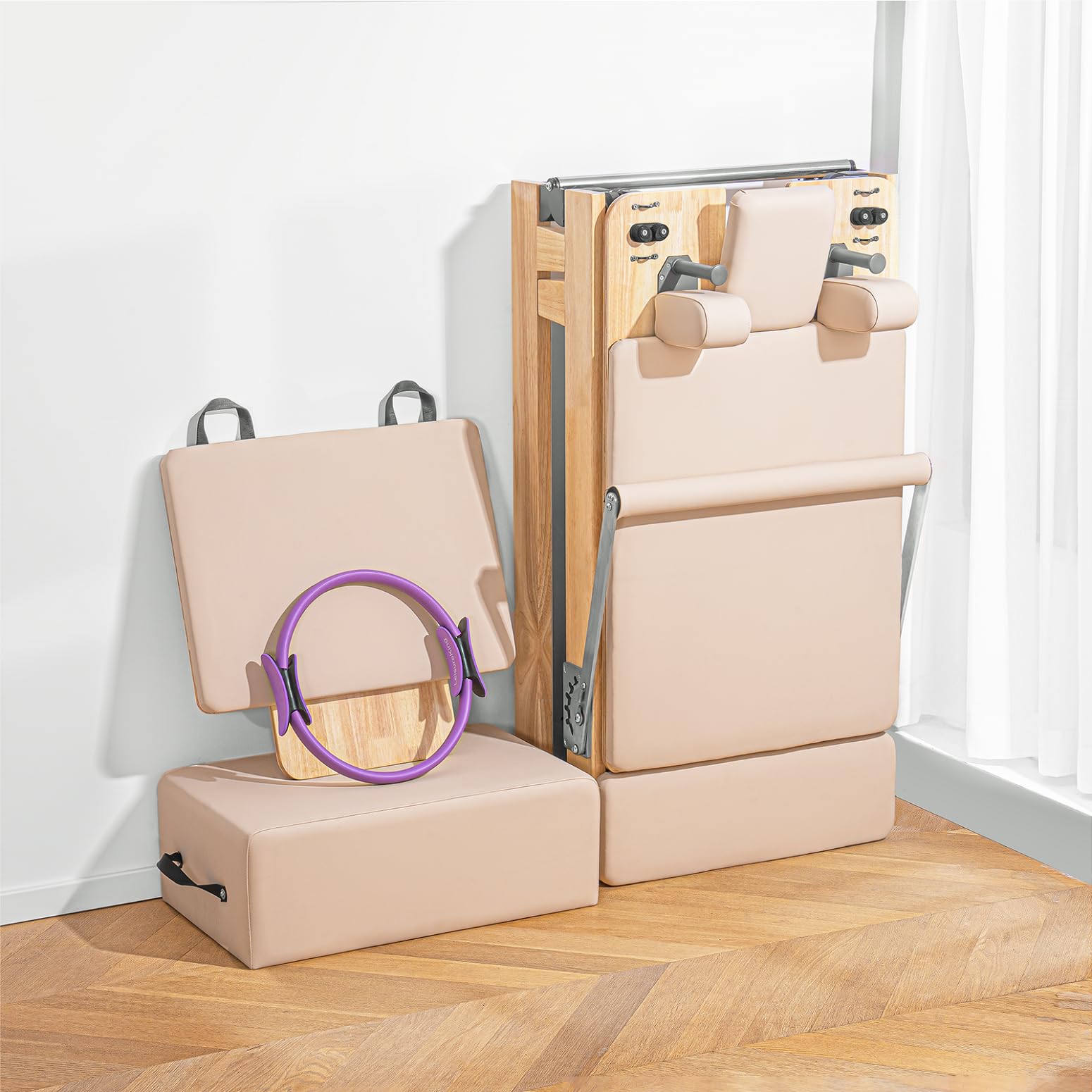
Just under 26 by 15 inches is what the LeisureKing gives you when it's folded, and that number is why it earns a place: this is a solid-oak reformer that can be put away in a small home rather than left in the middle of the room. The frame comes mostly built, and the folding mechanism is part of the design rather than a workaround. We like how little the folded package asks of a closet, especially for a machine with a 91-inch rail.

In use, the carriage has the smooth, quiet glide we look for, and the oak frame and aluminum rails feel stable under load. The five springs give you useful resistance steps, and the package includes a box, jump board, and foot strap, so the machine is ready for more than beginner footwork. Setup is mostly a matter of attaching the shoulder blocks, handles, risers, and ropes; the heavy lifting is already done.

At 143 pounds, it's a machine you'll want a second person to move or fold; the folded package is compact, not light. That's the trade-off for the stability, and it's why we see this as a machine for a home where it stays open most of the time and folds only for guests or seasonal storage. If that's your routine, the LeisureKing's studio feel earns its keep.

Pros

  • Folds to a compact 26 by 15 inches
  • Solid-oak studio feel
  • Quiet, smooth carriage
  • Box, jump board, and foot strap included

Cons

  • Premium price tier
Our verdict

For a wooden reformer that disappears between sessions, the LeisureKing is our pick for compact home studios.

Check Latest Price
3

Best for Cardio Rebounding

AeroPilates 701 Premier

89 /100
Peggy's Score Excellent

Key details

Frame
Alloy steel
Included
Two workout DVDs
Overall Length
86.25 inches
User Weight Limit
300 lb
Check Details on Amazon

The AeroPilates 701 Premier is the one to look at if you want a rebounder built into your reformer workout. The padded rebounder turns the carriage into a low-impact cardio station, and the package includes two workout DVDs to get you moving. It folds and rolls, so it can live against a wall between sessions, and the 86-inch rail is long enough for standard footwork.

We recommend it most for someone who wants cardio variety rather than a purist studio machine. The carriage glides smoothly, and the adjustable resistance lets you switch from gentle stretching to harder rebound intervals. The steel frame is stable, and the machine's following is built on that combination of price, function, and a workout you can actually finish at home.

For rebound work and a compact cardio routine, it's the most versatile machine in this set. The trade-off is that it doesn't feel as substantial as the oak reformers. If you want a studio-style carriage for heavy resistance work, spend up; if you want to bounce, stretch, and sweat at home, this is the one.

Pros

  • Rebounder adds low-impact cardio
  • Folds and rolls for storage
  • Adjustable resistance for varied workouts
  • Two workout DVDs included

Cons

  • 300-pound user weight limit
  • Pulley hardware is less refined
Our verdict

The AeroPilates 701 is our choice when you want cardio and rebound work alongside reformer moves, with strong value for a home machine.

Check Latest Price
4

Best Budget Reformer

Dpiolrcag Foldable Reformer

91 /100
Peggy's Score Outstanding

Key details

Assembly
90% pre-assembled
Resistance
Four springs and five cords
Item Weight
70 lb
User Weight Limit
250 lb
Check Details on Amazon

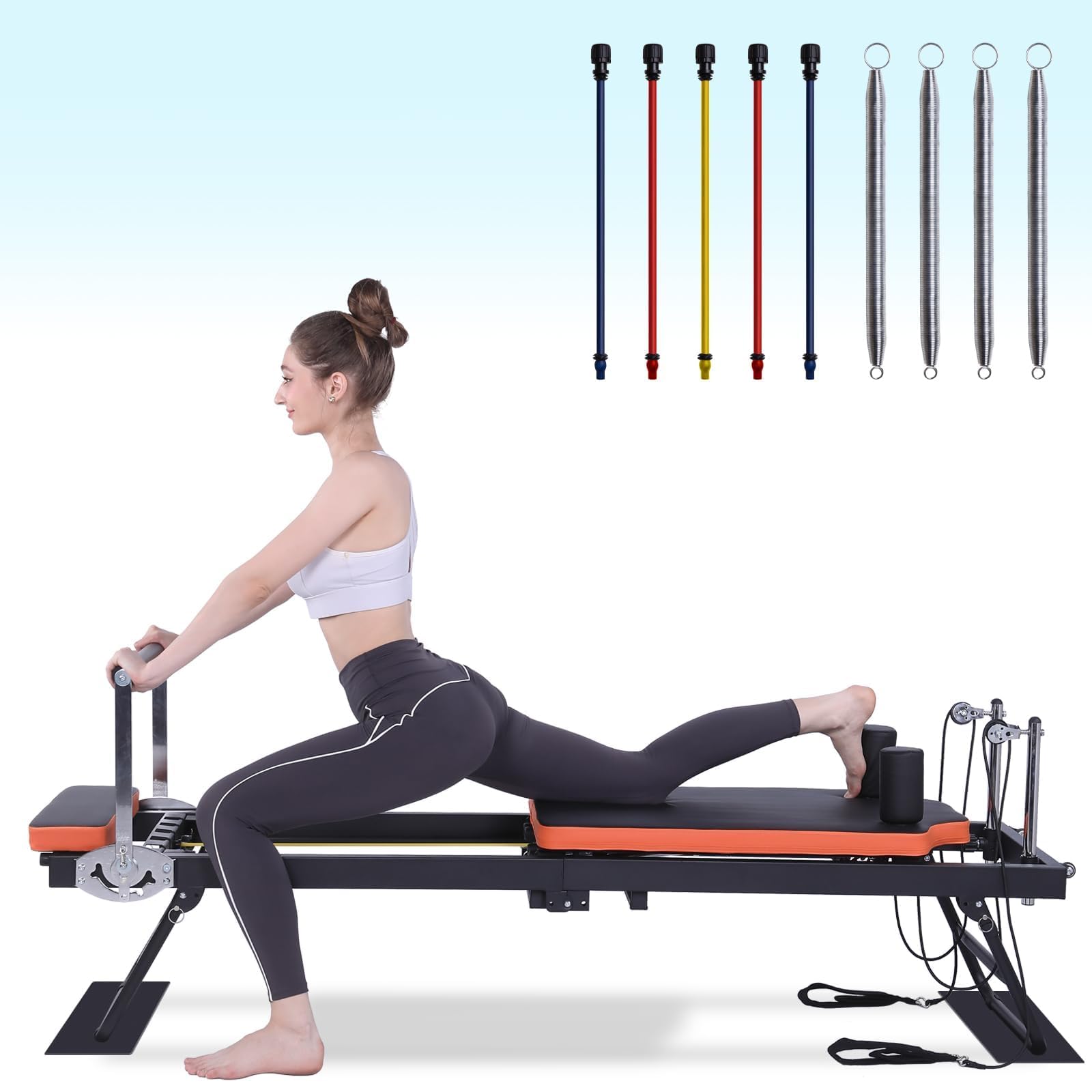
At 70 pounds, the Dpiolrcag is the reformer you can actually move without help, and that's the point: it folds, rolls, and fits into a small home gym without becoming a permanent installation. The 250-pound user capacity is the first limit to check, because it puts the machine in a different class from the 400- and 500-pound wood reformers here. For a smaller beginner, that trade-off can make sense.

The resistance system is more flexible than the price tier suggests: four springs and five cords give you several ways to lighten or deepen an exercise, and the foot bar and pulley risers adjust for different bodies. The padded carriage is comfortable, and the glide is smooth enough for a full footwork series. Assembly is mostly done out of the box, which matters if you're not handy.

It is a shorter machine, and taller users will feel the difference in exercises that ask you to stretch out. What you get in return is a low-cost entry point that doesn't feel like a toy: stable, quiet enough for an apartment, and easy to live with. We see it as a first reformer, not a forever machine, and that's fine if it gets you practicing.

Pros

  • Light 70-pound frame
  • Four springs and five cords
  • Mostly pre-assembled
  • Budget price tier

Cons

  • Arm straps run long for some moves
Our verdict

For a first reformer on a tight budget, the Dpiolrcag is the one we recommend, provided you fit its shorter deck and 250-pound limit.

Check Latest Price
5

Low-Profile Wood

nexace Wood Folding Reformer

89 /100
Peggy's Score Excellent

Key details

Frame
Solid oak
Resistance
Six springs
Item Weight
150 lb
User Weight Limit
400 lb
Check Details on Amazon

Eight wood legs and six springs give the nexace a planted, low-slung feel that's unusual in a folding reformer. The solid oak frame handles up to 400 pounds, and the machine folds in half for storage, so it covers the two things buyers usually have to choose between: a stable wood base and a smaller footprint. At 150 pounds, it's still a substantial piece.

We recommend it for someone who wants a wood reformer without a permanent studio footprint. The carriage glides smoothly, the springs are easy to read, and the included box, jump board, and foot strap make it useful beyond basic footwork. Assembly is clearer than most, and the eight-leg base stays quiet and steady through leg and footwork sets.

The low deck makes mounting and dismounting easier, and the folding mechanism is straightforward. The machine is heavy enough that you'll want a second person for the lift. If you want a low, stable wooden reformer that can be tucked away, it's a strong alternative to the bigger oak machines.

Pros

  • Eight-leg oak base feels planted
  • Folds in half for storage
  • Six springs give broad resistance
  • Box, jump board, and foot strap included

Cons

  • Fit runs short for taller users
Our verdict

The nexace is our pick for a low-profile, eight-leg oak base with folding storage and a 400-pound capacity, and it suits smaller frames best.

Check Latest Price
6

Studio Purists

Merrithew At Home SPX

85 /100
Peggy's Score Excellent

Key details

Frame
Aluminum rails
Item Weight
115 lb
Overall Length
96.5 inches
User Weight Limit
250 lb
Check Details on Amazon

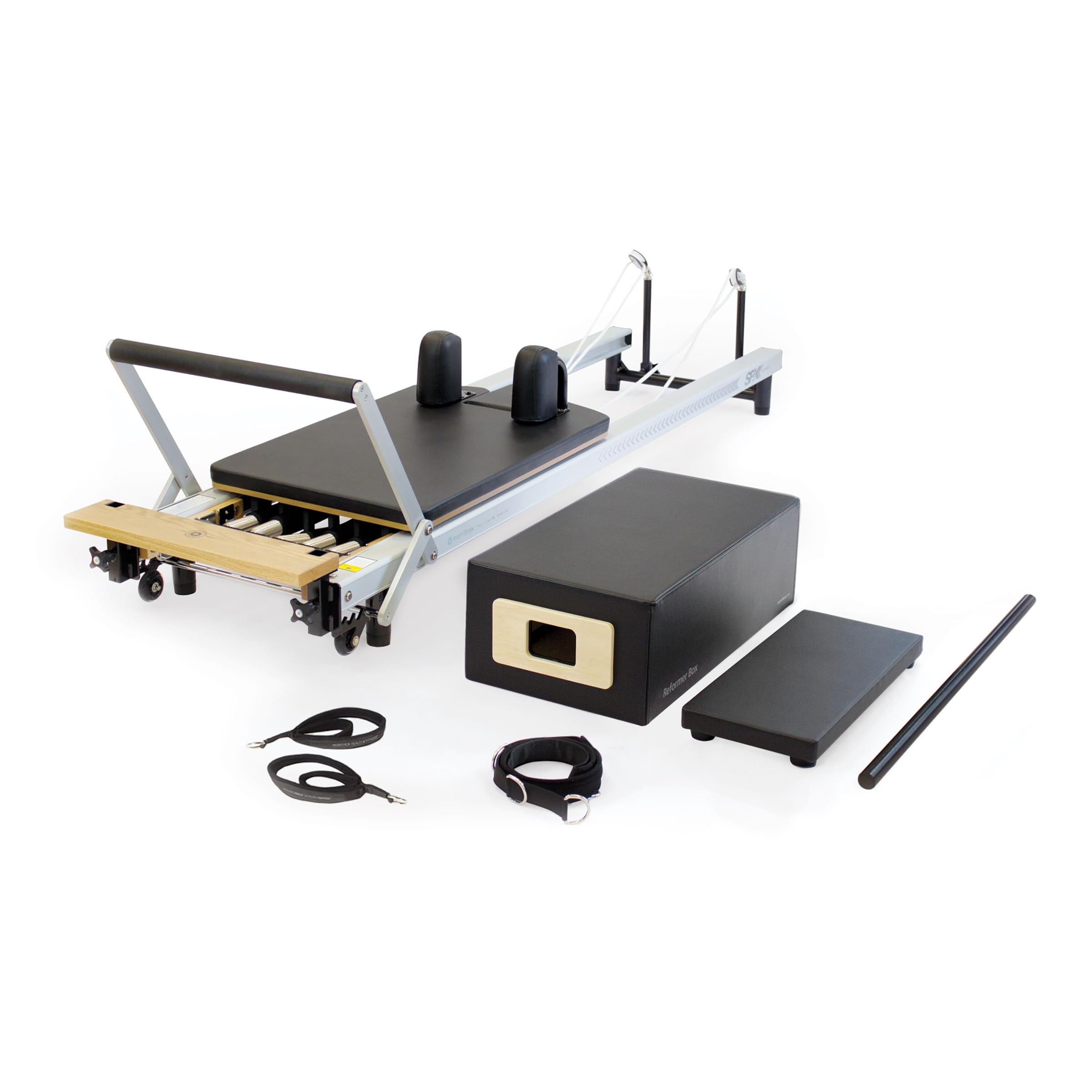
Merrithew's At Home SPX is the closest thing here to a studio-brand reformer you can buy for a home, with aluminum rails, a long 96.5-inch frame, and the same double-loop straps and spring package used in commercial settings. The 250-pound user capacity is low for the category, though, and it's the first thing we check before recommending it.

The carriage glides smoothly, the padding is comfortable, and the package includes a reformer box, platform extender, roll-up pole, and five springs. Assembly is straightforward, and the long rail gives tall users room to work. The aluminum rails are sturdy, but the machine is heavy and long enough that it wants a dedicated room rather than a corner that gets rearranged.

We recommend it narrowly for a smaller user with a dedicated room: the 250-pound capacity and premium tier put it out of reach for many households. What you're paying for is the studio feel, the long rail, and a carriage that feels familiar under the hands. If you need a reformer that adapts to a wide range of bodies and workouts, the wood machines here are the better fit.

Pros

  • Studio-brand aluminum rail and carriage
  • Long 96.5-inch frame
  • Five-spring resistance package
  • Box, platform extender, and pole included

Cons

  • Limited rope-length adjustment
Our verdict

The Merrithew is for the buyer who wants studio-brand DNA and a long aluminum rail, not maximum weight capacity or easy rope adjustment.

Check Latest Price
7

Under-Bed Storage

PAETA 86-Inch Reformer

84 /100
Peggy's Score Excellent

Key details

Resistance
Dual springs and cords
Item Weight
80 lb
Overall Length
86 inches
User Weight Limit
400 lb
Check Details on Amazon

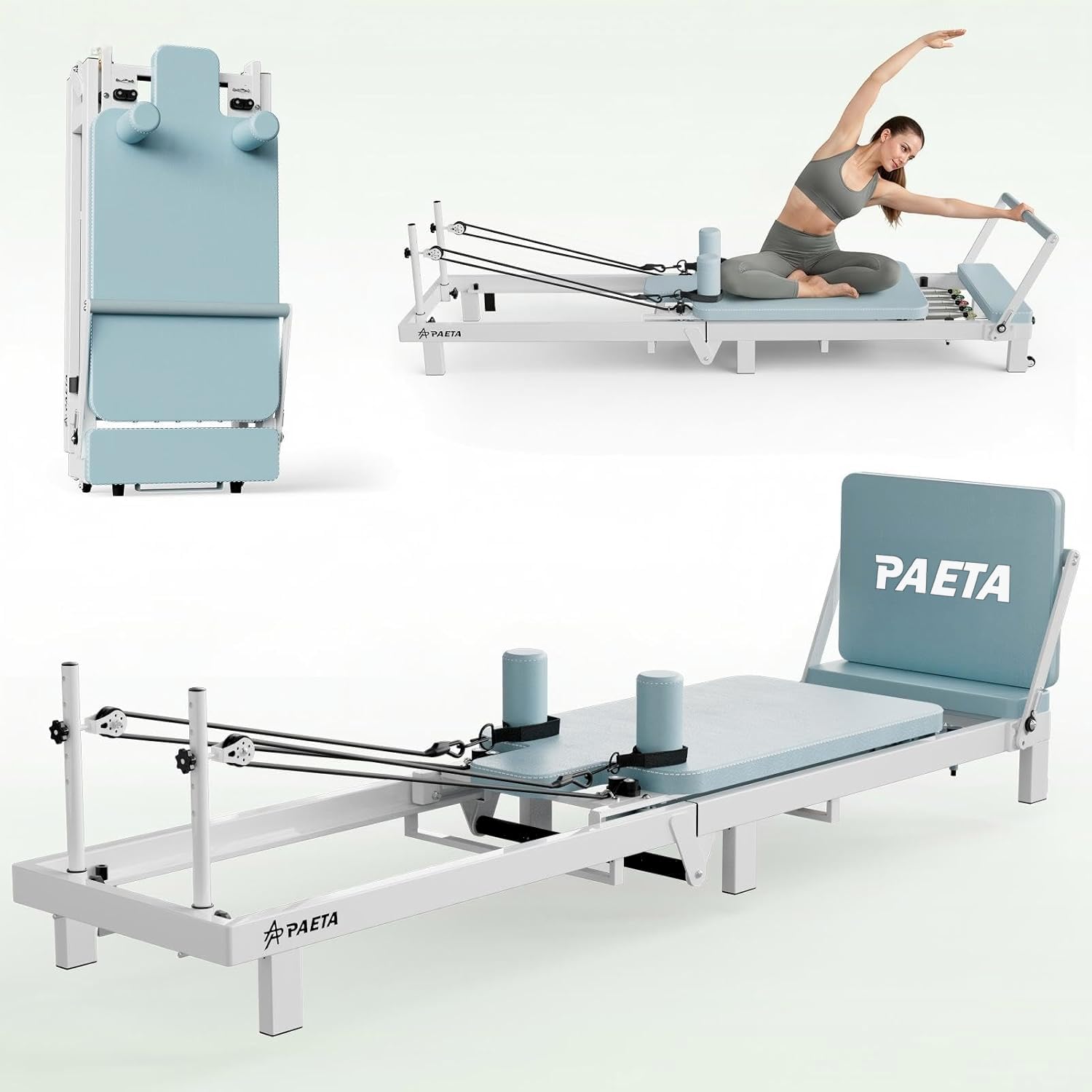
Under-bed storage is the appeal here: the 86-inch frame folds and, with enough clearance, can slide under a bed, which is more useful than a folded machine that still needs a closet. At 80 pounds, it's light enough for one person to move on a smooth floor, and the 400-pound user capacity keeps it in the same conversation as bigger home machines.

The dual resistance system is the other reason it stands out: springs and cords let you change the feel of an exercise, and the adjustable shoulder rests help different bodies settle in. The carriage glide is quiet, and the machine comes mostly pre-installed, so setup is short. We like that combination for an apartment or a room that has to do double duty.

Mobility is where it separates from the wood machines: at 80 pounds, it's a one-person move on a smooth floor, though carpet makes the wheels work harder. The folded package still needs a clear path under the bed or into a closet, so measure the height before you count on the slide.

We recommend it for a tight apartment or a home gym that has to be put away. It gives you a real sliding carriage, adjustable resistance, and a 400-pound frame without the furniture weight of the oak machines. The 80-pound frame is what makes the storage promise real: one person can move it, and that's the difference between a machine you use and one you avoid.

Pros

  • Folds and slides under a bed
  • Light 80-pound frame
  • Dual springs and cords
  • 400-pound user capacity

Cons

  • Fixed headrest limits some exercises
  • No foot strap included
Our verdict

The PAETA 86-inch is the folding reformer we suggest when storage is tight and you want a lighter machine that still takes 400 pounds.

Check Latest Price

How We Tested the Best Pilates Reformers

We started by researching the reformers sold by established Pilates brands and filtering the shortlist by frame materials, adjustment range, footprint, and price relative to what each machine included. From that pool we brought six reformers into real homes and a small studio space, then spent eight months using them the way people actually do: morning workouts before work, evening stretching sessions, and weekend sessions with friends of different heights and experience levels.

Assembly came first. We timed how long each took with one person, noted whether the instructions were clear and the hardware was labeled, and checked for wobble once everything was tightened. During workouts we paid attention to the carriage: whether it glided smoothly through footwork, whether it caught or shuddered at the turnarounds, and how much noise the springs and rails made during quiet morning sessions. We also tested the adjustments that determine fit—spring bar, footbar, headrest, and shoulder rests—with users from about 5 feet 2 inches to 6 feet 2 inches, watching whether each position felt secure and whether changes could be made mid-workout without wrestling the machine.

Sturdiness and mobility were judged in less glamorous ways: we pushed and pulled at the frame during side-lying work, watched for rocking during long spine stretches, and noted how much effort it took to lift one end and roll each reformer across a wood floor and around a tight corner. At the end of eight months we checked upholstery seams, spring tension, and every bolt for loosening, then compared what each machine delivered against its cost. The reformers that held up without constant fiddling—and that made the workout feel smoother rather than more complicated—earned their spots below.

How to Choose Pilates Reformers

Start With the Carriage, Not the Spring Count

The carriage is the part you touch every session, and a smooth glide with predictable resistance matters more than a long list of spring colors. A reformer with a sticky carriage feels worse than one with fewer springs that move cleanly. Look for adjustable spring or cord resistance, a foot bar that locks securely, and shoulder rests that move for different bodies. The PAETA PR07 uses a long carriage and springs to feel close to a studio machine, while the AeroPilates 701 trades some of that solidity for rebound work.

Match the Rail to Your Height and Weight

Reformer fit comes down to two measurements: the rail and the user limit. A 74- to 86-inch machine works for many homes, but taller users notice a short deck in exercises that stretch the body out. The 250-pound machines here suit smaller users, while the oak models at 400 and 500 pounds give more room and stability. Check the stated user weight, not the shipping weight, and try a similar machine before buying if you are near a height or weight boundary.

Decide Whether Folding Is Storage or a Routine

Folding is useful only if it matches your routine. A 143-pound wooden reformer can fold into a genuinely small footprint, but it still takes a deliberate lift, so daily folding gets old. A lighter 70- to 80-pound model is easier to move, though it may give up some stability. Measure the open length, the folded footprint, and the path between them. If the machine will live open, spend the stability budget on the frame; if it has to disappear, prioritise weight and folded size.

Count the Accessories You'll Actually Use

The box and jump board change the workout: the box opens up sitting and lying exercises, and the jump board adds rebound work. A foot strap is useful for footwork and standing work, but it's easy to overlook until you want it. Adjustable shoulder rests, a movable foot bar, and a headrest you can position matter more than a long list of extras. Buy the package with the accessories you'll use, not the one with the most pieces.

Plan for Noise, Assembly, and Upkeep

Reformers are mechanical, and springs or cords can develop squeaks after a few weeks. A quiet carriage is worth paying for, but it's also worth checking bolts and spring clips regularly. Assembly ranges from mostly pre-built to an hour with tools; heavy wood frames are easier to build in place. If you're not comfortable with basic maintenance, choose a simpler machine with accessible hardware and clear replacement parts.

Frequently Asked Questions

Final Verdict

We choose the PAETA PR07 for most homes because its 92-inch oak frame and 500-pound capacity give you studio-style room without the premium wood price. If storage is the deciding constraint, the LeisureKing folds into a genuinely small footprint and still feels like a studio machine; if the budget is tight, the Dpiolrcag is the sensible first reformer as long as its 250-pound limit fits your household.