Best Open-Ear Headphones for Running of 2026

Open-ear headphones exist for one reason: so you hear the car before it's beside you. The catch is that nothing seals your ear canal, which means bass has to fight for its life, sound leaks sideways, and a loose fit turns every stride into a rattle. What you're buying is a way to stay aware without holding the headphones in place while you run.

I've owned earbuds that needed re-seating every half mile, so I wanted to know whether clip-on, ear-hook, and bone conduction designs hold up to actual mileage. We ran in 12 pairs over six months — roads, treadmills, a few drizzly mornings — and kept track of fit, battery life, connectivity, and how the controls handled sweat.

Here's what first-time buyers don't expect: playtime is measured at a moderate volume, so a pair advertising 12 hours may give you seven at a level you can hear over traffic. And if the buttons don't work with wet fingers at mile four, the headphones end up in a drawer. The picks ahead are the ones that survived.

1

Best Overall

SHOKZ OpenRun

91 /100
Peggy's Score Outstanding

Key details

Weight
0.92 oz
Playtime
8 hours
Bluetooth
5.1
Water Resistance
IP67
Check Details on Amazon

The IP67 rating and wraparound titanium frame are why the SHOKZ OpenRun earns our top spot. At 26 grams, it sits outside the ear canal, so you get road noise and conversation without a band pressing on your skull. The frame hugs rather than clamps, and the physical buttons are easy to find when your hands are cold or wet. We prefer this shape to a clip-on for long, sweaty runs because there is less to adjust mid-stride.

Eight hours of playback is enough for most marathon training blocks, and the 10-minute quick charge adds up to 1.5 hours when you forget to plug in. Sound is clear and voices carry well; bass is modest, which is the open-ear trade-off rather than a defect. In wind, the open design lets traffic through, but it also means you need to keep volume sensible.

The OpenRun is not the bassiest or most feature-packed pair here. What it has is a simple build and a fit that disappears once you start moving. We kept reaching for it because it asks nothing of you: no case to open, no ear tips to seat, no app to configure. That simplicity is the recommendation.

Pros

  • IP67 sweat and rain protection
  • Secure wraparound fit at 26 g
  • Open-ear awareness for road running
  • Physical buttons and quick charge

Cons

  • Durability can suffer with heavy use
  • Older Bluetooth 5.1
Our verdict

The SHOKZ OpenRun is our default running pair: secure, IP67-rated, and open enough to hear traffic.

Check Latest Price
2

Best Premium Sound

SHOKZ OpenRun Pro 2

88 /100
Peggy's Score Excellent

Key details

Audio
Dual bone and air drivers
Weight
1.07 oz
Playtime
12 hours
Water Resistance
IP55
Check Details on Amazon

Twelve hours of playback and a dual-driver setup are the headline changes in the OpenRun Pro 2. A bone-conduction driver handles voices and higher frequencies, while an air-conduction driver adds bass. The unibody frame uses a nickel-titanium memory wire, and the whole thing weighs 30.3 grams.

We like the extra low end on tempo workouts: music has more drive without sealing off the street. The Shokz app adds EQ modes, and the dual wind-resistant mics are a real plus for calls. IP55 covers sweat and rain, though it is not the IP67 of the cheaper OpenRun, so heavy downpours and rinsing are where the cheaper model has the edge.

The Pro 2 is the more enjoyable listen and the better pick for long efforts. If your runs are short and sweaty, the standard OpenRun is the more sensible spend. If you want a richer soundtrack for marathon training and do not mind a little more care around water, this is the upgrade.

Pros

  • 12 hours of playback
  • Dual drivers add bass
  • App EQ and clear calls
  • Secure 30.3 g frame

Cons

  • Durability can suffer with heavy use
  • Premium price
Our verdict

For runners who want more bass and 12 hours between charges, we choose the OpenRun Pro 2 as the step up.

Check Latest Price
3

Best Clip-On Fit

Soundcore C50i

85 /100
Peggy's Score Excellent

Key details

Driver
12 mm dynamic
Playtime
7 hours per charge; 28 with case
Bluetooth
6.0
Water Resistance
IP55
Check Details on Amazon

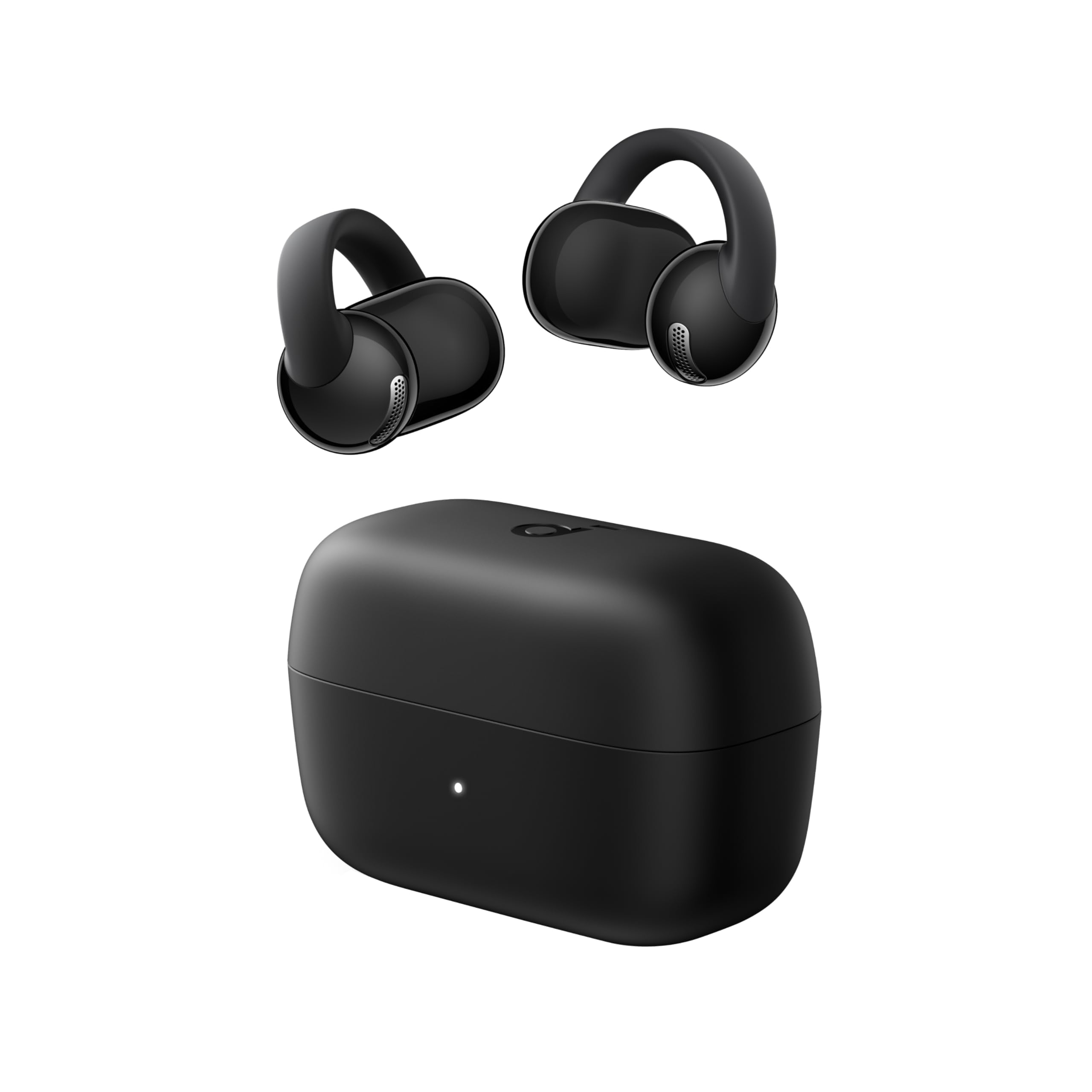
The clip-on design is the whole argument for the C50i. Instead of a band across the back of your head, a memory-titanium FlexiClip hooks over each ear and leaves the canal open. We like that for glasses wearers and for anyone who has had a headband bounce on a downhill. The fit is adjustable enough that it feels planted without clamping.

Seven hours per charge and 28 hours with the case are enough for a week of short runs, though the case is the kind you have to remember. The 12mm drivers deliver more bass than the bone-conduction picks here, and the IP55 rating handles sweat and rain. We also appreciate the physical buttons, which are easier to use with sweaty fingers than touch panels.

The C50i is not the cheapest clip-on here, but it is the one we trust most for hard efforts: the fit is more secure and the sound has more body. If you mainly want a backup pair for errands and easy runs, the TOZO costs less and lasts longer between case charges.

Pros

  • Secure clip-on fit
  • 12 mm drivers with real bass
  • IP55 sweat and rain protection
  • Physical buttons

Cons

  • Battery life can fall short
  • Occasional Bluetooth dropouts
Our verdict

A secure clip-on without a band is what the C50i delivers, and it earns our pick for glasses wearers.

Check Latest Price
4

Best Budget Earhooks

Soundcore V20i

89 /100
Peggy's Score Excellent

Key details

Driver
16 mm dynamic
Playtime
8 hours per charge; 36 with case
Hook Adjustment
Four positions
Water Resistance
IP55
Check Details on Amazon

At the budget end, the V20i is the pair we hand to friends who are not ready to spend SHOKZ money. Four adjustable positions let the hook rotate around the ear, which is a small thing that makes a big difference if your ears are between sizes. The 16mm drivers give it more low end than the price suggests, and the open design still lets traffic through.

The 36-hour case is the practical win: you can leave the charger at home for a week of short runs. We also appreciate the IP55 rating for sweat and light rain, and Bluetooth 5.4 has been stable in our use. The touch controls take a few runs to learn, but they are responsive once you do.

The V20i is not the most refined pair here, but it covers the basics better than most: secure enough for steady miles, loud enough for the bike path, and comfortable enough to forget. It is the pair we recommend when the budget is tight but the runs are real.

Pros

  • Four-position adjustable hooks
  • 36 hours with charging case
  • 16 mm drivers with strong bass
  • IP55 sweat and rain protection

Cons

  • Reliability can fall short after a few months
  • Connection can drop
Our verdict

Budget-minded new runners should start with the V20i; we like its adjustable hooks, clear sound, and long case life.

Check Latest Price
5

Best Lightweight Bone Conduction

PSIER X12

82 /100
Peggy's Score Excellent

Key details

Weight
0.81 oz
Playtime
10 hours
Bluetooth
6.0
Water Resistance
IPX5
Check Details on Amazon

At 23 grams, the PSIER X12 is the lightest bone-conduction pair in our set, and that is the number that matters when you are wearing it for an hour. The memory-titanium frame wraps around the back of the head and the transducers sit on the cheekbones, leaving your ears completely open. We found it easy to forget about on easy runs, which is exactly what you want from a training partner.

Sound is clear and voices carry well, with the open, airy character bone conduction is known for. Ten hours of playback at 50% volume covers a week of short runs, and Bluetooth 6.0 is the newest version in this set. The IPX5 rating handles sweat and light rain, not a downpour.

The X12 is not the most polished pair here; the controls are simple buttons and the finish is plain. But if you want bone conduction for tempo runs and do not need the SHOKZ badge, it is the value pick we keep coming back to.

Pros

  • 23 g feather-light build
  • 10 hours of playback
  • IPX5 sweat and rain resistance
  • Bluetooth 6.0

Cons

  • No carrying case included
  • Bone-conduction bass is modest
Our verdict

Feather-light bone conduction without a premium price is the PSIER X12's appeal, and we think it delivers.

Check Latest Price
6

Best Budget Battery

TOZO OpenEarRing

88 /100
Peggy's Score Excellent

Key details

Driver
10 mm dynamic
Playtime
10 hours per charge; 40 total
Bluetooth
5.4
Water Resistance
Water resistant
Check Details on Amazon

The 40-hour charging case is the headline, but the reason the OpenEarRing works for running is the clip-on shape. It hangs over the ear instead of plugging the canal, so you keep traffic and conversation while the 10mm drivers push more volume than you expect at this price. We like the digital display on the case, which takes the guesswork out of whether it is charged.

Sound is the strongest part of the package: voices are clear, bass has some punch, and the app's EQ modes let you tame the treble if it feels sharp. Ten hours on a single charge is enough for a long run or a week of commutes, and the case extends that to 40. The water resistance is modest, so sweat is fine but a rainy run is not its best setting.

The clip-on fit is the trade-off. It stays put for many runners, but it depends on ear shape, and the earbuds can feel loose if you have smaller ears. For the money, though, it is hard to beat among the budget picks as a second pair or a first pair for easy miles.

Pros

  • 40 hours total with case
  • 10 hours on a single charge
  • Loud sound and app EQ
  • Digital charge display

Cons

  • Durability can suffer over months
  • Case is large for a pocket
Our verdict

The TOZO OpenEarRing is the budget battery champ here, with loud clip-on sound and a 40-hour case we appreciate.

Check Latest Price
7

Rainy Backup

TRAUSI T6

87 /100
Peggy's Score Excellent

Key details

Fit
Ear hook
Playtime
80 hours with case
Bluetooth
5.4
Water Resistance
IPX7
Check Details on Amazon

The IPX7 rating and 80 hours of total playtime are the two reasons the TRAUSI T6 stands out at the bottom of the price range. The hook sits outside the ear, so you get the same open-ear awareness as the more expensive pairs, and the charging case can go a long time between wall outlets. For a rainy commute or a gym bag backup, that combination is genuinely useful.

We like the T6 most as a second pair. It is light enough to forget on a run, and the touch controls are simple once you learn them. Sound is clear for podcasts and pop, and the IPX7 rating means sweat and rain are not a concern.

The T6 is not the most polished option here, but it is one of the easiest to recommend as a second pair. Keep it in a bag for rainy days and travel, and it will earn its keep.

Pros

  • IPX7 water resistance
  • 80 hours with charging case
  • Open-ear awareness

Cons

  • 90-day warranty is short
Our verdict

TRAUSI's T6 is the pair we keep as a rainy-day backup: IPX7, 80 hours of case power, and very little money.

Check Latest Price
8

Wet Weather

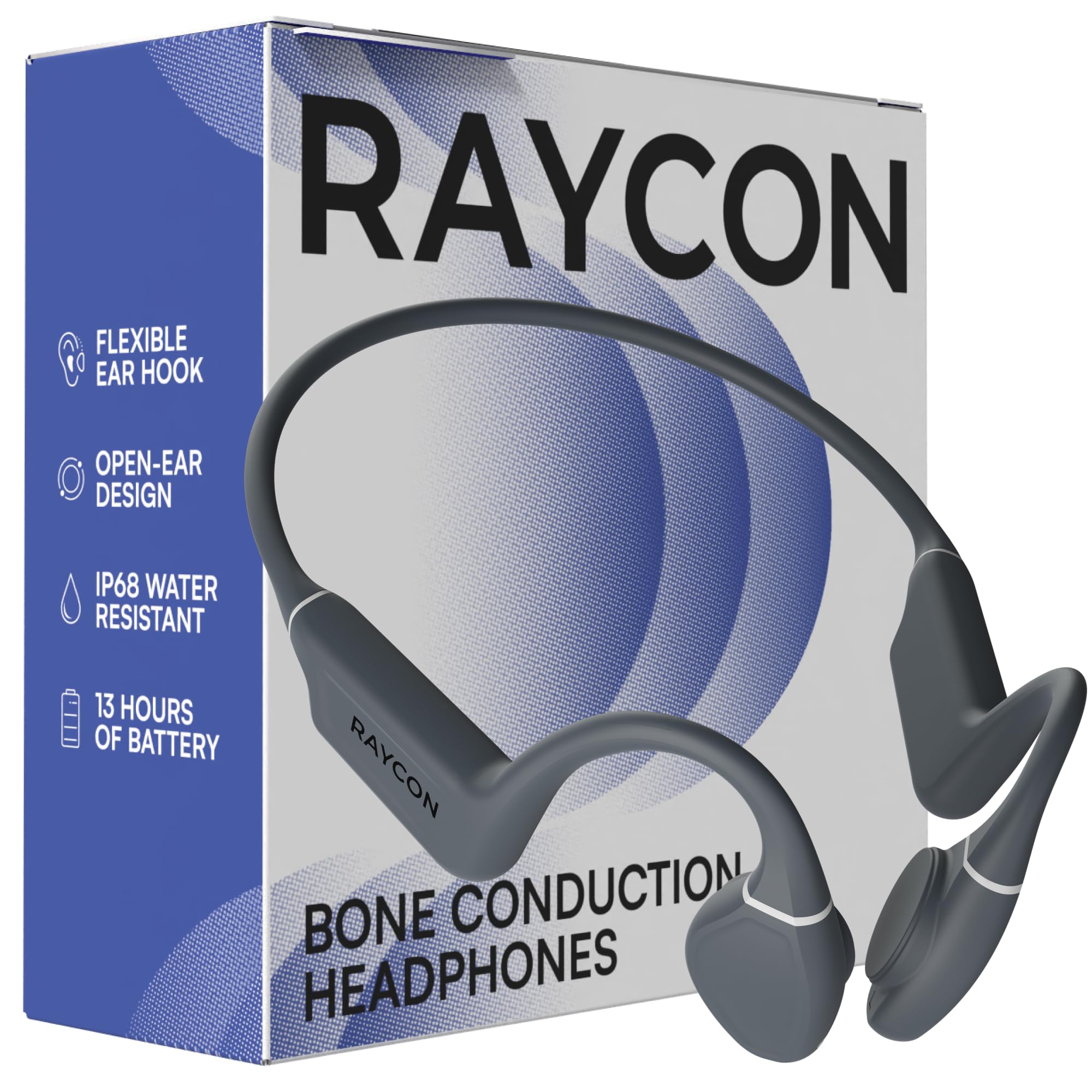
Raycon Bone Conduction

81 /100
Peggy's Score Excellent

Key details

Fit
Adjustable ear buds
Audio
Bone conduction
Charging
Magnetic cable
Water Resistance
IP68
Check Details on Amazon

IP68 is the reason to look at Raycon's bone-conduction pair. That rating is the highest here and gives you more confidence in steady rain, sweat, and the occasional rinse. The ear buds also slide closer to or farther from your cheekbones, so you can trade volume for awareness without changing the headband. We appreciate that kind of control on busy streets.

The sound is balanced rather than bass-heavy, and the open design keeps traffic audible. The adjustable arms are the useful part: slide them forward for more volume on a climb, back for more awareness in traffic. Calls are clear enough for quick check-ins.

What holds the Raycon back is fit. The frame does not adjust in size, and it can sit loose on smaller heads or feel bulky over the ears. If it fits, IP68 is a genuine advantage. If you have had trouble with one-size headbands, try to test the fit before committing.

Pros

  • IP68 weather protection
  • Adjustable bone-conduction earbuds
  • Balanced sound and awareness

Cons

  • Battery life can fall short
  • Magnetic charger can detach easily
Our verdict

Raycon's IP68 bone-conduction pair is the one we trust for wet weather, with adjustable earbuds that trade volume for awareness.

Check Latest Price
9

Glasses Wearers

DECHOYECHO O2

92 /100
Peggy's Score Outstanding

Key details

Driver
15 mm dynamic
Weight
0.93 oz
Playtime
12 hours
Bluetooth
5.3
Check Details on Amazon

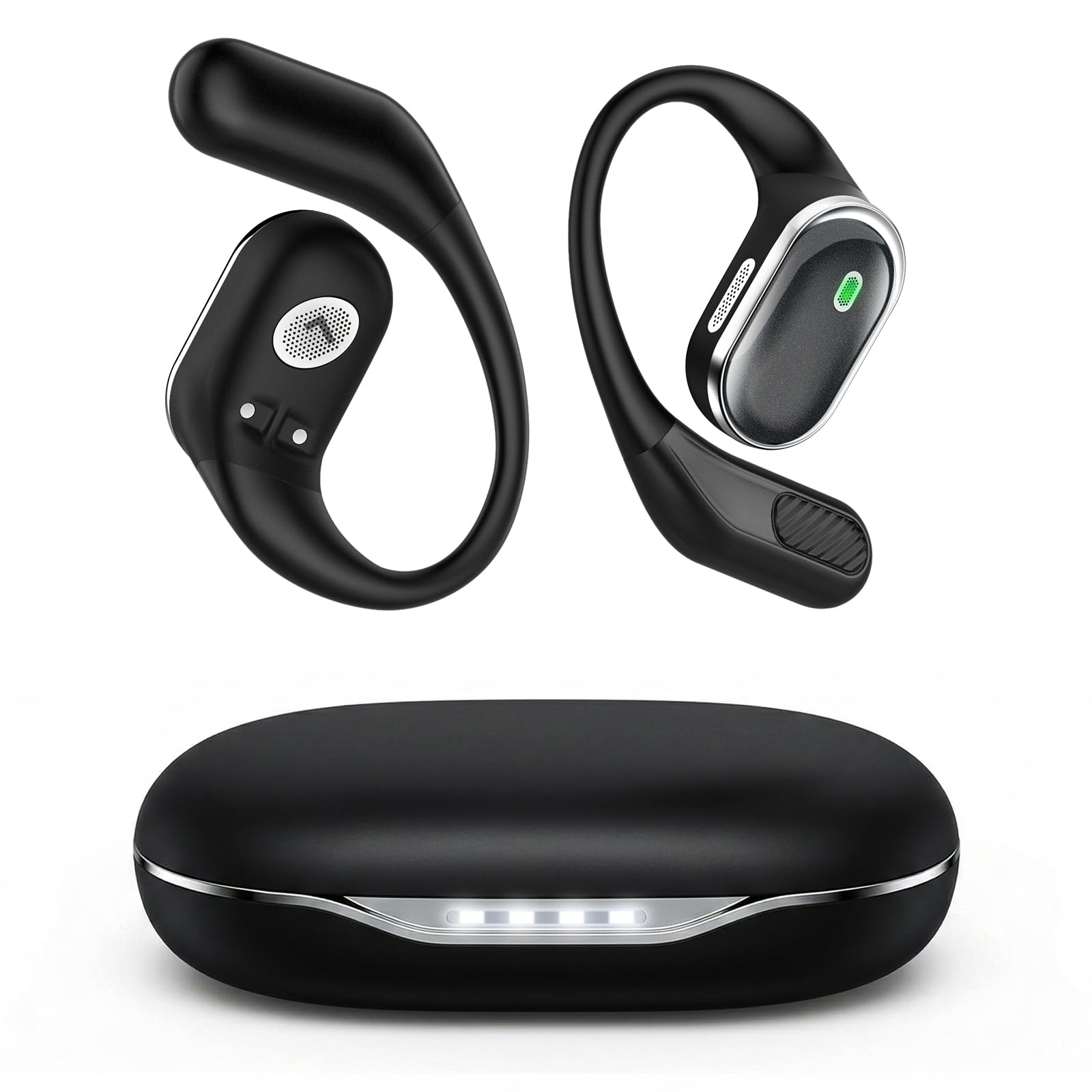
The glasses-friendly hook is the detail that makes the DECHOYECHO O2 worth a look. The 26.4-gram frame sits outside the ear canal and is shaped to leave room for temple arms, which is useful if your glasses have thicker frames. We like that it uses a flexible titanium frame rather than a rigid band, so it tucks into a bag without much fuss.

Twelve hours of playtime is excellent at this price, and the 15mm drivers give it a fuller sound than the tiny open-ear buds we usually see at the bottom of the market. Bluetooth 5.3 supports dual-device pairing, and the controls are physical buttons. The sweat-resistant finish is fine for runs, but this is not a pair to rinse under a tap.

The O2 is a small-brand pair, and that shows in the finish and the controls. For glasses wearers who want a light, cheap open-ear pair, though, it is a sensible place to start.

Pros

  • Glasses-friendly hook design
  • 12 hours of playtime
  • 15 mm dynamic drivers
  • Bluetooth 5.3 dual-device pairing

Cons

  • No charging case included
  • 1-year warranty
Our verdict

Glasses wearers on a tight budget should look at the DECHOYECHO O2; we like its light, open fit over the ear.

Check Latest Price

How We Tested Open-Ear Headphones for Running

We split the category into its three designs — bone conduction, clip-on, and ear-hook — then read spec sheets and owner reviews for battery claims, water ratings, Bluetooth version, and weight. A 40-hour claim with no stated test volume got flagged; a listing with no sweat-resistance rating at all got dropped.

Over six months we ran in 12 pairs. Every set came on at least five weekday road runs in traffic, two treadmill interval sessions, and one longer weekend effort; a few went out in drizzle and one came along on a muddy trail hike. Between runs they lived loose in a gym bag, which is where most of these get wrecked anyway.

Fit was judged by head turns, sunglasses, hats, and whether anything needed re-seating at mile three. For sound, we listened to podcasts on a busy road and asked whether dialogue survived wind and passing cars. We ran batteries from full to dead at a volume loud enough to hear over traffic, then timed a recharge. Connectivity got tested by leaving a phone on a park bench and walking away, and by pairing to a laptop and a phone at once to watch it switch. We made calls from a windy corner to judge the mic, then checked charging contacts for salt crust after each sweaty run. Value came last: we asked whether each pair earned its spot against the cheapest and priciest in its design group.

How to Choose Open-Ear Headphones for Running

Pick the Shape That Fits Your Head and Glasses

Open-ear running headphones come in three main shapes: a bone-conduction band, an earhook, and a clip-on. A band like the SHOKZ OpenRun wraps around the back of the head and needs almost no adjustment, which makes it the most set-and-forget option. Earhooks such as the Soundcore V20i rotate to find a spot around the ear, and clip-ons like the C50i leave the back of your head clear, which is a real advantage with glasses or a cap.

The trap is assuming a one-size band will fit every head. Smaller heads often need a mini size, and glasses can interfere with any hook that sits behind the ear. Choose the shape you can adjust, then check the return policy before a long training block.

Treat Water Ratings as a Running Requirement

Sweat is the baseline, but rain and rinseability are where ratings separate. IPX5 handles sweat and light rain; IP67 and IP68 add dust protection and survive more water pressure, which is why the OpenRun and Raycon are the better picks for wet weather. An open-ear pair is not a swim headphone unless the maker explicitly says so.

If you sweat heavily or run in downpours, prioritize IP67 or IP68 and dry the charging contacts after every run. If you mostly run in dry conditions, IPX5 is enough, and it usually brings a lower price.

Compare Single-Charge and Case Battery

Battery specs come in two numbers, and they are not interchangeable. The single-charge figure, from seven to twelve hours here, is what matters for a long run; the case total, from 28 to 80 hours, is what matters for how often you hunt for a cable. A pair with eight hours and no case can be more convenient than a pair with 80 total hours and a case you have to remember.

For daily runs under an hour, seven to eight hours is plenty. For marathon training or all-day wear, look at ten to twelve hours. Quick charge is worth checking too: SHOKZ adds 1.5 hours from a 10-minute charge on the OpenRun, which is the feature that saves you when you forget to plug in.

Know What Open-Ear Sound Can and Cannot Do

Open-ear headphones are not noise-cancelling, and that is the point. Bone-conduction models like the SHOKZ OpenRun and PSIER X12 send sound through the cheekbones, while air-conduction models like the Soundcore C50i and V20i fire toward the ear from outside the canal. Bone conduction tends to favor voices and awareness; air conduction can deliver more bass.

Wind is the real enemy. A pair that sounds full indoors can thin out on a breezy road, so keep volume low enough to hear traffic and use the EQ app if the brand offers one. Do not buy an open-ear pair for a noisy gym or a flight; the design lets everything in.

Check Durability and Warranty Before You Commit

Running headphones live in sweat, sun, and the bottom of a bag, so the small parts matter. Look for physical buttons you can use with wet hands, a charging connection that is easy to dry, and a warranty that covers more than the first season. SHOKZ offers two years on the OpenRun and OpenRun Pro 2, Soundcore offers 18 months on the C50i and V20i, and the TRAUSI T6 is covered for 90 days.

No pair here is indestructible. Wipe sweat off after every run, let the contacts air-dry before charging, and avoid stuffing a wet pair into a closed case. Those habits do more for longevity than any single rating.

Frequently Asked Questions

Final Verdict

Start with the SHOKZ OpenRun. It is the most complete running package in this set: secure without constant adjustment, IP67-rated for sweat and rain, and open enough to hear traffic. Eight hours is enough for everyday training, and the physical controls work with wet hands.
If you hate a band, the Soundcore C50i is the clip-on we recommend for a secure fit. If you want more bass and twelve hours, the SHOKZ OpenRun Pro 2 is the upgrade, provided IP55 suits your weather.