Best Long Yoga Mats for Tall People of 2026

The first time I did downward dog on a standard mat, my hands landed on the studio floor and my heels hung off the back edge. For anyone past about 5-foot-10, the usual 68-inch mat turns every flow into a negotiation with the edges. A long mat fixes that: 80-plus inches keeps palms and toes on the cushion through the whole sequence, which changes how stable a lunge or a wide-legged forward fold feels, and puts more cushioning under knees and wrists, at the cost of a bulkier roll to carry.

We've spent six months with 12 long mats, from big brands to small studio labels, and the differences came down to things you only notice after a few dozen classes: whether the extra length stays put, how fast the rubber smell fades, and whether the grip holds once your hands get sweaty. The picks below cover thick, cushioned mats for sensitive knees and thin, light ones for people who haul theirs to class.

1

Best Overall

Body By Yoga Cork Mat

89 /100
Peggy's Score Excellent

Key details

Weight
9.9 lb
Material
Cork over natural rubber
Dimensions
80"L x 26"W x 0.25"Th
Check Details on Amazon

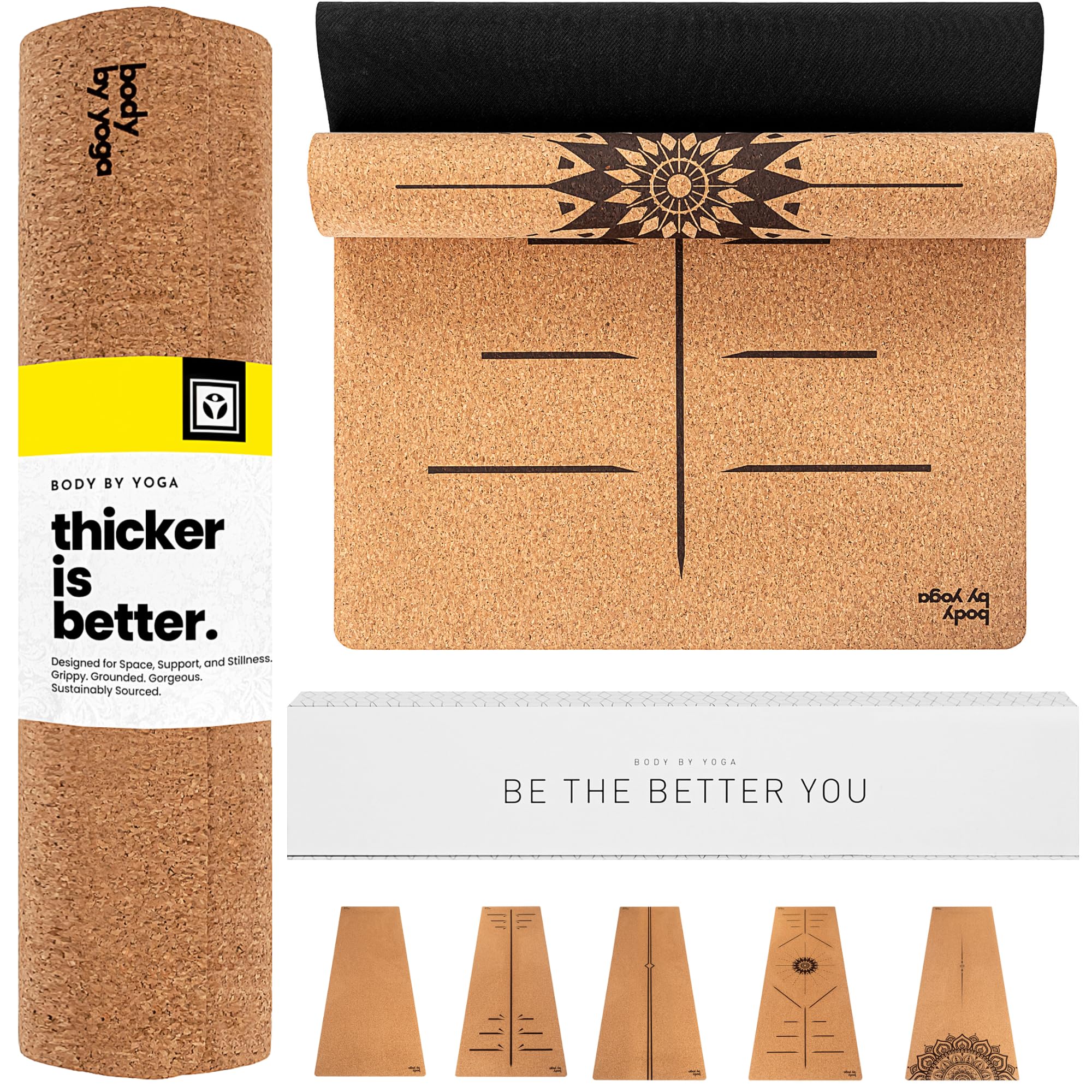
Unroll this one and the first thing that registers is how much mat there is: 80 inches long and 26 inches wide, with a surface that feels like fine sandpaper rather than foam. Lie down with your arms overhead and nothing hangs off the end, no cold floor at your fingertips and no heels sliding onto the boards. For a tall body, that is the entire pitch.

The surface is what separates it from everything else here. Cork gets tackier as your hands dampen, so grip improves through a sweaty session instead of fading, which is the opposite of how the TPE and PVC mats in this guide behave. Underneath, the natural rubber is dense rather than spongy: 6mm takes the sting out of knees and sit bones without letting you sink, so standing poses still feel like standing on a floor.

That pairing is why it earns the top spot. Plenty of mats here are long enough; this is the one that stays put when your hands are wet and your feet are planted, and it manages that without the squish that makes thick foam hard to balance on. Cork is also the easiest surface here to live with, because a damp cloth is the whole cleaning routine.

The compromise is width. At 26 inches it is narrower than the 32- and 36-inch mats in this guide, and a very wide stance will find the edges; if a wide-legged fold is central to your practice, the CAMBIVO's 32 inches is the better shape. For most tall practitioners 26 inches is plenty of room, and the narrower cut keeps the mat from feeling like a rug you have to move furniture to unroll.

Pros

  • 80 inches of length for tall frames
  • Cork grip improves as hands sweat
  • Dense 6mm cushions without sinking
  • Wipes clean with water alone

Cons

  • 9.9 pounds, so it stays home
Our verdict

We recommend this one for tall yogis who want length, grip, and cushioning in a single mat: 80 inches of cork that gets tackier as your hands sweat.

Check Latest Price
2

Best for Maximum Length

CAMBIVO Extra Long Wide Yoga Mat

90 /100
Peggy's Score Outstanding

Key details

Extras
Carrying strap
Weight
2.76 lb
Material
Thermoplastic elastomers
Dimensions
84"L x 32"W x 0.24"Th
Check Details on Amazon

Room is the entire pitch here: 84 inches long and 32 wide is the most floor space of any mat-shaped mat in this guide. If you have spent years watching your heels land on the floor mid-pose, that extra foot over a standard mat is the whole argument, and the width means a wide-legged stance does not put a foot over the edge.

At 1.25 kg it is also the one we carry. Rolled up it goes under an arm, and the TPE surface, denser and less clingy than cork, suits stretching, Pilates, and bodyweight work more than a sweaty flow. Six millimeters is the same depth as the cork mat, but the feel is firmer and more foam-like under a bare foot.

On fit, 84 inches leaves room at both ends of a body well past six and a half feet, and the strap in the box keeps it rolled tight in a closet. It is the long mat here that is genuinely easy to live with: light enough to take to a class, long enough that you stop thinking about where the mat ends.

Pros

  • 84 by 32 inches, the most room here
  • Light enough to carry to a studio
  • 6mm support without thick-foam wobble

Cons

  • Goes slick once hands and feet sweat
  • Scuffs where hands and feet pivot
Our verdict

The longest, widest mat here at a midrange price: 84 by 32 inches of light TPE that fits very tall bodies, best for stretching and floor work rather than hot classes.

Check Latest Price
3

Best Budget

KEEP Extra Wide Yoga Mat

90 /100
Peggy's Score Outstanding

Key details

Extras
Adjustable strap
Weight
2.8 lb
Material
Thermoplastic elastomers
Dimensions
72"L x 32"W x 0.28"Th
Check Details on Amazon

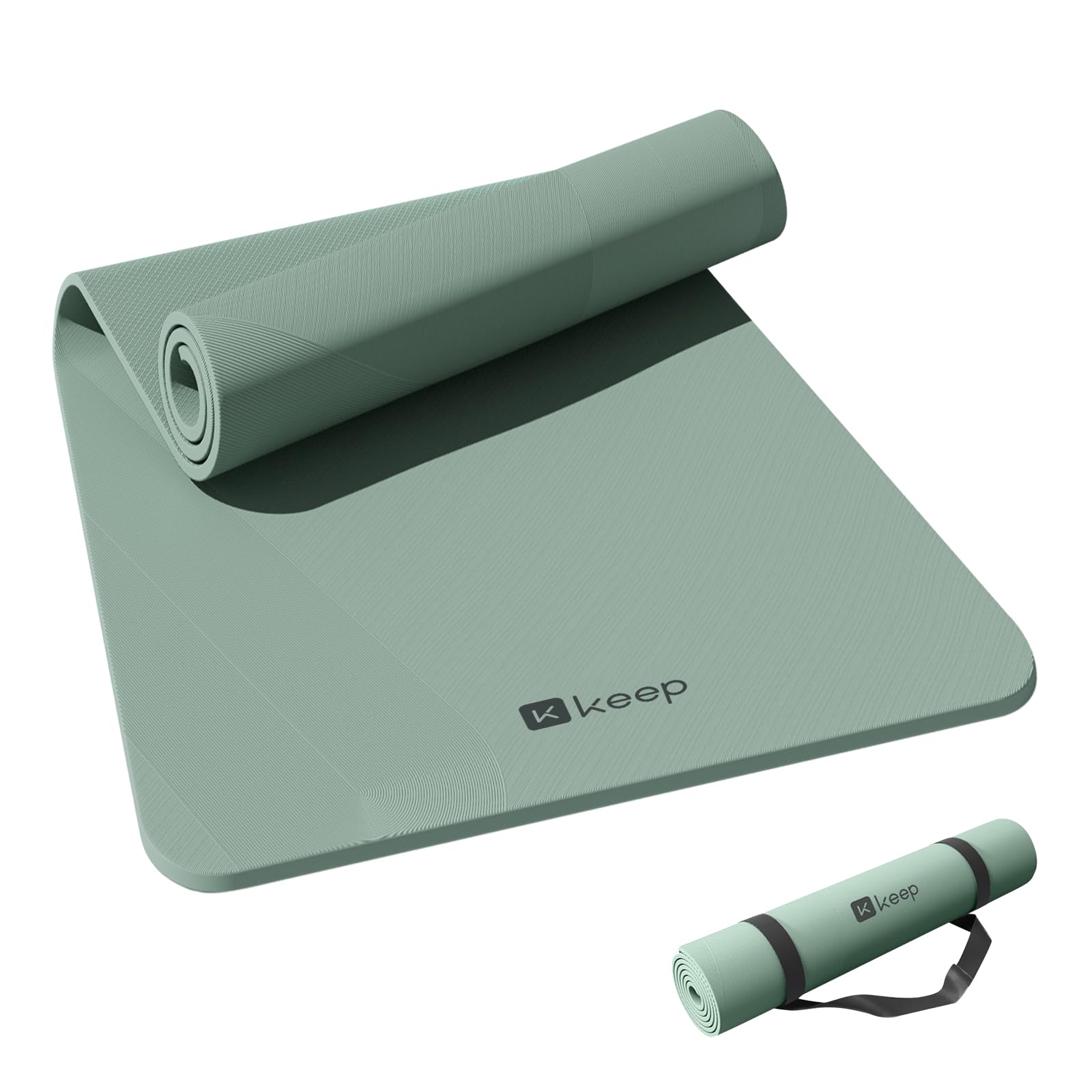
The least expensive mat in this guide is also one of the widest, which is not a combination we expected. Thirty-two inches across, 7mm of TPE, an adjustable strap in the box, and 2.8 pounds rolled up: the specifications read like a mat that costs considerably more, and that is before you notice how well the surface holds on a wood floor.

Where it lands for a tall buyer is the 72 inches. That is the entry ticket for this search rather than the ideal, so past about six feet your fingertips will find the floor in an overhead stretch, and a 6'4" frame should be looking at the 80- and 84-inch mats above. For a tall teenager who is still growing, or a six-footer who wants width more than length, it is the sensible first mat.

What makes it the value pick is that nothing important was cut to reach the price. The strap adjusts to the roll, the texture is grippy rather than sticky, and the 7mm surface has enough give that a knee does not find the floor. It also rolls small enough to live in a gym locker, which is more than the thick mats here can claim.

Pros

  • 32-inch width at the lowest price here
  • 2.8 pounds with an included strap
  • 7mm cushions knees without wobbling

Cons

  • Surface scratches and dents easily
Our verdict

The value pick: a 32-inch-wide, 7mm mat for a tall teenager or a six-footer who wants room to move without paying much for it.

Check Latest Price
4

Best for Sore Joints

Karma Fitness Large Workout Mat

92 /100
Peggy's Score Outstanding

Key details

Extras
Carry bag and strap
Weight
3.97 lb
Material
Thermoplastic elastomers
Dimensions
72"L x 32"W x 0.39"Th
Check Details on Amazon

Knees are usually what send people looking for a thicker mat, and 10mm is where this one starts: two and a half times the foam on a standard 4mm mat, which turns kneeling poses, wrist-heavy work, and long seated stretches into something you are not thinking about.

What we did not expect is how little it squishes. The dual-layer TPE has a dense bottom that keeps standing poses steady while the top gives under a knee, so you can hold a lunge without your ankle rolling, which is more than we can say for the other thick mats here. At 1.8 kg with a bag and strap included, it is also the lightest way to get this much cushioning.

Thirty-two inches of width puts it alongside the KEEP and Hatha mats for room, and the diamond texture grips on both faces, so it holds on tile and on a wood floor without a rug underneath. The whole thing rolls into its own bag without a fight, which is how a 10mm mat ends up going to class instead of living in a closet.

Pros

  • 10mm cushions knees and wrists
  • Dense base keeps standing poses steady
  • 1.8 kg with a bag and strap included

Cons

  • 72-inch length leaves very tall bodies short
Our verdict

Our pick for tall bodies with sore knees: 10mm of dense TPE that cushions without turning standing poses to jelly, in a mat light enough to carry.

Check Latest Price
5

Best for Small Spaces

Feetlu Original Foldable Yoga Mat

91 /100
Peggy's Score Outstanding

Key details

Weight
2 lb
Storage
Folds flat, no strap needed
Material
Polyolefin elastomer (POE)
Dimensions
72"L x 24"W x 0.25"Th
Check Details on Amazon

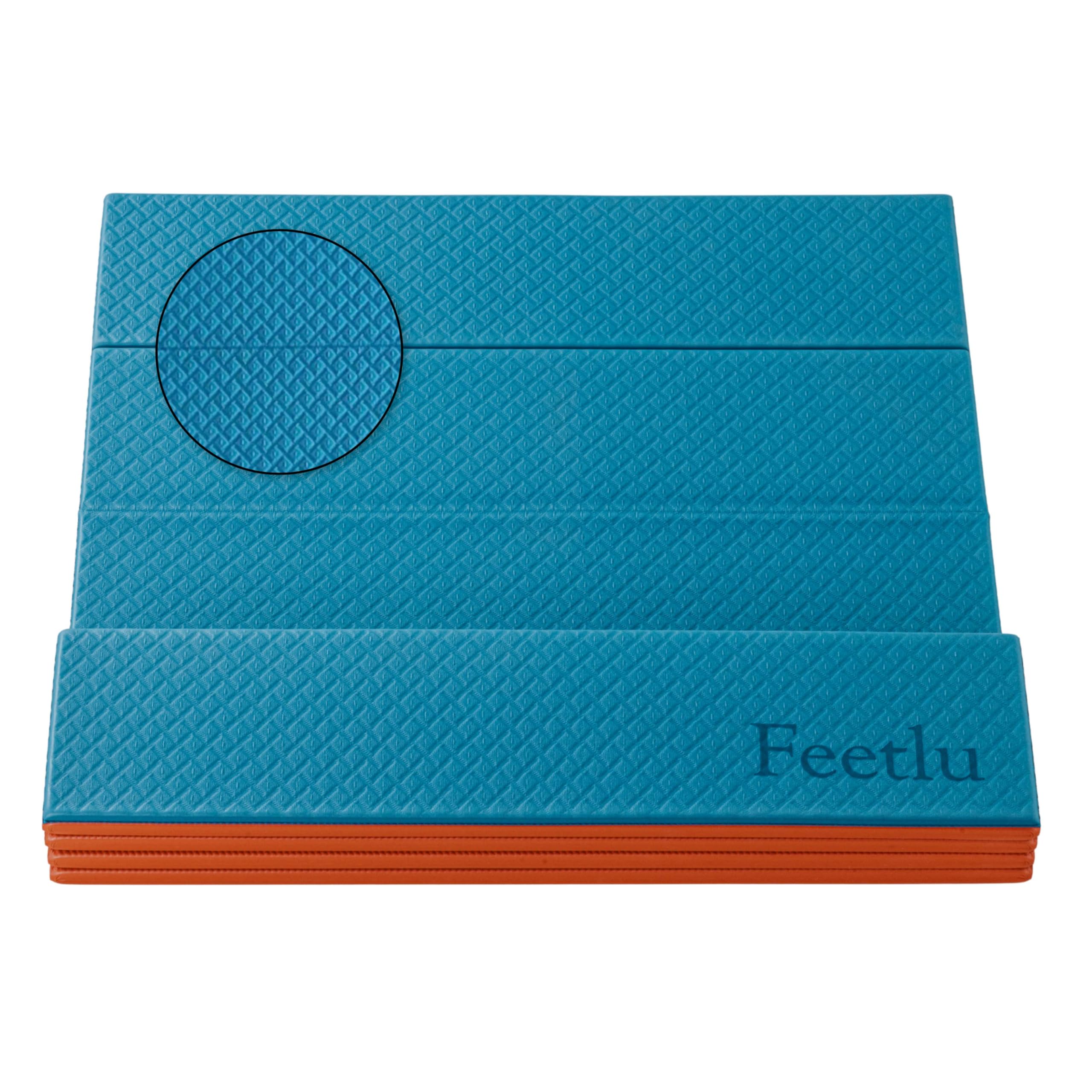
This is the mat we keep folded in a closet, and that is the point of it: accordion folds turn a 6mm mat into a stack you can stand on a shelf, with no strap to lose and nothing leaning against the wall. In an apartment where the living room floor is also the practice floor, that is the difference between a mat you use and one that stays rolled in the corner.

Two pounds of POE foam, with a double-textured surface that holds on hardwood. The grip is the pleasant surprise, because foldable mats often skate, and it avoids the tacky, slightly sticky hand-feel that some TPE mats develop. It also opens flat enough to use straight out of the stack.

The 72-by-24-inch footprint is the limit. It is the narrowest mat here, so a tall, broad body will find the edges in a wide stance, and this is a second mat, a travel mat, or the one you keep by a desk for stretching, not the mat a tall body builds a daily practice on. As a mat that disappears when you are finished, though, nothing else here comes close.

Pros

  • Folds into a shelf-ready stack
  • 2 pounds with nothing extra to buy
  • Grips hardwood without skating

Cons

  • Creases can lift and stop lying flat
Our verdict

The mat to buy when storage is the real problem: it folds into a shelf-ready stack, grips a hardwood floor, and weighs 2 pounds.

Check Latest Price
6

Wide Stances

Gogokiwi Extra Wide Yoga Mat

90 /100
Peggy's Score Outstanding

Key details

Extras
Alignment marks
Weight
5 lb
Material
RecFoam
Dimensions
72"L x 36"W x 0.5"Th
Check Details on Amazon

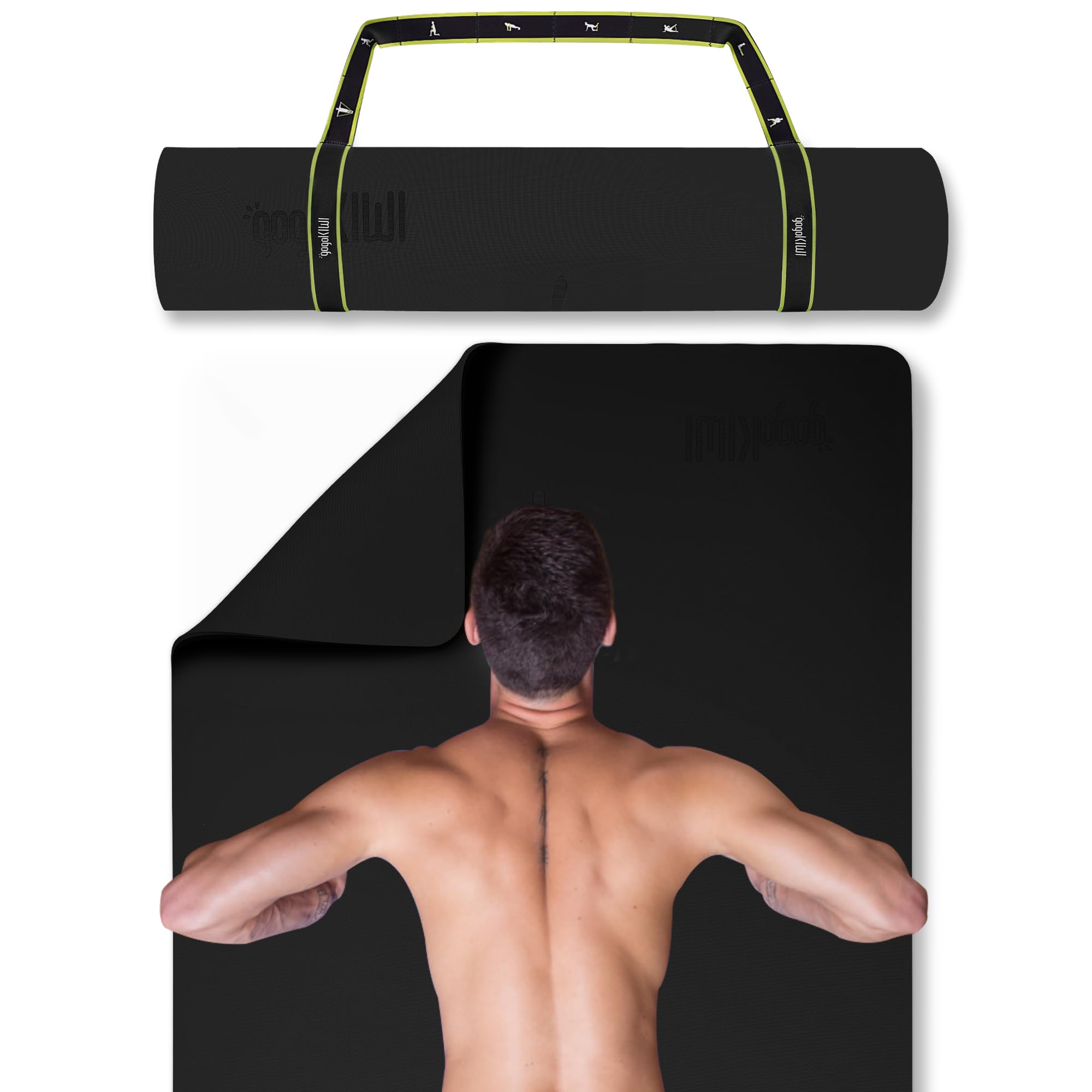
You notice the width before anything else. Thirty-six inches across is four more than the 32-inch mats here and a foot more than a standard mat, and on the floor it means a wide-legged stance, a shoulder-width plank, and a supine twist all happen without a hand or a foot drifting off the edge, which is the thing broad, tall bodies notice first.

Half an inch of RecFoam is the second half of the pitch. It is dense enough that knees and sit bones do not reach the floor, and the closed-cell surface resists sweat rather than drinking it, so a wipe with a damp towel is the whole upkeep. At 5 pounds it is heavy enough that we never had to chase it across the floor mid-flow.

The alignment marks are a small thing that turns out to be useful: they give you a consistent place to put your hands and feet, which is exactly the feedback you want while working out how wide your own stance should be.

Where it costs you is precision. Half an inch of foam under your hands is a lot of distance from the floor, and one-legged balance work feels less certain than it does on the 6mm mats here. If your practice leans toward floor work, wide stances, and slow stretching, that trade is easy to take; if it leans toward balance, the width and cushioning are not worth the softness.

Pros

  • 36-inch width for wide stances
  • Alignment marks keep placement consistent
  • Closed-cell foam wipes clean

Cons

  • Surface gets slippery in a sweaty flow
Our verdict

The widest mat here built as a yoga mat: 36 inches and a half-inch of foam for broad, tall frames that prefer floor work to balance poses.

Check Latest Price
7

Floor and Restorative

Hatha Yoga Extra Thick Mat

91 /100
Peggy's Score Outstanding

Key details

Weight
4 lb
Material
Thermoplastic elastomers
Dimensions
72"L x 32"W x 0.47"Th
Check Details on Amazon

Restorative sessions and long floor work are where this mat makes sense, and it is the one we pull out when the practice is slow. Twelve millimeters of TPE is the thickest foam in this guide, and it turns a hardwood floor into something you can kneel on for a slow twenty minutes without thinking about your knees.

It is also 32 inches wide, which matters once you are lying in a twist or working through a pigeon variation, and at 4 pounds it is heavy enough to feel substantial without becoming a mat you avoid carrying. The TPE surface is closed and slightly rubbery, and it spot-cleans with a damp cloth.

Two things to know before you buy. The first is that 12mm of foam moves under a standing pose, so this is not the mat for a fast vinyasa practice; the Karma at 10mm or the CAMBIVO at 6mm suits that better. The second is the smell: new TPE arrives with a factory odor, and it is worth unrolling in a spare room for a day or two before the first session.

Pros

  • 12mm cushions knees and hips
  • 32 inches wide for floor work
  • Light enough to carry at 4 pounds

Cons

  • Slippery once hands get damp
Our verdict

For slow, floor-based practice: 12mm of TPE that pampers knees and hips, provided you do not need a firm platform for standing balance.

Check Latest Price
8

Home Gym Floor

CAMBIVO Large Yoga Mat 72x48

89 /100
Peggy's Score Excellent

Key details

Material
Thermoplastic elastomers
Dimensions
72"L x 48"W x 0.24"Th
Grip Surface
Dual-texture top, wavy underside
Check Details on Amazon

This is a room mat, not a class mat. Seventy-two by 48 inches covers 24 square feet, the footprint of a small area rug, which is enough to run through push-ups, lunges, and floor work without stepping off and repositioning between sets.

The width is what you are buying. Forty-eight inches across means a full plank, a sumo squat, and a supine stretch all fit at once, and it is the mat we set out when two people want to stretch in the same room. Six millimeters of TPE is thin enough that you feel the floor under a hand and dense enough to protect a wood floor from bodyweight work.

In the box you get two storage straps, a microfiber towel, and a carry bag, which is more than most mats here come with. Rolled and strapped it is manageable for one person to move around the house, even if it is not a mat you take to a studio.

The honest limit is length: 72 inches is the same as most mats here, so a tall body still runs out of mat at the ends in a supine stretch, and 48 inches of width does not help with that. Set it up as a home gym floor and it stops mattering, because you are training in the middle of it rather than trying to fit head to toe.

Pros

  • 72 by 48 inches of floor coverage
  • Two straps, a towel, and a bag included
  • Holds on wood and tile

Cons

  • Surface breaks down with hard use
Our verdict

A home-gym floor mat rather than a yoga mat: 48 inches of width to move in, in a mat that stays put in a corner of the room.

Check Latest Price

How We Tested the Best Long Yoga Mats

We started by pulling every mat we could find that listed at least 80 inches in length, then cross-checked those specs against the measurements buyers reported, since a few "long" mats run short. That gave us a shortlist of 12 mats across price points and materials, from natural rubber to TPE and PVC, and we unrolled each one in a living room with hardwood floors before assigning it to a tester.

Testers used the mats for six months, at home and in studio classes, including hot vinyasa sessions where hands get slick. We measured each mat with a tape measure the day it arrived and again a month later, because several crept back toward their original length after a few rolls. Every mat was weighed on a kitchen scale with its strap, then carried on foot and on public transit to a class to see whether the extra length became a nuisance.

Grip got checked mid-flow with damp palms in downward dog and again in a sweaty standing sequence, and we noted which mats let hands creep forward and which held. For stability, we watched whether corners curled or the mat slid on hardwood during lunges. Cushioning was judged on knees in kneeling poses and wrists in plank, where a dense thin mat often beat a squishy thick one. We sniffed each mat out of the box and again after a week of airing out, then at the end of six months checked the high-traffic spots under hands and feet for flaking, smoothing, and compression. Value was judged last, by comparing price against how each surface looked after half a year of weekly practice.

How to Choose Long Yoga Mats for Tall People

Measure Your Reach, Not Your Height

Your height is a rough guide; your reach is the real number. Lie on the floor with your arms overhead and have someone mark where your fingertips and your heels land, then look for a mat that covers that span. It is usually several inches more than your height, which is why one six-footer is fine on a 72-inch mat and another is not.

The mats here fall into two groups: 72 inches, which is the entry ticket for this search, and 80 to 84 inches, where tall bodies stop noticing the ends. If you are over about six foot one, spend your budget on length before you spend it on thickness, width, or material.

Width Is the Other Half of Fit

Tall usually means broad, and 24 inches is where hands and feet start leaving the surface in a wide-legged stance. Thirty-two inches is the sweet spot in this group: wide enough for a lunge, narrow enough to roll and carry. Thirty-six and 48 inches exist for people who train rather than flow.

The catch is that width adds weight and floor space. A 48-inch mat covers 24 square feet of room, which makes it wonderful in a home gym and useless as something you sling under an arm on the way to class.

Cushioning Is a Trade, Not a Free Upgrade

Every millimeter of foam lifts your hands and feet further off the floor, which is why the thickest mats in this guide are the least certain in a one-legged pose. Six millimeters is the all-rounder; 10 to 12 millimeters suits knees, wrists, and floor-based practice; a full inch is a comfort mat for stretching and kneeling, not a surface to balance on.

If your knees are the reason you are shopping, buy thickness and accept a little wobble. If balance poses matter more, stay close to 6mm and add a folded blanket under kneeling knees instead.

Match the Surface to How Much You Sweat

Cork is the outlier: it gets tackier as your hands dampen, so it grips better in a warm room than a cool one. TPE and PVC do the opposite and turn slick exactly when you want traction, which is why the cork mat is our top pick for a sweaty practice and the TPE mats suit stretching, Pilates, and bodyweight sessions.

The trap is that a mat can hold the floor beautifully and still be slippery under your hands. Those are two different surfaces, so judge them separately, and if you sweat heavily, plan on a towel whatever you buy.

Decide Whether the Mat Travels

Weight is the quiet decider. The lightest mats here are around 2 pounds and go to class under an arm; the heaviest is 9.9 pounds and stays where you put it. If your practice is at home, ignore weight entirely and buy the surface you actually want.

If you carry a mat more than a few blocks, a long, thick, cork-topped mat becomes a piece of furniture. The cheaper answer is a heavy mat for home and a light one for the walk to the studio.

Frequently Asked Questions

Final Verdict

Two mats cover most tall buyers. The Body By Yoga cork mat is the one we recommend first: 80 inches of length, dense 6mm of natural rubber under the cork, and a surface that grips harder as your hands sweat, a combination nothing else here puts together.

If you want the longest mat on the page and your hands stay dry, the CAMBIVO at 84 by 32 inches is the better shape and far easier to carry. If your knees decide the purchase, the Karma's 10mm of dense TPE beats both.