Best Balance Trainers of 2026

A balance trainer looks like a half ball with delusions of grandeur—until your first single-leg squat on one, when every muscle in your foot starts sending memos. The appeal is simple: it turns ordinary squats, planks, and push-ups into work for your core and ankles, and it gives you a place to practice stability without a gym membership. What it fixes is the gap between knowing you should train balance and having something at home that makes you do it.

The catch is that a wobbly dome is only worth the money and floor space if it stays where you put it, holds air, and doesn't turn slick under a sweaty foot. We've spent seven months with 12 balance trainers, from firm rehab-style domes to inflatable ones, using them barefoot on hardwood, in sneakers on a garage mat, and during morning routines in the living room. The best ones made balance work feel like training rather than a balancing act; the rest slid, squirmed, or lost firmness by week three. Below are the ones that earned a spot.

1

Best Overall

LifePro Horizon Half-Ball

93 /100
Peggy's Score Outstanding

Key details

Setups
Dome-up or base-up
Dome Size
23.6 in diameter, 8.5 in high
In The Box
Pump, 10 in Pilates ball, tape measure, plugs
Max User Weight
440 lb
Check Details on Amazon

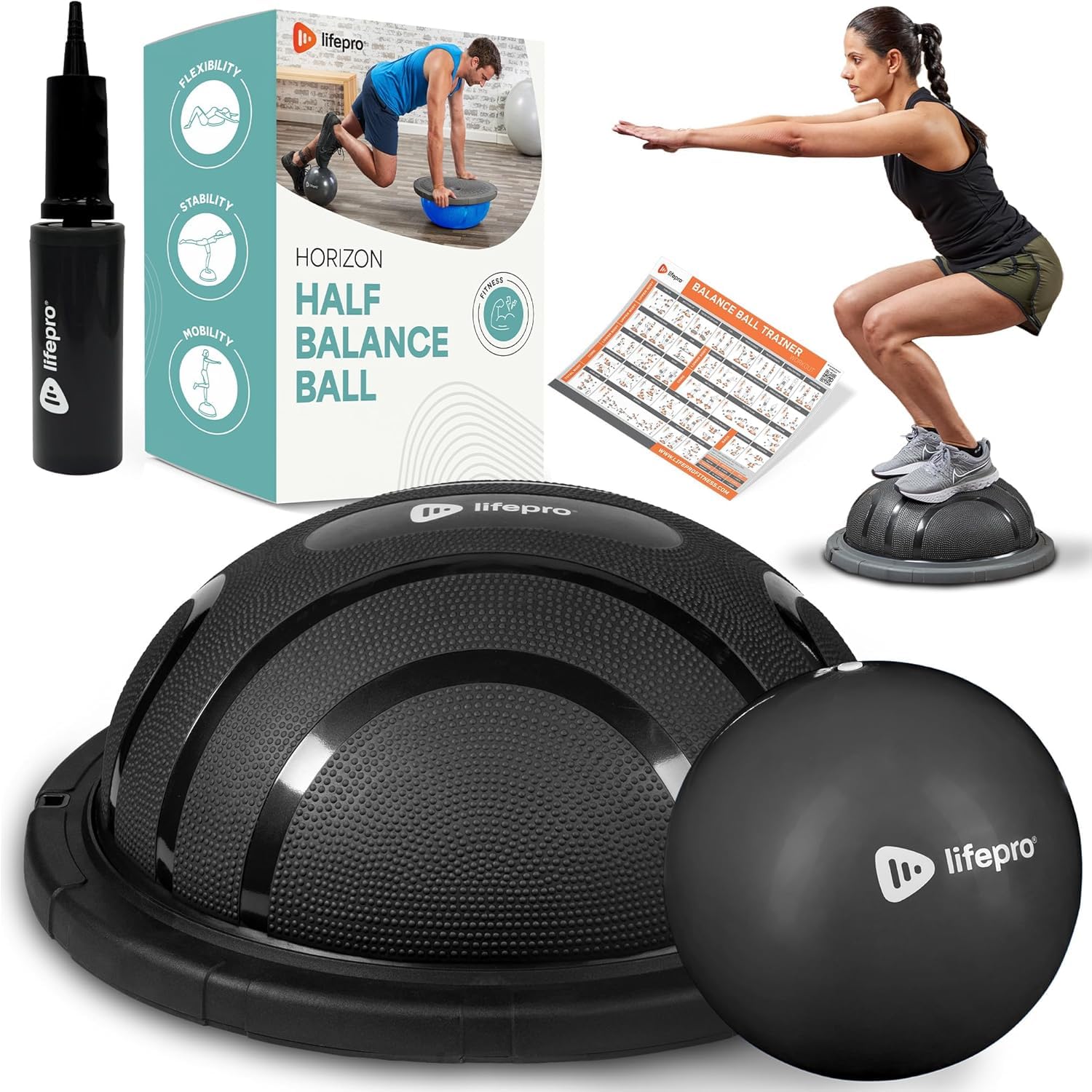
The box is the first argument. A pump, a 10-inch Pilates ball, an inflation straw, a tape measure and spare plugs all come with the dome, which means the first session happens the day it arrives rather than the day the accessories turn up. The platform is 23.6 inches across and 8.5 inches high, with a textured top over a PP/TPE base, and it flips: dome up for standing work and planks, base up when you want the surface to feel genuinely tippy.

We recommend it as the default because it covers both halves of the job and arrives ready to use. Its build and durability are the strongest of the domes here, the 440-pound rating covers a household rather than one careful user, and the lifetime support promise outlasts the 90-day cover on the BOSU by a wide margin. If you want one thing that handles balance drills, core work and the exercises a physical therapist hands out, this is the one we point to.

Firmness is the part to plan for. Getting a half-ball to full pressure takes an unhurried session with the pump, and the last stretch is slow; after that it's an occasional top-up rather than a weekly chore. The tape measure looks like padding in the box, but it earns its place: a dome's feel changes with pressure, and a quick diameter reading gets you back to the firmness you liked instead of guessing.

In a small room it behaves. At 8.5 inches high it's a low step, which matters for anyone with knee trouble, and the textured top holds a bare foot through a sweaty session. Leave it out between workouts; it's stable enough that nobody in the house will trip over it and heavy enough that it stays where it's put.

Pros

  • Pump, Pilates ball, plugs and tape in the box
  • 440-pound rating covers a household
  • Dome-up or base-up doubles the exercise range
  • Lifetime support backing

Cons

  • Dome is smaller than the 26-inch BOSU
Our verdict

For most homes, this is the balance trainer we recommend: a full-size dome with a 440-pound rating, a complete starter kit, and the longest support promise here.

Check Latest Price
2

Best for Guided Workouts

BOSU Balance Trainer

91 /100
Peggy's Score Outstanding

Key details

Warranty
90 days
In The Box
Guided workout program and pump
Platform Size
26 in
Max User Weight
300 lb
Check Details on Amazon

The BOSU has to earn its place against our top pick, and it does it with deck size and programming rather than price. The platform is listed at 26 inches, so there's more room to spread your feet than the Horizon offers, and a guided workout program comes in the box for anyone who wants to be told what to do in week one. That combination of a bigger deck and a plan is the reason we still recommend it.

Inflation is the soft spot. A dome that won't hold pressure is the failure to catch early, because the warranty runs 90 days and a slow leak turns a useful tool into a wobbly pile of rubber. Pump it up when it arrives, leave it overnight, then check firmness again before the return window closes. The pump that ships with it works; it just takes a while.

Flip it base-up and the same dome becomes far less forgiving, since you're stepping onto a curved surface with nothing to hold. That's what makes it useful for push-ups and plank variants, where the instability under your hands does more work than the flat side ever will. The rubber surface grips bare feet well, the 8.5-inch height is easy on knees, and the program means you're never standing there wondering what to do with it.

Pros

  • 26-inch deck leaves room for both feet
  • Guided workout program in the box
  • Rubber surface grips bare feet
  • Flips for plank and push-up work

Cons

  • 300-pound rating is the lowest of the domes here
Our verdict

We keep the BOSU on the list for its bigger 26-inch deck and the guided program in the box — the best pick here if you follow structured dome workouts.

Check Latest Price
3

Best for Progressive Training

Revbalance 101 v2

95 /100
Peggy's Score Outstanding

Key details

Weight
6.8 lb
Surface
DuraSoft traction
Max User Weight
400 lb
Difficulty Adjustment
Magnetic stops, tool-free
Check Details on Amazon

Two magnetic stops sit under the deck and click into new positions without a tool, which is the whole idea of the 101 v2: the roller only travels as far as the stops allow. Set them close together and the board barely moves; slide them apart and the deck starts to run. It's the most practical adjustment in this group, because you can change it between sets without hunting for an Allen key.

The deck is 6.8 pounds of plastic with a DuraSoft traction surface that's comfortable under bare feet: no grit, no sandpaper, nothing that scrapes if you come off mid-rep. It's handcrafted in the USA and the finish reads that way, with clean edges and a quiet roll. The 400-pound rating puts it behind only the Sportneer here, which is more capacity than most households need and reassuring all the same.

Where it earns its keep is progression. A fixed rocker gives you one challenge and then nothing; here difficulty is a setting you move, and the gap between a tight stop and a wide one is the gap between a wobble and a workout. It's the board we keep coming back to when we want balance work to feel like training rather than fidgeting.

Pros

  • Magnetic stops adjust without tools
  • DuraSoft surface is comfortable barefoot
  • 400-pound weight rating
  • Clean, handcrafted finish

Cons

  • Standing only
  • Priced above every half-ball here
Our verdict

We rate the 101 v2 as the board to buy when you want balance work that keeps getting harder, thanks to magnetic stops you can change mid-session.

Check Latest Price
4

Best Roller-Board Kit

Sportneer Balance Board

95 /100
Peggy's Score Outstanding

Key details

Material
Birch
Board Size
31.5 x 14.17 in
Configuration
Board, roller and ball, seven modes
Max User Weight
450 lb
Check Details on Amazon

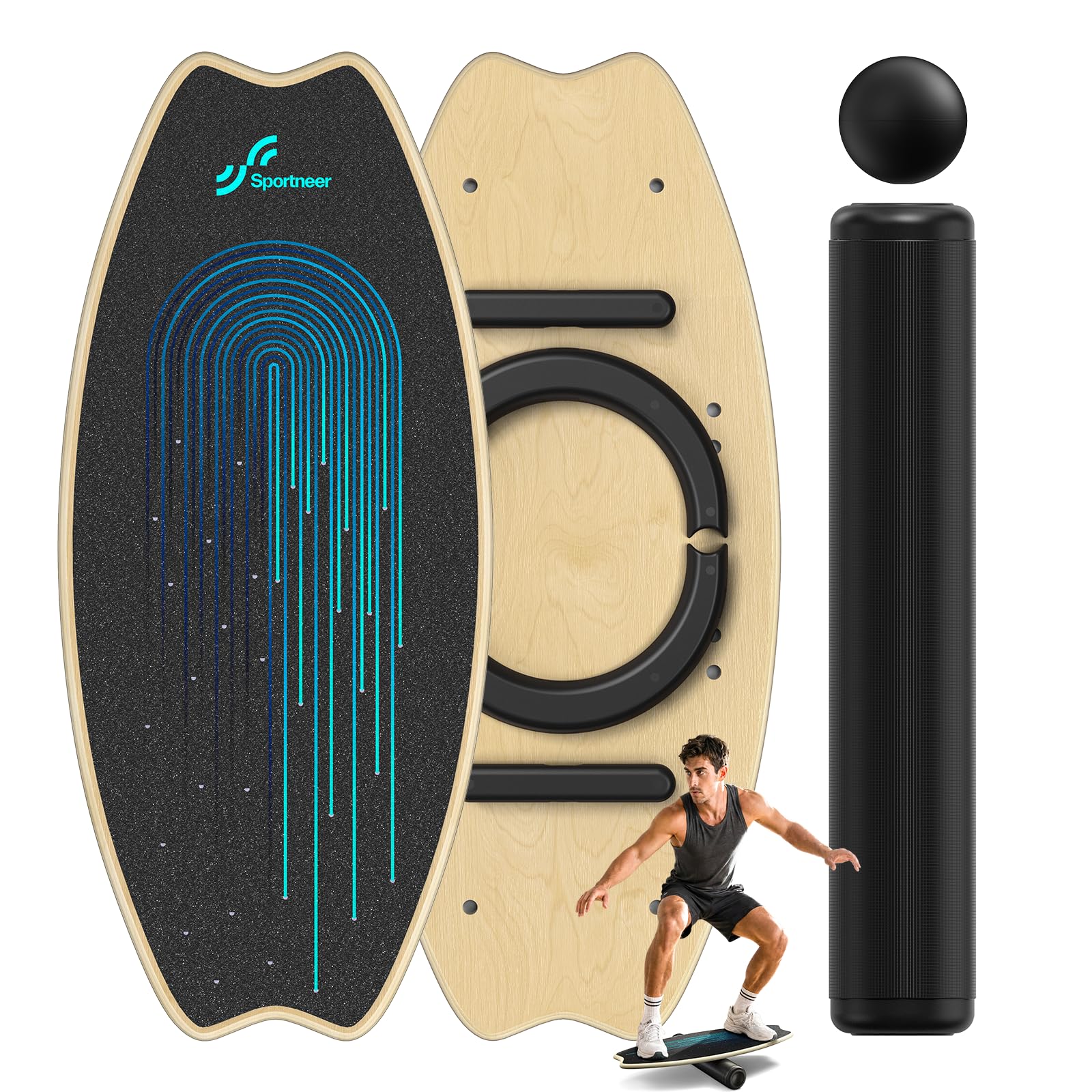
One box, three pieces: a 31.5-by-14.17-inch birch deck, a roller, and an inflatable ball that turns the whole thing into a much less stable platform. Sportneer counts seven setups across the three, and the stoppers set the roller's travel in three positions, so the same kit covers a tentative first week and a genuinely hard session later. The matte top holds bare feet and shoes, and the 450-pound rating is the highest in this group.

It's the kit we point to when a household wants one purchase everyone can use. With the stops close in, the deck is forgiving enough for a nervous beginner; the ball is humbling enough that a teenager and a gym-going adult both find their level. Length is the cost: 31.5 inches is the longest deck here, and you'll want clear run-out fore and aft for the roller. Ball mode is a big jump from the deck, so treat it as a separate skill rather than a setting.

Pros

  • Board, roller and ball in one kit
  • Stoppers give several difficulty settings
  • 450-pound rating is the highest here
  • Matte birch deck grips barefoot or shod

Cons

  • Longest deck here, so it needs clear floor
  • Ball mode is a big jump in difficulty
Our verdict

We recommend this kit for households sharing one purchase: three pieces, seven setups, and the highest weight rating in this group.

Check Latest Price
5

Best for Beginners and Physical Therapy

ProsourceFit Balance Pad

96 /100
Peggy's Score Outstanding

Key details

Weight
12 oz
Surface
Non-slip, sweat-proof
Material
TPE foam
Dimensions
15.5 x 12.75 x 2.25 in
Check Details on Amazon

It doesn't rock, roll or tip; it squishes. That's the point. A foam pad gives you an unstable surface without a fall built into it, and for anyone restarting balance work after an injury or surgery, or an older adult who wants a daily challenge that doesn't involve stepping up onto anything, this is the one we hand over first. It's also among the least expensive things here.

At 15.5 by 12.75 inches and 2.25 inches thick, there's room for two feet and enough give that a single-leg stand feels like work. It's firm enough to kneel on, which quietly makes it the most useful piece here on floor days: a knee pad for lunges, a cushion for long stretches, something under your feet at a standing desk. At 12 ounces it goes in a bag without a second thought.

The one adjustment worth making is stance. Keep your feet closer together than you would on a board, because the pad is 15.5 inches long and a wide squat puts your heels near the edge where the foam rolls. For single-leg work, marching and the standing drills a physical therapist hands out, it's plenty, and when it stops being enough, that's a signal to move up rather than a fault in the pad.

Pros

  • A fraction of the cost of a board
  • Doubles as a knee pad and seat cushion
  • Firm enough for kneeling floor work
  • Twelve ounces, so it travels easily

Cons

  • No challenge left once your balance improves
Our verdict

We hand the pad to anyone restarting balance work after injury or surgery, because it builds confidence without putting a fall under your feet.

Check Latest Price
6

Best Budget Board

Amazon Basics Wobble Board

93 /100
Peggy's Score Outstanding

Key details

Material
Solid wood
Warranty
1 year
Deck Size
15.75 x 15.75 x 3.15 in
Max User Weight
265 lb
Check Details on Amazon

This is the cheapest board in the group, and it's the one that convinced us a rocker doesn't need to be clever. A 15.75-inch solid wood deck on a curved base, a top that feels like fine sandpaper, 265 pounds of stated capacity, and a one-year warranty. Nothing adjusts, nothing inflates, nothing to lose.

What it does is rock, front to back and side to side, on a fixed arc your ankles learn fast. That makes it a good standing-desk companion and a decent ankle strengthener for the drills a physical therapist hands out, and it explains why the board is so easy to step onto and step off when someone else wants a turn. Store it under a desk and it disappears.

Grip is where it needs help. The sandpaper top holds your feet; nothing holds the floor, and a smooth hardwood room turns a gentle rock into a slide. Put a yoga mat underneath and the problem goes away, which is a cheaper fix than a heavier board. Buy it if you're testing whether balance work sticks; if you already know it will, spend more on something you can't outgrow in a month.

Pros

  • Cheapest board here
  • Solid wood deck, 15.75 inches across
  • Low 3.15-inch step for easy starts
  • Tucks under a desk between sessions

Cons

  • 265-pound limit is the lowest of the boards here
Our verdict

We recommend this board to anyone testing whether balance work will stick — it costs the least here and asks nothing of you to set up.

Check Latest Price
7

Surf and Skate Training

Indo Board Original

96 /100
Peggy's Score Outstanding

Key details

Material
Maple wood
Deck Size
30 x 18 in
In The Box
Board and roller
Max User Weight
350 lb
Check Details on Amazon

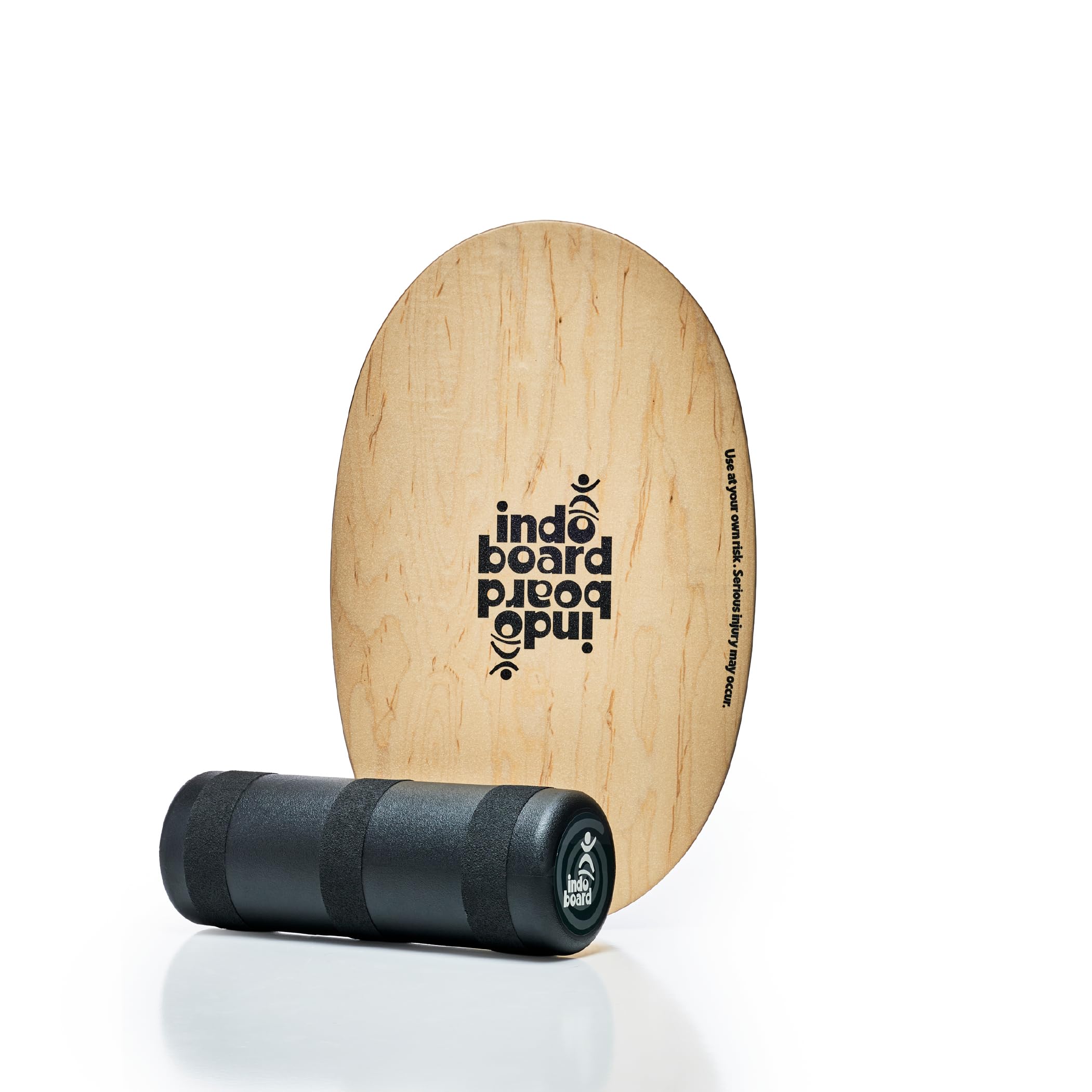
The first few goes on the Indo Board are humbling. The deck rolls freely on its roller with nothing to catch it, and your feet find out quickly how much of your everyday balance was really the floor doing the work. Expect to reach for a wall.

It's also the best-looking thing here. Thirty inches of maple, eighteen wide, three pounds, finished natural: it sits in a room like furniture rather than gym equipment, and the roll is smooth and quiet on a hard floor. The 350-pound rating is mid-pack, but the deck is the widest in this group, which gives you room to shift your stance instead of clinging to one spot.

Stance is where it separates from the boards above. Thirty inches means you can walk your feet into something like a surf stance, ride out a wobble and reset, which is the closest thing here to standing on a board that's actually moving. It's also why the thing tends to stay out in the room rather than get put away.

For a household that surfs, skates or snowboards, the maple deck and the free roll are worth the premium: the board trains a quiet upper body over busy feet, which is what those sports ask for. If your goal is physical therapy or a full-body workout, the domes above ask far less patience.

Pros

  • Widest deck here at 30 by 18 inches
  • Smooth, quiet maple-and-roller roll
  • 350-pound weight rating
  • Looks good enough to leave out

Cons

  • Most expensive trainer in the group
  • Two pieces to store and keep together
Our verdict

We recommend the Indo Board to surfers, skaters and snowboarders who want the widest deck here and don't mind a humbling first week.

Check Latest Price
8

Desk and Classroom

bintiva Wobble Cushion

90 /100
Peggy's Score Outstanding

Key details

Setup
Ships inflated, pump included
Height
2.8 in
Diameter
13 in
Max User Weight
200 lb
Check Details on Amazon

If the balance problem you actually have is eight hours in a chair, a 13-inch rubber cushion solves more of it than any board here. It ships inflated, drops onto a desk chair or a classroom seat, and turns sitting still into low-grade core work: movement that's easy to keep up because it never feels like a workout.

The mechanism is simple. Sitting on air is never quite static, so your hips make small corrections all day, the same reflex the standing tools train at a lower intensity. The bumpy surface adds a little texture underfoot if you use it as a foot rocker, and kids who can't stop wiggling get somewhere to put it, which is why these turn up in classrooms.

The included hand pump is the weak link. Its needle is thin enough that a heavy hand bends it, and a sturdier replacement from a bike shop ends the problem for good. Beyond that the cushion asks nothing: no inflation routine, no storage decision, no floor space.

The thing to get right is firmness. Soft enough to compress, firm enough that you don't bottom out against the chair, and a couple of pumps either way changes the whole feel. Get that right and it's the piece here that gets used the most, simply because it's the one you're already sitting on.

Pros

  • Adds constant low-grade movement to desk sitting
  • Ships inflated, with a pump for top-ups
  • Gives fidgety kids somewhere to wiggle
  • Costs a fraction of a balance board

Cons

  • Seated use only
  • 200-pound weight limit
Our verdict

We like the bintiva for desk chairs and classrooms, where a 13-inch cushion adds movement all day without asking you to stand on anything.

Check Latest Price

How We Tested Balance Trainers

We started by pulling together a shortlist of balance trainers sold at mainstream fitness retailers, then narrowed it by dome size, base diameter, weight limit, material, and price. We cut anything with vague inflation guidance or a base that looked too small for the dome. The 12 we kept ranged from firm, nearly flat rehab domes to tall, air-filled half balls, and we used each one for seven months.

Testing happened where people actually train: barefoot on hardwood in the living room, in sneakers on a rubber garage mat, and on low-pile carpet. We inflated each trainer with its own pump and noted how long setup took, whether the gauge matched the firmness we felt, and whether the dome held that firmness after a week of daily use. Then we ran the same short circuit: single-leg balances, bodyweight squats, push-ups with hands on the dome, and split squats with the rear foot on the platform. We watched for side-to-side wobble, whether the base crept across the floor, and whether sweaty hands or socks slipped on the surface.

Durability got checked by living with them: we left them inflated between sessions, wiped them down, and looked at seams, valves, and base edges at the end of each month. Value came down to whether the trainer still felt stable after weeks of use and whether the pump and instructions were included. The ones that scored best were easy to inflate to a firm, predictable feel, stayed put on both carpet and hardwood, and kept their grip once we started sweating. We'll keep using them and update if anything changes.

How to Choose Balance Trainers

Match the Wobble to the Skill

A rocker pivots on a curved base and tilts in a fixed arc, which makes it good for ankles, standing-desk fidgeting, and a first taste of single-leg work. A roller board travels fore and aft on a cylinder, the motion surfers, skaters and snowboarders recognize. A dome adds the least predictable surface, and flipping it base-up turns a stable platform into a hard one, which is why domes get used for planks, push-ups and physical therapy. A foam pad or disc barely destabilizes anything, and that's exactly what makes it the right place to start after an injury.

Pick by the skill rather than the feature list. If you want one tool that does a bit of everything, a dome is the safest bet; if you have a specific sport or a specific weak ankle, a rocker or roller gets you there faster.

Adjustability Decides How Long It Stays Useful

Fixed boards are wonderful until week three, when the challenge is gone and the deck is under the bed. Anything you can change, whether magnetic stops, index stoppers at different spacings, or a dome you inflate firmer, keeps a single purchase useful as you improve and lets two people of different abilities share it.

In this group the adjustable options cost more, and they're the ones worth the extra. If two people in the house are at different levels, treat adjustment as a requirement rather than a bonus: the Revbalance's sliding magnetic stops and the Sportneer's spacers both change the difficulty in seconds, which is the difference between a board that gets used and one that gets stored.

Read the Weight Rating, Then Look at Your Floor

Stated maximums here run from 200 pounds on a wobble cushion to 450 on a roller board, so check the number against the heaviest person who'll use it. A deck that flexes under a user is a deck that fails.

The other number that matters isn't printed anywhere: grip on your floor. A non-slip surface keeps your feet still, but nothing in the listing keeps the base still, and smooth hardwood lets a wooden rocker skate out from under you. A yoga mat underneath solves it, quiets the noise, and protects the finish.

Inflatables Need a Pump and a Little Patience

A dome or disc is only as good as its air. Firmness changes how a half-ball feels underfoot, so inflate gradually, check the diameter as you go, and stop when the surface is taut rather than drum-tight. The pump usually comes in the box; if it doesn't, a ball pump with the right needle works fine.

Expect to top up now and then, and take a slow leak seriously while the return window is open, because cover varies widely: the BOSU is warranted for 90 days where the LifePro carries lifetime support. Check what ships in the box on arrival too, since pumps and accessories are the parts most likely to go missing.

Frequently Asked Questions

Final Verdict

The LifePro Horizon is the balance trainer we point most people to. It arrives with everything needed for a first session, carries a 440-pound rating, and comes with the longest support promise here, and its build and durability are the strongest of the domes in this group.

If you follow a structured dome workout, the BOSU's bigger deck and included program earn their premium. If balance work is a progression toward a sport, the Revbalance's magnetic stops do more than any fixed board can. And if you're restarting after an injury, begin on the ProsourceFit pad and move up when standing on one foot stops being interesting.