Best Balance Pads of 2026

A balance pad looks like a slab of foam until you stand on one foot and feel every muscle in your ankle negotiating. That wobble is the point: the pad turns ordinary balance work into a real challenge, whether you are rehabbing or training at home. But these pads are not interchangeable: a soft one can swallow your foot and make drills feel vague, a rock-hard one barely challenges your stability, and a dense or undersized pad can make beginner exercises feel like a circus act. The right one gives you a grippy platform with just enough give to wake up your muscles without making you feel unsafe.

I have used these in physical therapy, and the difference comes down to density, size, and honest firmness. Over six months, my team and I tested 12 pads through balance drills, single-leg holds, and bodyweight strength work. Some were too squishy to trust, others barely wobbled, and the keepers stood out for quality, stability, and value, and they made balance work feel challenging, not precarious. The picks below are worth reaching for.

1

Best Overall

ProsourceFit Balance Pad

96 /100
Peggy's Score Outstanding

Key details

Material
TPE foam
Thickness
2.25 in
Surface Size
15.5 x 12.75 in
Weight Capacity
749.6 lb
Check Details on Amazon

At 12 ounces, the ProsourceFit is the pad we reach for when we want a full-size surface without carrying a slab around. The 15.5-by-12.75-inch top leaves room for a shoulder-width stance, and the 2.25-inch TPE foam compresses enough to make standing work feel active without turning every shift into a wobble. We also like that it is thick enough to kneel on when a session moves to the floor.

On a smooth wood floor, the textured surface held its place through knee lifts and single-leg holds, and the TPE wipes clean after bare feet. We found the foam on the softer side of firm, which is why it works so well as a dual-purpose pad: it takes the sting out of kneeling but still gives your ankles something to correct against. A harder pad can feel more demanding, but it is not automatically better for a home routine.

If you want a very firm, flat platform, the StrongTek is the more definite choice; the ProsourceFit has more give underfoot. That give is the reason we kept choosing it for longer sessions that mixed standing, kneeling, and seated work. The pad is also light enough to move from room to room, which sounds minor until you are carrying it to the mat every day.

A limited lifetime warranty adds some reassurance, though the strongest argument is simpler: this is the pad that fits the most routines without asking you to work around its size or weight.

Pros

  • Roomy enough for two-foot balance work
  • Light 12-ounce build is easy to move
  • Textured TPE grips and wipes clean
  • 2.25-inch foam cushions knees

Cons

  • Width leaves little spare room for very wide stances
Our verdict

For most people, this is the balance pad we recommend: roomy enough for two-foot work, light enough to move, and forgiving enough for knees.

Check Latest Price
2

Best for Wide Stances

AIREX Balance Pad

95 /100
Peggy's Score Outstanding

Key details

Material
Closed-cell foam
Thickness
2.36 in
Surface Size
19.69 x 16.14 in
Weight Capacity
600 lb
Check Details on Amazon

The AIREX is the one that makes the other pads look compact. Its 19.69-by-16.14-inch platform is the largest here, and the 2.36-inch foam gives a wide, flat surface for a two-foot stance, a split stance, or a kneeling position where you want your knees farther apart.

The closed-cell foam is the practical part. It is designed to resist moisture and odor, and the edges are meant to stay flat instead of curling up. We found the surface slightly springy rather than hard, so it is comfortable under bare feet while still asking your ankles to work. After a session, it wipes down like the rest of the foam pads here.

What you give up is storage convenience. The AIREX is the heaviest pad in this group at 2 pounds, and it takes up more shelf or floor space than the others. If the pad lives in a closet and comes out for short sessions, that bulk matters less than the room it gives you when you are standing on it.

For a wide stance or a large foot, the extra platform is worth the real estate. This is the pad we choose when balance work is the main event rather than a five-minute add-on, and its 600-pound capacity makes it the clear option for heavier users too.

Pros

  • Largest standing surface in this set
  • Closed-cell foam resists moisture and odor
  • Edges are designed to stay flat
  • 600 lb weight capacity

Cons

  • Best used barefoot rather than in shoes
Our verdict

The AIREX is the roomiest pad we tested, and its dense foam makes it the one to choose when a standard-width pad feels cramped.

Check Latest Price
3

Best Cushioned

Vive Balance Pad

93 /100
Peggy's Score Outstanding

Key details

Material
High-density foam
Thickness
2.6 in
Surface Size
16 x 13.2 in
Weight Capacity
300 lb
Check Details on Amazon

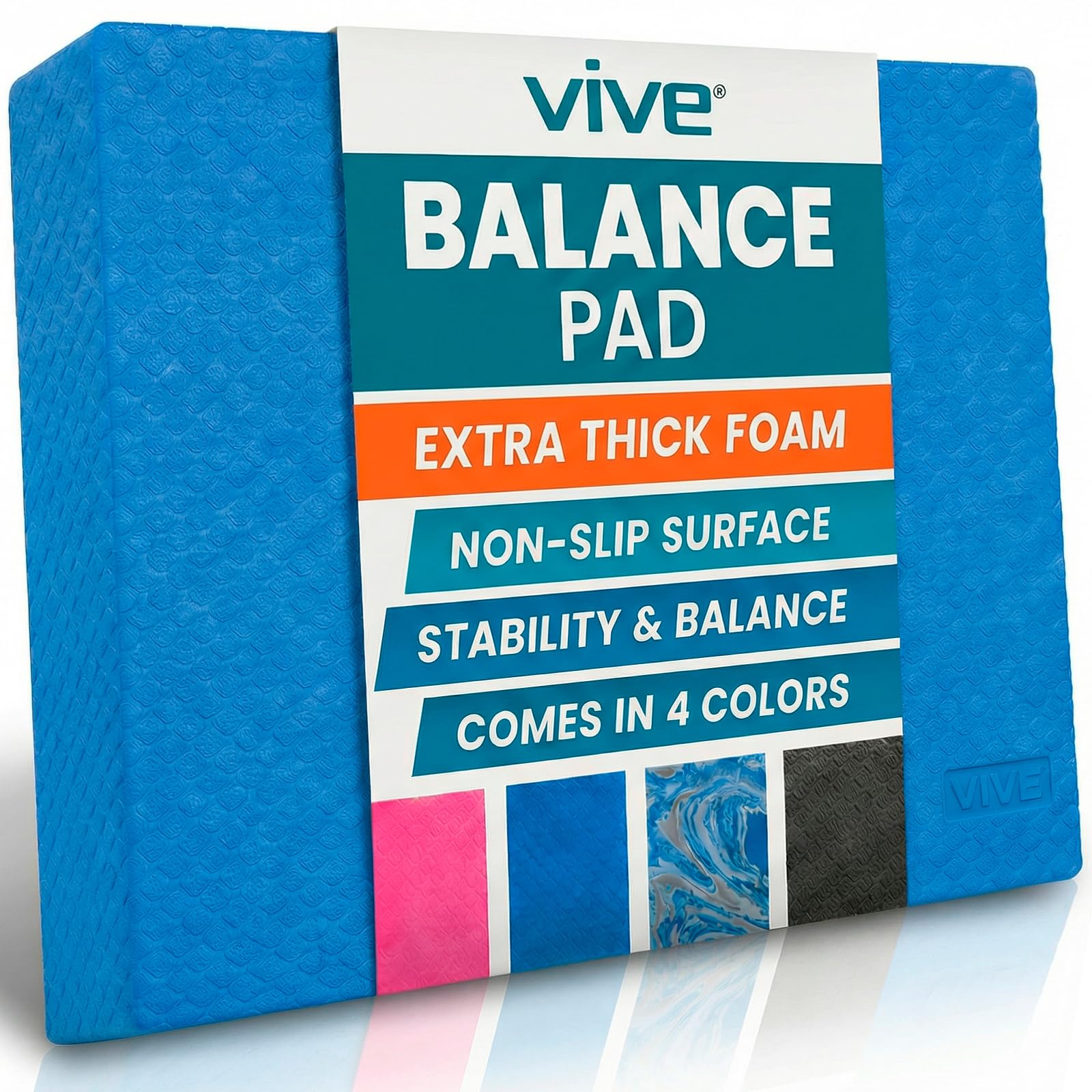
The Vive's 2.6-inch foam is the thickest of the pads we recommend, and that extra depth is obvious when you kneel. The 16-by-13.2-inch surface is close to the ProsourceFit's, but the Vive feels more like a cushion and less like a slab, which is exactly what some knees want.

We liked that cushioning most for floor work: it takes pressure off knees and elbows without letting you sink through to the floor. On standing drills, the Vive has a denser, more supportive feel than a soft mat, and the textured top and base kept it from sliding on smooth flooring. It is not the liveliest pad for fast balance work, but it is the one we pick when comfort is the priority.

The closed-cell foam is water-resistant, so sweat wipes off instead of soaking in. At 10.56 ounces, it is also easy to move and store. The 300-pound limit is lower than the AIREX and ProsourceFit, but it still covers most home users, and Vive backs the pad with a 60-day guarantee.

Pros

  • Extra thickness cushions knees and elbows
  • Textured top and base resist slipping
  • Water-resistant foam wipes clean

Cons

  • Firm foam may feel hard to sensitive knees
  • Not much spare width for wide stances
Our verdict

This is the pad for someone who wants more cushion under knees and elbows during rehab-style floor work, provided they like a firm surface.

Check Latest Price
4

Best Firm Feel

StrongTek Balance Pad

93 /100
Peggy's Score Outstanding

Key details

Weight
11.2 oz
Material
TPE foam
Thickness
2 in
Surface Size
15.8 x 13 in
Check Details on Amazon

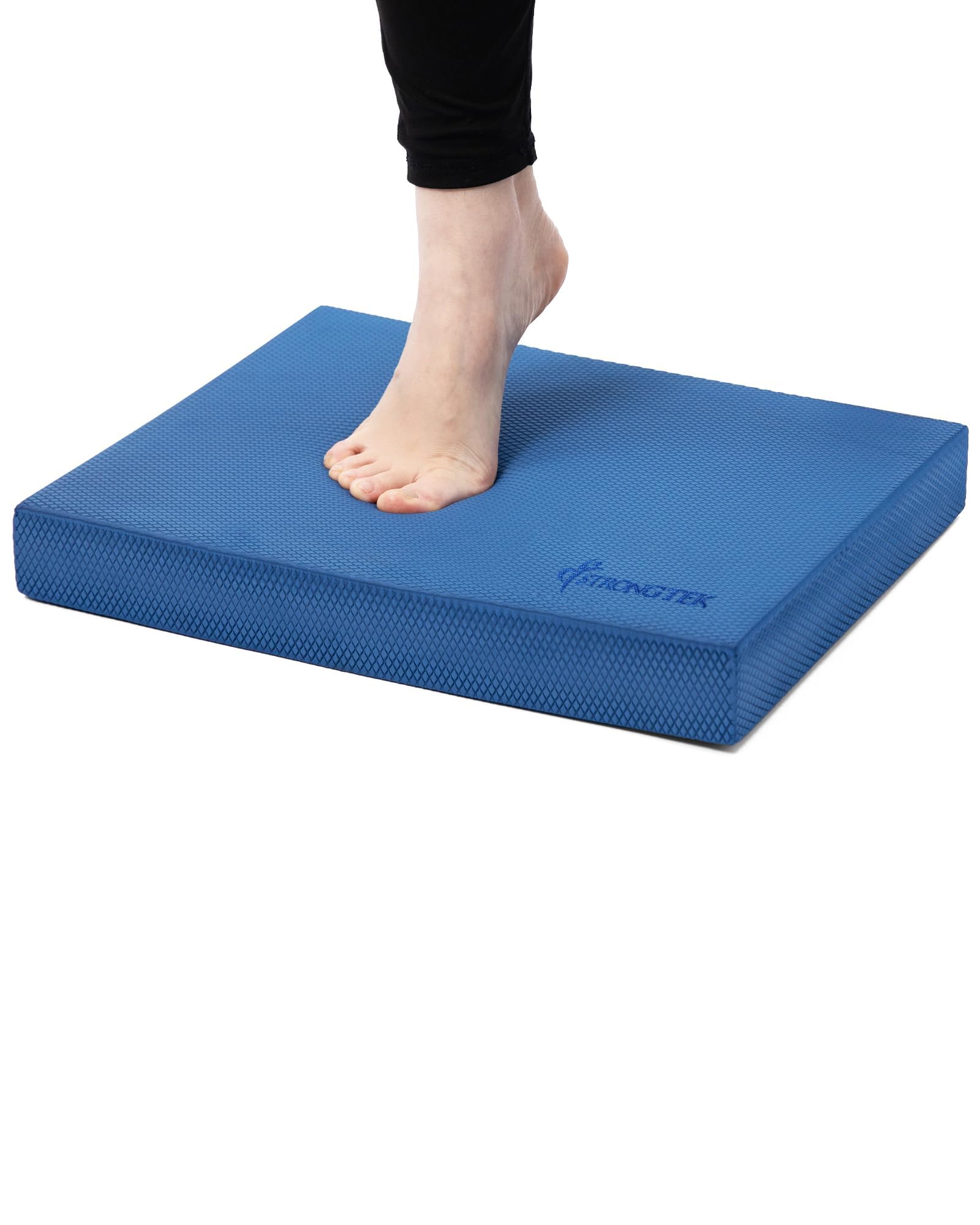
The StrongTek is the pad that feels least like a cushion and most like a dense mat. Its 2-inch TPE foam has a firm, flat surface, and the 15.8-by-13-inch platform gives you room for a two-foot stance without the sink of a softer pad. We liked it immediately for yoga and floor work, where a stable base matters more than plushness.

Under hands in a plank or downward dog, the texture is noticeable but not abrasive, and the pad stays put on a smooth floor. It is thick enough to protect knees during lunges and stretches, though it does not have the deep give of the Vive. At 11.2 ounces, it is light enough to hang on a hook or slide under a couch, and the 15.8-inch length fits a standard mat without sprawling.

The firmness is the point. If you want a pad that makes standing balance feel sharp and uncluttered, this is the one; if you want a soft landing for sore knees, the Vive is the better fit. The TPE surface wipes clean, and the single-piece foam has no straps or covers to fuss with, which is why it stays in our rotation for daily mat work.

Pros

  • Firm, flat feel for balance work
  • Roomy 15.8-by-13-inch surface
  • Textured TPE wipes clean
  • Light 11.2-ounce build

Cons

No notable drawbacks to flag.

Our verdict

Buy this if you want a firm, flat pad for yoga and floor work rather than a soft cushion underfoot.

Check Latest Price
5

Best for Small Spaces

THERABAND Stability Trainer

92 /100
Peggy's Score Outstanding

Key details

Thickness
2 in
Surface Size
16 x 9 in
Firmness Level
Soft intermediate
Weight Capacity
300 lb
Check Details on Amazon

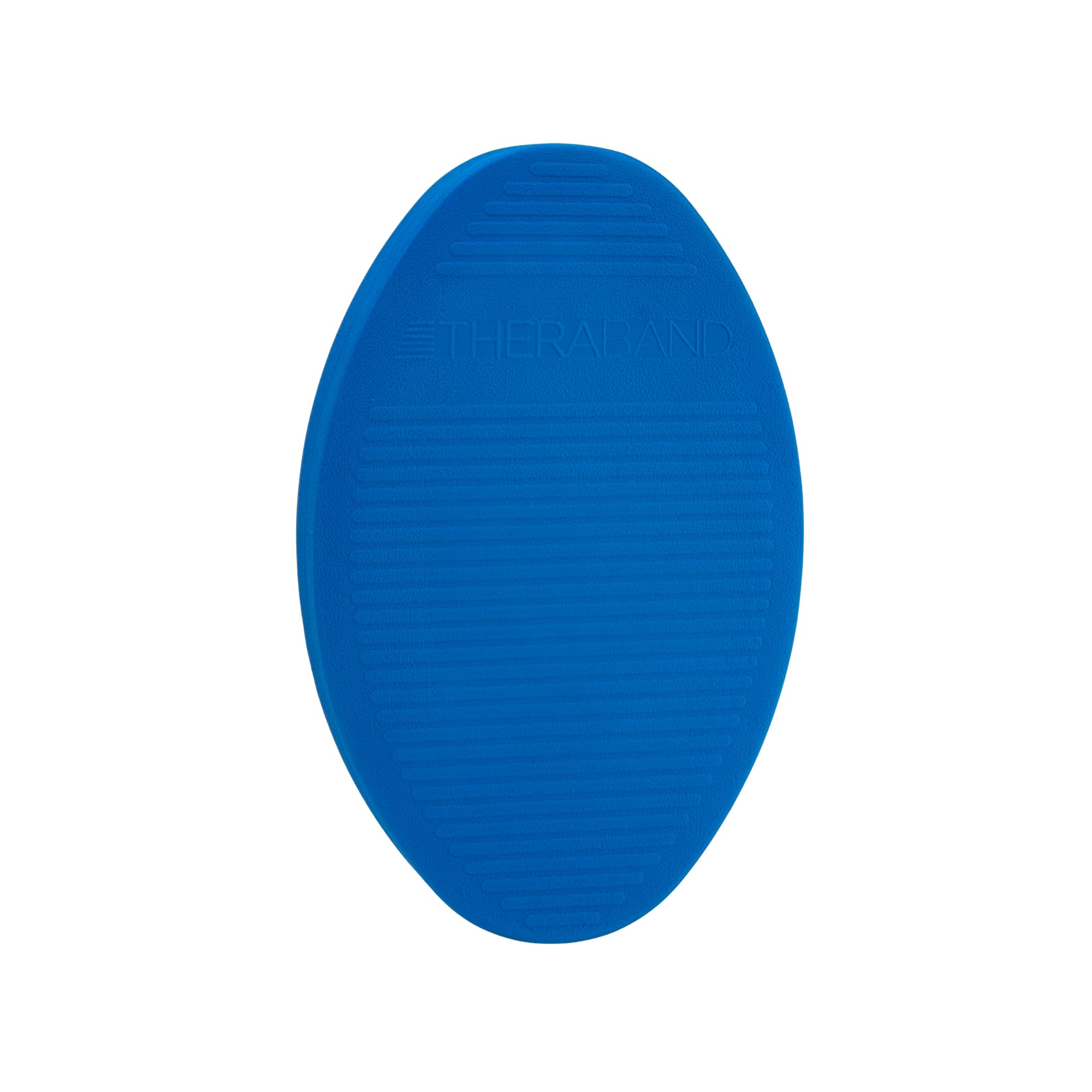
The THERABAND pad is narrower than every other pick here: 16 by 9 inches, with a 2-inch foam platform. That makes it look like a specialty tool beside the larger pads, and in practice it is one. The blue foam is the softer intermediate level in the line, so it gives a little more movement than a firm pad while still staying stable underfoot.

We found the narrow shape most useful for single-leg work. It fits easily in a small duffel or beside a desk, and the textured surface kept it in place on a smooth floor. The foam has a gentle give rather than a sharp, hard rebound. The 300-pound capacity is fine for most home users, and the pad wipes clean after bare feet or shoes.

The compact footprint is the reason to choose it: it forces a narrower stance, which is exactly what you want for ankle and single-leg drills, and it stores where a full-size pad will not. For two-foot standing work, one of the larger pads is more comfortable. The color-coded softness also makes it easy to move up to a firmer level later.

Pros

  • Compact 16-by-9-inch footprint
  • Textured non-slip surface
  • Soft intermediate foam

Cons

  • Softer foam may feel easy for advanced balance work
Our verdict

This is the one for single-leg drills in a tight room, where a smaller platform is an advantage.

Check Latest Price
6

Best Budget

Yes4All Balance Pad

91 /100
Peggy's Score Outstanding

Key details

Material
TPE foam
Thickness
2 in
Surface Size
15.5 x 13 in
Weight Capacity
1102.3 lb
Check Details on Amazon

The Yes4All is the budget pick in this set, and it keeps the basics simple: a 15.5-by-13-inch TPE platform, 2 inches of foam, and a 1.1-pound body. It does not have the plushest surface here, but it is firm enough for standing balance drills and comfortable enough to kneel on for short floor sessions.

We found the 500 kg weight limit surprising for such a light pad, and it makes this a reasonable choice for heavier users who want a straightforward platform. The foam has a firm, supportive feel without the dense spring of the AIREX. It is the pad we reach for when we want a spare by the television or a second pad for a partner.

The TPE surface wipes clean, and the light weight makes it easy to move or store. There is no strap or exercise guide in the box, so this is a pad for someone who already knows the drills or has a routine to follow. A one-year warranty is modest, but it matches the simple build. If you want a pad that disappears into a closet between sessions, that simplicity is an advantage.

Pros

  • Firm enough for basic balance drills
  • Light 1.1-pound build
  • 500 kg weight capacity

Cons

  • Edges can chip if dragged or heavily loaded
Our verdict

If you need an inexpensive pad for basic balance drills and kneeling support, this one covers the job.

Check Latest Price
7

Home Rehab Kit

Pete's Choice Balance Pad

93 /100
Peggy's Score Outstanding

Key details

Included
Strap and exercise guide
Material
Foam
Thickness
2 in
Surface Size
16 x 13.5 in
Check Details on Amazon

The Pete's Choice pad arrives with a stretching strap and an exercise guide, which is more than most pads here include. The pad itself is a 16-by-13.5-inch foam platform with a 2-inch thickness and a 12-ounce body. It is a familiar shape and weight, and the extras are what make it worth a look.

We found the foam firm and supportive underfoot, with enough give for kneeling work. The smooth surface wipes clean, and the pad stayed put on a dry floor during standing drills. The strap is useful for calf and hamstring stretches after a session, and the guide gives a beginner a place to start instead of a list of exercises to look up.

For a home rehab routine, the bundle is the point: you get the pad and a way to use it without buying a separate strap. The pad does not feel like a premium upgrade over the ProsourceFit or StrongTek, but the included tools make it easier to begin. That matters if you are starting from zero and want a routine you can follow on day one. The strap is the part we kept using after the pad found its spot by the couch.

Pros

  • Includes strap and exercise guide
  • Firm high-density foam
  • 12-ounce weight is easy to carry

Cons

  • XL label overstates its 16-inch length
Our verdict

This is a sensible kit for a home rehab routine because the pad arrives with a strap and exercise guide.

Check Latest Price

How We Chose and Tested Balance Pads

We started by gathering balance pads that showed up repeatedly in physical therapy forums, gym bag recommendations, and retailer best-seller lists, then filtered the field by footprint, stated density, firmness descriptions, and price. We ended up with 12 pads, from feather-light travel options to thicker, denser platforms, and tested them for six months.

Most of our testing happened barefoot in living rooms and a physical therapy studio, with shoes-on checks on gym floors. We stood on each pad for 30-second single-leg holds, squats, lunges, and push-up pluses, noting whether the surface slid on carpet or hardwood, whether our feet sank or the edges rolled, and whether the pad sprang back after compression. To judge difficulty, testers who had never used a balance pad tried the same beginner stance on every model, while more experienced testers added eyes-closed holds; we noted which pads felt wobbly but manageable and which felt like a punishment.

We measured length, width, and thickness with a tape and checked whether two bare feet could stand shoulder-width apart without hanging off. We pressed a thumb into the center and edges to compare density and rebound, then watched for tears, crumbling, and surface wear after daily use. For value, we compared construction, grip with bare feet and socks, and how well each pad handled being dragged out for a quick session; a pad that only worked for one drill or felt slippery in socks lost points.

How to Choose Balance Pads

Match the platform to your stance

A two-foot standing stance needs enough length and width that your feet are not hanging off the edges. Most pads here run about 15 to 16 inches long, while the AIREX stretches to nearly 20. A narrower pad like the THERABAND is fine for single-leg work and easier to store. If you plan to shift your feet or use a split stance, go larger; if you mostly kneel or drill one leg at a time, a compact pad is more convenient.

Thickness and firmness

Thickness is not the same as softness. A 2-inch pad can feel firmer than a 2.6-inch one because foam density does more for support than depth. Firmer pads give a flatter, more demanding surface for standing work; softer ones are kinder under knees but can feel less precise. We look for a pad that does not bottom out under a heel and still has enough give for kneeling. If you want one pad for both, start around 2 to 2.5 inches and expect a compromise.

Grip, material and weight limits

TPE and closed-cell foam resist sweat and wipe clean, and a textured top helps bare feet, but the floor matters just as much. On tile or hardwood, a damp or dusty surface can undo good texture. Check the stated weight limit before standing on a pad, and remember it is a maximum, not a target. Most here are rated 300 pounds or more, with the AIREX at 600.

Durability and storage

Foam pads are simple, but the edges and the spot under your standing foot take the wear. Store the pad flat or on edge, not folded, and keep it out of a crowded closet where it can be crushed. A denser foam tends to hold its shape; a lighter pad can lose its crisp edge over time. If the pad will live in a shared room, weight and footprint matter as much as performance, because the pad you leave out is the one you use.

Frequently Asked Questions

Final Verdict

The ProsourceFit is the balance pad we recommend for most homes: its 15.5-by-12.75-inch surface is big enough for two-foot work, the 2.25-inch TPE foam is comfortable under knees, and 12 ounces makes it easy to move.

Choose the AIREX if your stance is wide or you want the largest platform; choose the THERABAND if storage space is tight and you mostly work one leg at a time. Those are the two requirements that change the pick.