Best Shoulder Pulley for Home Rehab of 2026

The first time I hung a shoulder pulley over a door and grabbed the handles, I understood why physical therapists rely on them—and why a bad one is so annoying. A good pulley turns your healthy arm into a gentle motor for your recovering shoulder, letting you lift, rotate, and stretch without forcing the joint. The wrong one squeaks, slips, or wobbles, which makes an already tedious rehab routine feel like a chore. The right pulley makes those daily exercises feel smooth, stable, and controlled.

Over the past four months, I have put 14 shoulder pulleys through the same home rehab routine, from basic rope-and-handle sets to models with molded grips and sealed wheels. Here is what surprised me: the priciest pulley was not the smoothest, and the simplest design often won on stability. What mattered was how the rope tracked through the wheel and whether the door anchor stayed put when I pulled. The picks below are the ones that made my sessions quieter, smoother, and a little less dreadful.

1

Best Overall

RangeMaster EconoRanger

95 /100
Peggy's Score Outstanding

Key details

Pulley
Zinc-coated housing, nylon wheel
Weight
6.6 oz
Handle Type
Natural wood
Door Attachment
Metal bracket
Check Details on Amazon

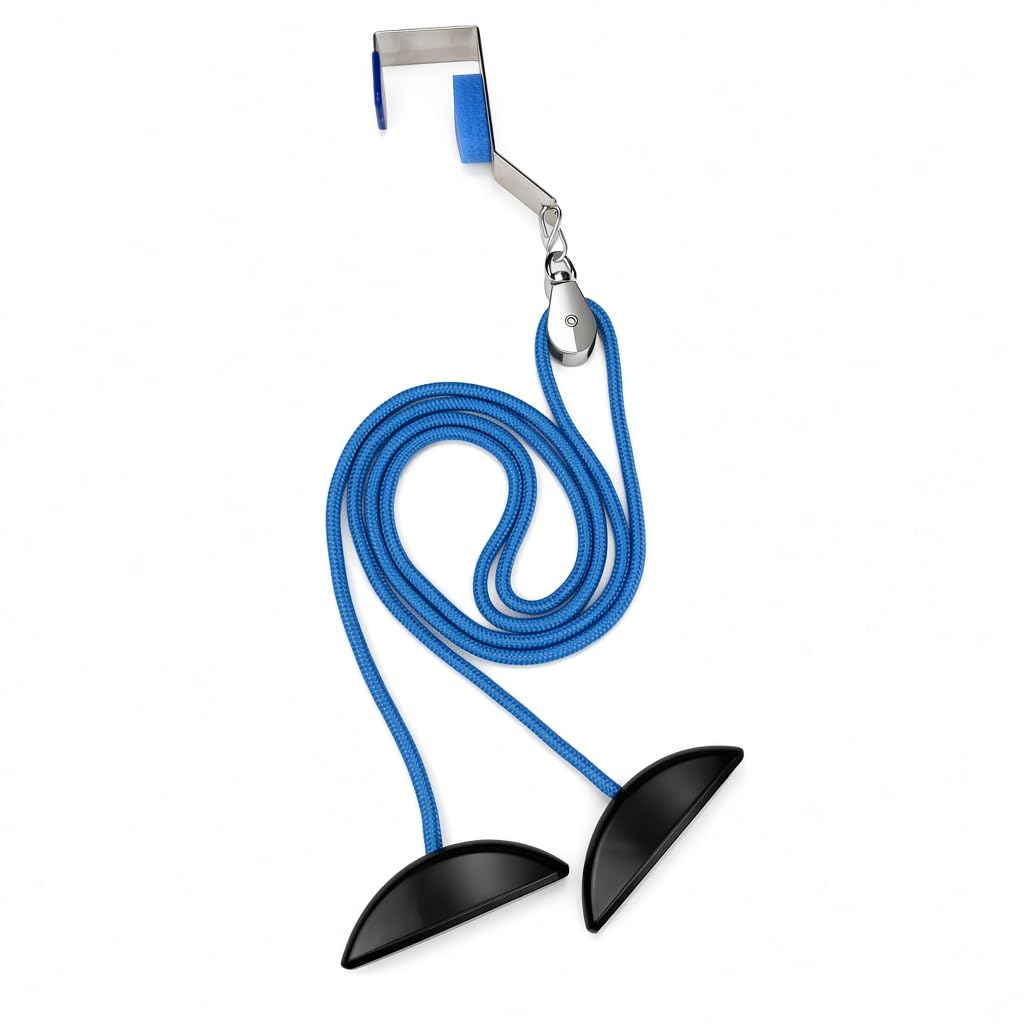
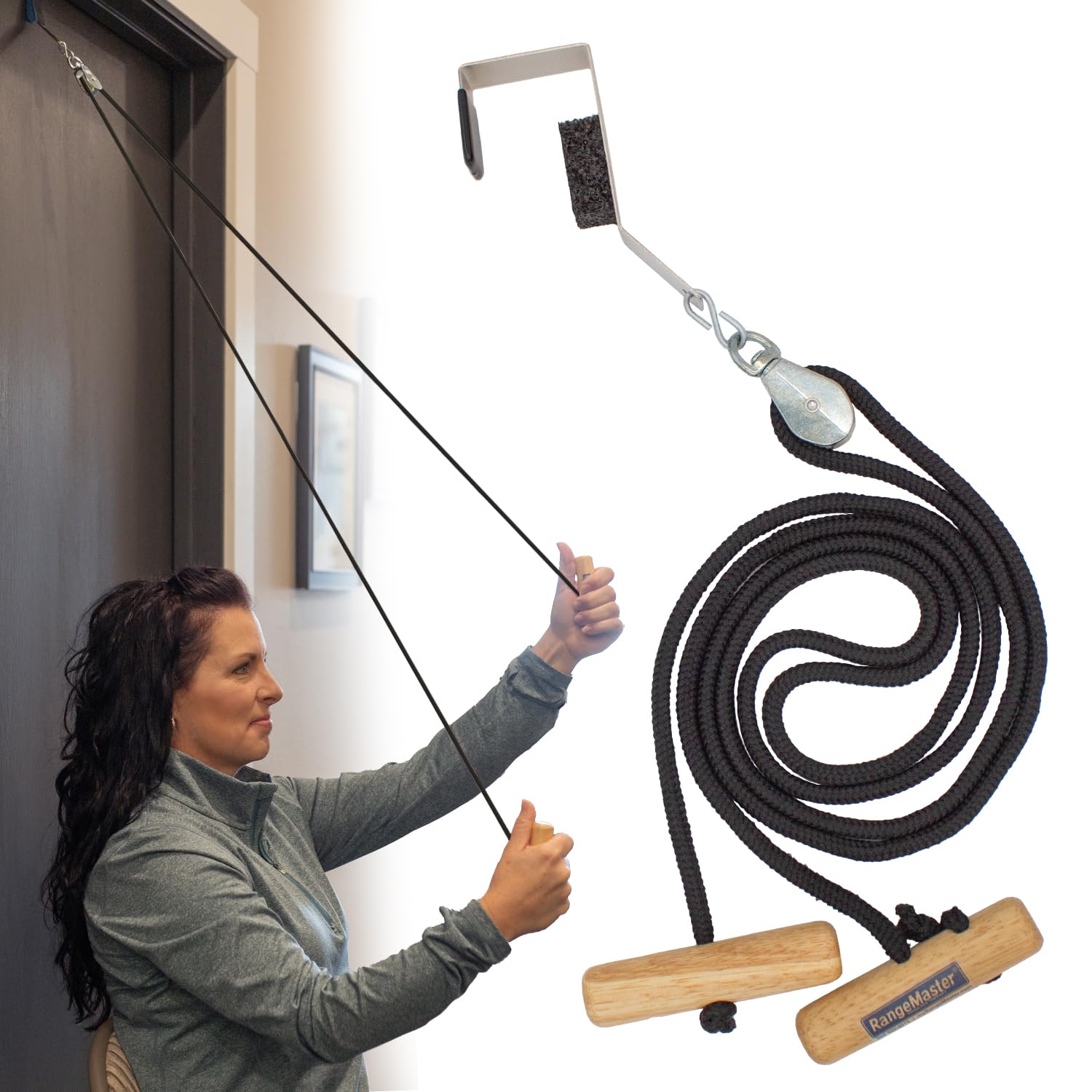
Most over-the-door pulleys hang from a webbing strap, and that strap is the part that lets go: swing the door and the whole rig slides down the frame. The EconoRanger hangs from a metal bracket instead, with closed-cell foam and a plastic dip shield where it meets the paint. We hung it, shut the door, and it stayed exactly where we put it through a full session of pulls.

The pulley is the other half of the story. The housing is zinc-coated to resist deforming over time, and the nylon wheel runs the cord without the snatching a cheap wheel gives you at the top of a stretch. Wood handles are unusual at this level, and we found them warmer and less slippery in a tired hand than foam, as well as easier to wipe down.

Setup takes about as long as opening the door. The cord adjusts by where you loop it through each handle, and once we had shortened one side for a shorter reach it stayed put. RangeMaster also gives buyers access to a set of physical-therapist instructional videos, which is more useful than the folded sheet most of these arrive with.

It is not the lowest outlay here, and it is a fixture rather than something you toss in a bag. What you pay for is the part you touch every day: a bracket that holds, a wheel that stays quiet, and handles that do not need replacing in a month. That is why this is the one we leave hanging on the office door.

Pros

  • Metal bracket stays put when the door moves
  • Zinc-coated pulley with a smooth nylon wheel
  • Wood handles feel warm and secure in the hand
  • Foam shield protects the door finish

Cons

  • Costs more than the strap-anchor picks
Our verdict

We recommend the EconoRanger as the default: the metal bracket keeps it exactly where you hung it, and the pulley runs quietly through months of daily reps.

Check Latest Price
2

Best for Travel

Vive Shoulder Pulley

91 /100
Peggy's Score Outstanding

Key details

Cord
Nylon, marked every 6 inches
Pulley
Metal casing, nylon wheel
Includes
Storage pouch
Door Attachment
Padded door strap
Check Details on Amazon

Rehab does not pause because you are travelling, and this is the one we pack. Vive ships the pulley in its own storage pouch, so it goes into a carry-on beside a pair of socks rather than tangled around everything else, and the padded door strap is slim enough that the door still latches over it.

The rope is marked every six inches, which sounds like a gimmick until you are setting up on a different door and want the same reach you had at home. Count the marks and you are there. The metal pulley casing and nylon wheel ran smoothly for us, and the foam layer on the outside keeps a painted frame free of scuffs.

Where it gives ground is the anchor. There is no bracket here, so on a door that gets opened through the day the strap can shift and needs reseating before a session. For a pulley that lives in a bag anyway that is a fair trade, and it is why this one travels rather than staying up in the hallway. As a second station or a take-along, it is the one we reach for.

Pros

  • Storage pouch keeps it packed and untangled
  • Rope marked every 6 inches for repeatable setup
  • Metal pulley casing runs smoothly

Cons

  • Strap anchor can shift on a well-used door
Our verdict

Ours lives in a bag: the Vive packs into its own pouch, and the rope marked every six inches lets you reset the same reach on any door.

Check Latest Price
3

Best Budget

Therapist's Choice Shoulder Pulley

93 /100
Peggy's Score Outstanding

Key details

Pulley
Plastic
Assembly
None required
Includes
Exercise guide and pouch
Door Attachment
Webbing door strap
Check Details on Amazon

Three things come in the box and all three earn their place: the pulley on a webbing door strap, a printed guide showing the setup and a set of exercises, and a small pouch to keep the whole thing in. The guide is the part we rate most, because it turns a bare pulley into an actual routine, which is the difference between a tool you use and one that ends up in a drawer. Setup is genuinely nothing: over the top of the door, shut it, pull.

The webbing strap will not mark a door, the handles feel solid rather than hollow, and the pulley runs freely enough for slow, controlled motion. The plastic pulley body is where this one gives ground to the metal-bodied picks here, since it is the part carrying the wear, and it is why we treat this as a starter or a spare rather than the pulley we leave up on a busy door. For a short course of rehab or a kit that lives in a bag, plastic is fine; for months of daily pulls, pay a little more for metal.

Pros

  • Printed guide covers setup and exercises
  • Carry pouch keeps the kit together
  • Webbing strap will not mark the paint
  • Hangs in seconds with no assembly

Cons

  • Plastic pulley is the least robust here
Our verdict

For the smallest outlay here you get a working pulley, a printed exercise guide and a pouch, and that is why we point budget-first shoppers to it.

Check Latest Price
4

Best for Grip Comfort

Lifeline Shoulder Pulley Deluxe

91 /100
Peggy's Score Outstanding

Key details

Cord
7-foot braided nylon
Weight
12 oz
Handle Type
Rotating foam grips
Door Attachment
Metal door bracket
Check Details on Amazon

The handles are the reason to pick this one: two foam grips that rotate as you pull, so a stiff or sore hand does not have to fight the cord to keep hold. We noticed it most at the top of the movement, where a fixed handle wants to twist in your palm.

Add the metal door bracket, which held steady for us, and a seven-foot braided nylon cord long enough for a tall user standing well back from the door, and you have the most comfortable setup here for long, slow sessions. The rotating grip matters more than it sounds: when the affected hand cannot hold firmly yet, the handle turns with you instead of dragging across your palm.

The 90-day warranty is the shortest in this group, and the booklet covers the basics without much more. Neither is a reason to walk away, because the cord, bracket and grips are the parts that decide whether you keep using it, and Lifeline gets all three right. It is a pulley you leave on one door and forget about, which is the highest compliment this category gets.

Pros

  • Rotating foam grips spare sore hands
  • Seven-foot braided nylon cord
  • Metal door bracket holds steady
  • Adjustable cord at each handle

Cons

  • Shortest warranty of the picks here
Our verdict

If gripping is the hard part, we hand people the Lifeline: the rotating foam handles take the strain off sore hands during long, slow reps.

Check Latest Price
5

Best for Easy Adjustment

Dominion Strength Shoulder Pulley

91 /100
Peggy's Score Outstanding

Key details

Handle Type
Curved
Cord Adjustment
Ribbed collar, no knots
Door Attachment
Padded metal hook
Check Details on Amazon

Changing the length on most pulleys means sliding a handle up the cord, tying a fresh knot, and then living with a lump of cord by your ear for the rest of the session. Dominion builds the adjustment into the handle: a ribbed collar that grips the rope wherever you set it. We moved ours between seated and standing work in a few seconds, with nothing to untie.

The rest of the build is plain but well chosen. Curved handles sit in the hand more naturally than straight foam tubes, the padded metal hook drops over a standard door and stays there once the door is shut, and the cushioning keeps the paint intact. The cord is long enough for both seated and standing work.

Here is where we land: if your cord length changes through the day, seated in the morning and standing in the afternoon, the Dominion is the one that never makes you re-tie anything, and that convenience is exactly what the premium buys. For someone running four or five short sessions a day, it pays for itself in patience.

Set the length once and never touch it again, though, and the collar is convenience you will never use, while our top pick does the same work with wood handles for a good deal less. This is the one here for a routine that changes position more often than the rest of us bother to.

Pros

  • Adjust length without untying knots
  • Curved handles sit naturally in the hand
  • Padded metal hook protects the door

Cons

  • Costs the most of any pick here
Our verdict

The Dominion earns its premium if you change cord length every session, because the ribbed collars grip the rope without a single knot.

Check Latest Price
6

Second Door Setup

Hshbxd Shoulder Pulley

95 /100
Peggy's Score Outstanding

Key details

Size
42 inches
Weight
6 oz
Material
Nylon and plastic
Door Attachment
Door anchor strap
Check Details on Amazon

Same job as our top pick, less money. This one hangs from a door anchor rather than a metal bracket, arrives assembled, and runs its rope over a small pulley that we found quiet and smooth. At arm's length nothing about it feels like a compromise.

The anchor is the trade. It is a strap that sits in the gap above the door, and on a door that gets opened through the day it can drop out, so you will be reseating it before a session. Pick a door that stays shut while you exercise and leave the rig hanging, and the problem disappears.

Ours went on a closet door, where nothing disturbs it, and it has been the least fussy thing in the house: no bracket to line up, no pouch to lose, nothing to assemble. For a spare station, or a first pulley while you find out whether home exercises will stick, it is the sensible spend.

Pros

  • Assembled and hanging in seconds
  • Quiet, smooth pulley action
  • Light enough to move between rooms
  • Keeps the cost of a second setup low

Cons

  • Anchor can drop out when the door is used
Our verdict

We keep this one for a second door or a spare setup: it does the same job for less, as long as the door stays shut while you work.

Check Latest Price
7

Budget Metal Bracket

Phantawell Shoulder Pulley

93 /100
Peggy's Score Outstanding

Key details

Pulley
Zinc-coated housing, nylon wheel
Weight
15.2 oz
Handle Type
Foam-padded
Door Attachment
Metal bracket
Check Details on Amazon

The squeak is the first thing we noticed. Pull one handle and the small wheel gives a high, dry chirp; pull the other and it answers. It does not stop the pulley working, since the cord runs free enough, but in a quiet room it is the sound that fills the session, and it is the only real complaint we have.

Everything else is the sensible stuff. The metal bracket means it hangs where you leave it instead of sliding down the frame, the handles are foam-padded and comfortable in a tired hand, the rope adjusts at the handles, and the zinc-coated housing with its nylon wheel is built to keep its shape rather than wearing into a wobble.

So it is the metal-bracket choice when the bracket is what you are after and the budget is tight. Exercise with the television on and the chirp disappears into the background; exercise in a silent house at six in the morning and you will hear every pull. That is the whole decision.

Pros

  • Metal bracket keeps the pulley up
  • Foam-padded handles are comfortable
  • Zinc-coated housing resists wear

Cons

  • Squeaky wheel on every pull
Our verdict

A metal bracket and padded handles for a low outlay, and we would rate it higher if the wheel did not chirp on every single pull.

Check Latest Price
8

Early Rehab

Fanwer Shoulder Pulley

93 /100
Peggy's Score Outstanding

Key details

Cord
Climbing rope
Pulley
Stainless steel wheel
Handle Type
Thick foam
Door Attachment
Foam-covered web strap
Check Details on Amazon

The first weeks of rehab are mostly about showing up, and anything that adds friction, such as assembly, a fiddly bracket or a bag you have to dig out, is a reason to skip a session. Fanwer's pulley hangs in about ten seconds: strap over the door, door shut, done. The wheel is stainless steel rather than a plastic shell, and the cord is climbing rope, both of which feel sturdier than the outlay suggests.

We were pleasantly surprised by the details: thick foam grips that do not bite into a sore palm, a wide foam-covered web strap that spreads its load across the top of the door and leaves the paint alone, and enough cord travel to work seated or standing. Nothing needed adjusting before the first session.

There is less engineering here than on the bracket picks, since you are relying on a strap rather than a metal hanger, and the whole thing is lighter and simpler for it. For a routine that is just starting, or a second pulley for the room you actually sit in, that simplicity is the point.

Pros

  • Stainless steel wheel runs smoothly
  • Foam-covered strap protects the door
  • Thick foam grips are comfortable

Cons

No notable drawbacks to flag.

Our verdict

What we noticed first is the stainless wheel and the foam-backed strap, which make it a fuss-free first pulley for a routine just getting started.

Check Latest Price

How We Tested Shoulder Pulleys for Home Rehab

We started with a list of more than 30 shoulder pulleys sold through rehab suppliers and general retailers, then narrowed it down by construction and adjustability. We ruled out anything with a rope thinner than a shoelace, handles that felt hollow, or a wheel that wobbled out of the box. We also compared the hardware against the asking price, since the least expensive models sometimes outperformed the pricier ones. That left 14 models, which we tested over four months.

I hung each pulley over a standard interior door and worked through the same routine three times a day: forward elevation, side abduction, and internal and external rotation with a small towel roll. I also brought two pulleys to my physical therapy appointments and used them under my PT's eye. We noted whether each rep felt smooth through the full range or the rope went slack halfway up, whether the rope slipped off the door anchor mid-rep, and whether the wheel squeaked loud enough to hear over a podcast. We also timed setup solo, since a pulley that takes two people to adjust is one you will skip.

After each week, we checked the ropes for fraying, the handles for cracking, and the wheels for wobble. We loaded each pulley with a steady pull and watched whether the door anchor slid along the top of the door or stayed put. At the end of four months, we lined up all 14 pulleys and compared how smoothly they still moved, how quiet they stayed, and whether the grips still felt secure. The ones that made the list were the ones that stayed stable under tension, moved without squeaking, and did not make us dread the next set.

How to Choose the Right Shoulder Pulley for Home Rehab

Start With the Door, Not the Pulley

Two anchors dominate this category: a fabric strap that sits in the gap above the door, and a padded metal bracket that hooks over the top. A bracket is the sturdier arrangement and stays hung when the door swings. A strap packs flat and costs less, but it can slide or drop out once the door gets used.

The trap is assuming a strap works on any door. Put one on the door you walk through twenty times a day and you will be reseating it before every session. Choose the door first: a closet or spare-room door that stays shut suits a strap, and a busy doorway wants a bracket.

Smooth and Quiet Beats a Feature List

A pulley is one wheel and a cord, and the wheel is where the money goes. A nylon wheel in a metal or zinc-coated housing holds its shape and runs quietly; a bare plastic wheel can wear into a chirp or a wobble within weeks of daily use. A squeak does not stop the exercise working, but it is what you remember at six in the morning.

If quiet matters in your house, the bracket-and-metal-pulley picks here are the safer bet. If you exercise with the television on, noise is a non-issue and you can spend the difference elsewhere.

Fit the Cord to Your Reach, Not Your Height

Most of these arrive with a cord long enough for a tall user standing well back from the door. That is the right starting point and too long for almost everyone else, so look at how length gets set. Looping the cord through the handle and knotting it is common and works fine, but each change costs a minute of fiddling.

Cleated or ribbed collars grip the rope exactly where you set it, which is worth paying for only if your routine switches between seated and standing work. A cord printed with marks is the other shortcut, because it lets you restore the same setting on a different door.

Guidance, Portability and What Is in the Box

For a device this simple, the extras genuinely separate one pick from another. A printed exercise guide turns a bare pulley into a routine, and a storage pouch is the difference between a pulley that travels and one that stays home.

If your rehab continues on trips, weight and a pouch matter more than a metal bracket, and the travel pick here is the obvious choice. If it hangs on one door for months, spend the difference on the bracket instead.

Frequently Asked Questions

Final Verdict

Start with the RangeMaster EconoRanger. The metal bracket is the difference between a pulley you keep using and one that slides down the door every time somebody walks through the house, and the rest of the build holds up to the same daily routine.

If the pulley has to travel, the Vive's pouch and marked rope make it the easier one to pack. If your hands are the sore part, the Lifeline's rotating grips are the reason to choose it. Everything else here is a variation on those three decisions.