Best Leg Stretcher Machines of 2026

For years my hamstring routine was the same: heel in a doorway, hand on the floor, hold for 30 seconds, pretend it was working. A leg stretcher machine does the part you can't do for yourself — the frame holds your leg at the edge of your range so the muscle can let go instead of fighting you. No partner pressing on your back, no counting in your head, and you can do it while the news is on. We've spent six months with nine of these, and the ones that earn their floor space are the ones you don't dread getting into.

The mistake I see first-time buyers make is shopping for maximum split width. Most of us don't need a full split; we need five more degrees in the hamstring and a frame that doesn't wobble when we lean into it. Padding that doesn't dig into the calf, leg support that actually holds the limb, and adjustability you can work one-handed matter far more than the spec sheet suggests. The nine machines below were judged on exactly that.

1

Best Overall

seanleecore Leg Stretcher Machine

86 /100
Peggy's Score Excellent

Key details

Warranty
365 days
Item Weight
12.7 lb
Frame Material
Stainless steel and thermoplastic elastomer
Max User Weight
300 lb
Check Details on Amazon

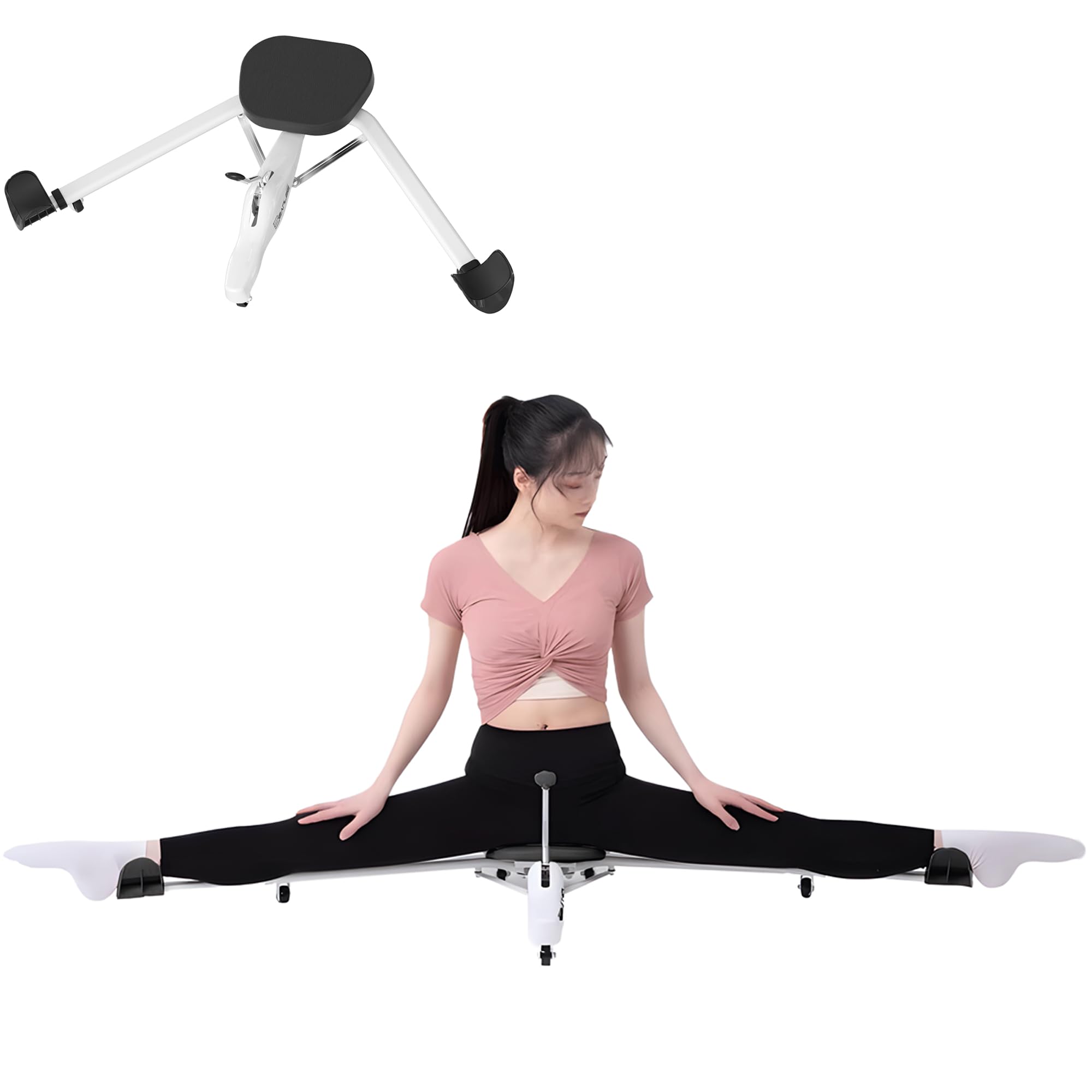
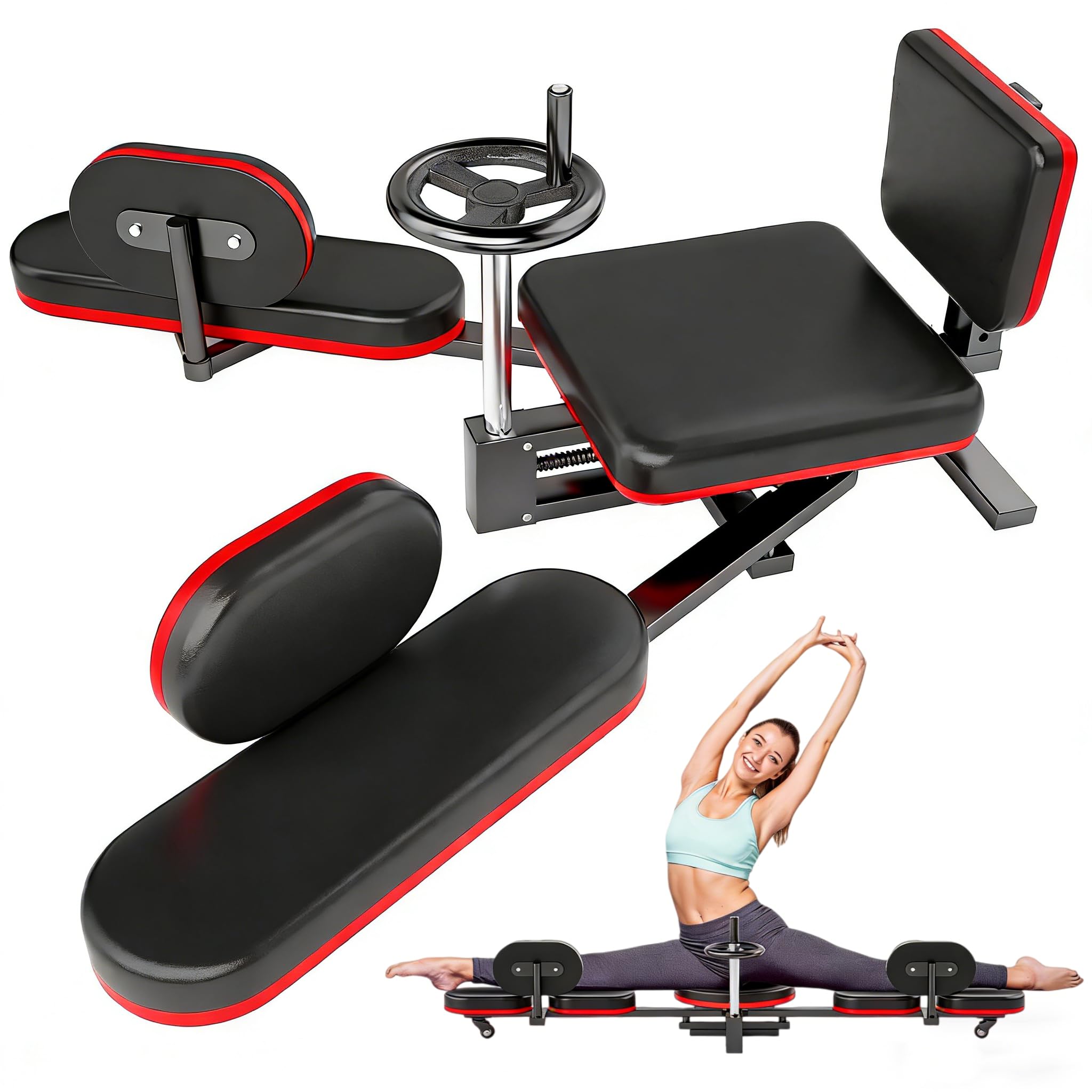
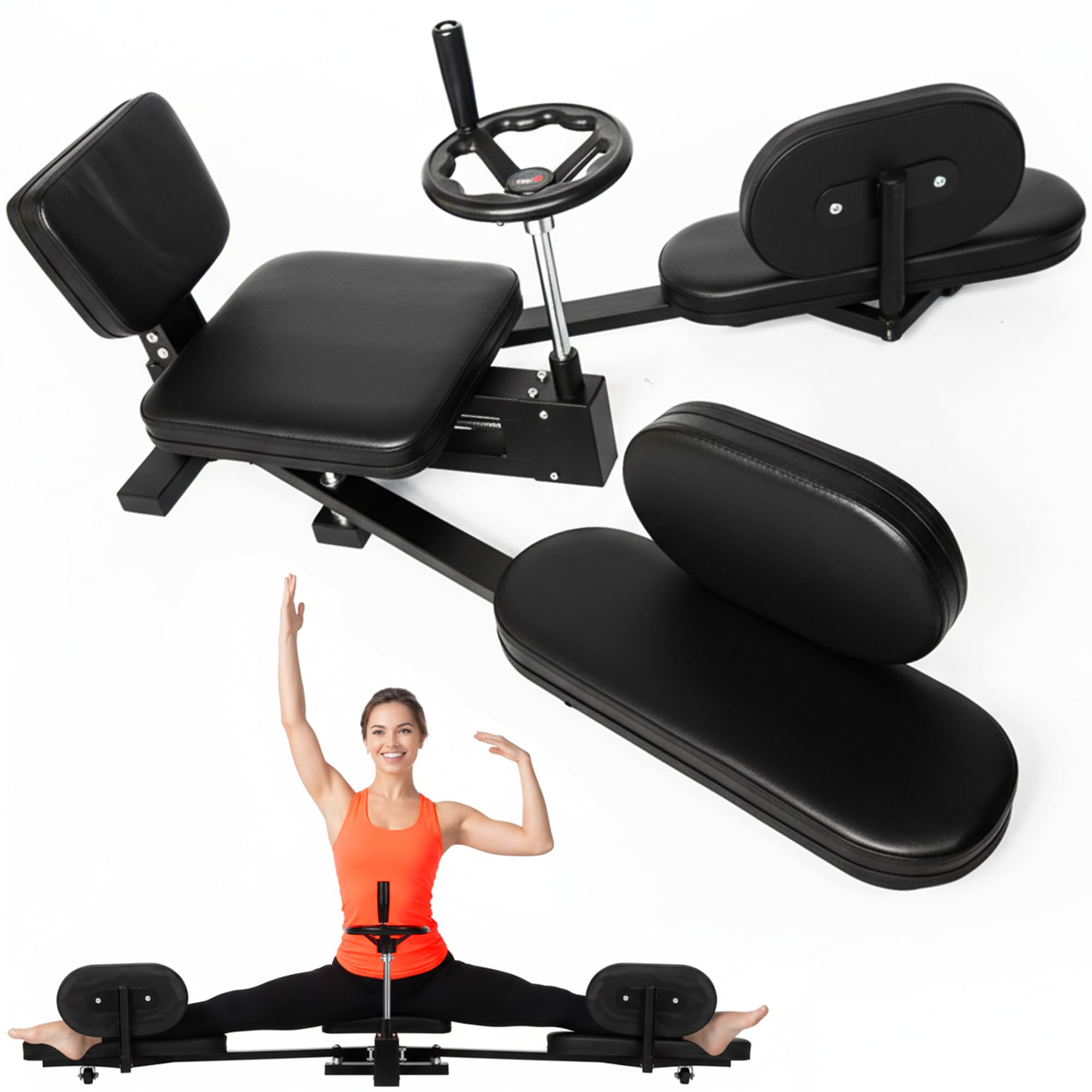
Stretching alone is where split training usually stalls. On the floor you can push into a stretch, but the moment it gets serious there's no way to hold it steady or back it off by a degree, so you either bounce or you give up. The seanleecore answers that with a geared hand crank that moves the legs in small, deliberate steps and stays where you leave it.

What settled it for us is how well that control works when nobody is spotting you. You turn the crank with one hand while seated, the legs travel a little, and you can stop exactly where the stretch is productive and unwind it just as easily. It adjusts for leg length, so a shorter and a taller person in the same house both get a workable position, and the 300-pound rating matches most of this group. Across stretching, assembly and everyday use, it's the most consistent machine here.

At 5.78 kg the frame is light enough to shift with one hand and slide under a bed, which matters more than it sounds. A stretcher that lives in the middle of the floor gets used for a week and then becomes furniture. Assembly takes minutes, and the stainless steel and rubberized padding hold up to daily sessions rather than flexing away from you.

The crank doubles as a progress gauge, too: count the turns from one session to the next and you have a number that climbs even in weeks when the mirror shows nothing. That's the difference between a machine you use for a month and one you keep.

Pros

  • Geared crank moves in small, controlled increments
  • Adjusts to leg length for shared use
  • Light enough to move and store
  • Rated to 300 pounds

Cons

  • Seat runs narrow for broader hips
  • No support under the knees
Our verdict

The one we recommend first: a geared crank you can stop and reverse mid-stretch, a 300-pound frame light enough to slide under a bed, and the most consistent performance in this group.
Check Latest Price
2

Best Built

TDH Leg Stretcher LR05

87 /100
Peggy's Score Excellent

Key details

Frame
1.5mm reinforced alloy steel
Warranty
1 year
Max User Weight
300 lb
Split Angle Range
0° to 210°
Check Details on Amazon

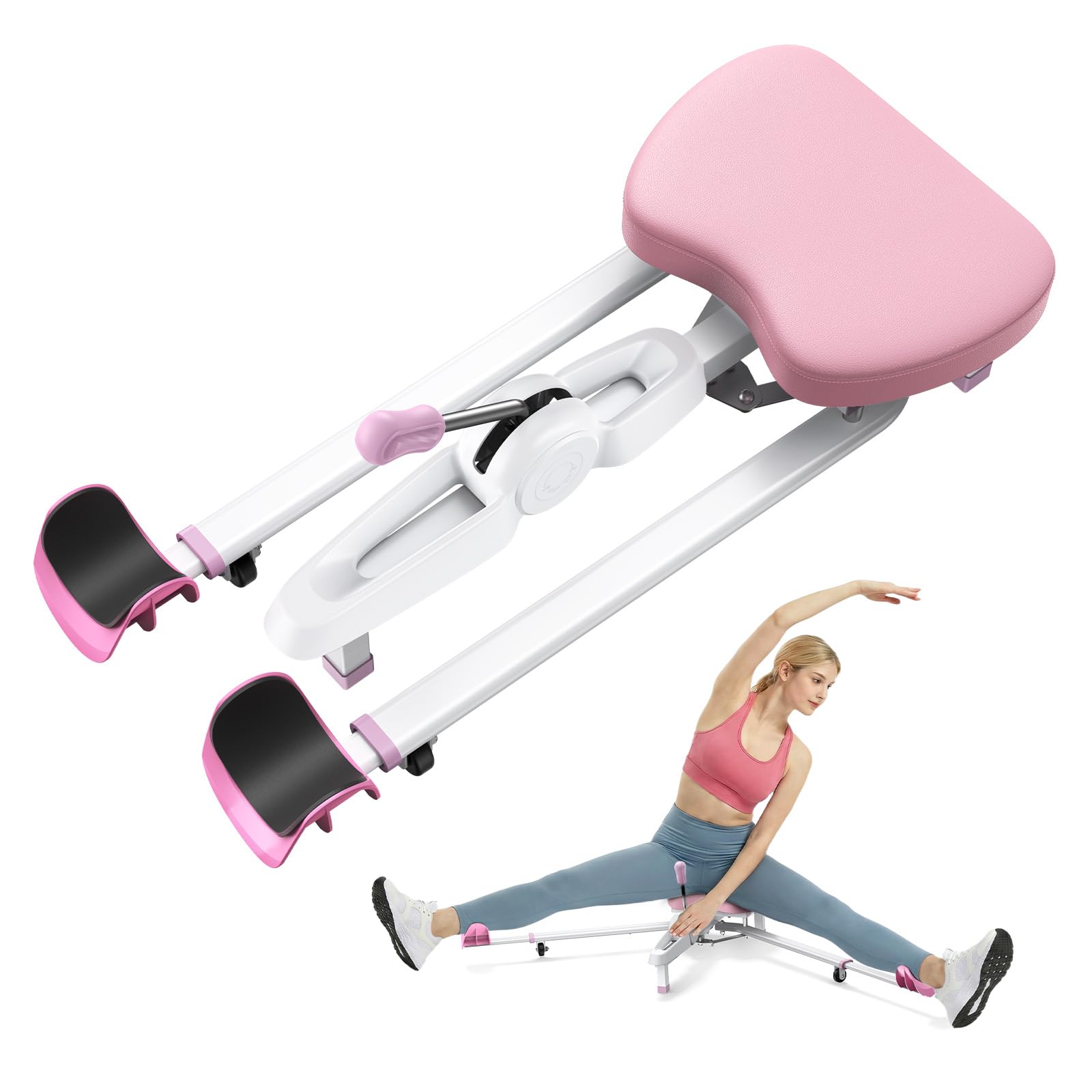
Two hundred and ten degrees is more range than most people chasing a front split will ever use, and that's rather the point: the TDH is the machine we hand to someone who plans to use it every day. It's built on 1.5mm reinforced steel with dual calf pads and wide PU leather cushions, and it feels like the most solid thing in this group.

The handwheel turns smoothly, so the stretch arrives in small increments rather than all at once, and the padding spreads pressure across the calves instead of concentrating it in one spot. It's compact enough to leave assembled in a corner between sessions, and the seat is generously sized.

Spend here if build quality is what you care about. The heavier gauge steel and the one-year manufacturer warranty are what the premium price buys, and for someone stretching five or six days a week, that margin is worth having.

Pros

  • Thicker 1.5mm reinforced steel frame
  • Opens to 210 degrees
  • Smooth handwheel makes small adjustments easy
  • One-year manufacturer warranty

Cons

  • Calf pads run short for long legs
  • No degree markings on the frame
Our verdict

Buy it if you want the most solidly built machine here and range that runs well past a full split; the calf pads favor average-height legs and the price sits at the top of the group.

Check Latest Price
3

Best for Larger Users

MuscleForge Leg Stretcher

84 /100
Peggy's Score Excellent

Key details

Warranty
2 years
Dimensions
38.58"D x 14.96"W x 16.54"H
Max User Weight
330.7 lb
Split Angle Range
Up to 180°
Check Details on Amazon

If you're over 200 pounds, or you simply don't trust a twelve-pound frame to hold you at your widest, the MuscleForge is the machine here built to answer that worry. It carries a 330.7-pound maximum user weight, weighs 22 pounds itself and uses a stainless steel frame — the heaviest and highest-rated build in this group.

It's not small. At 38.58 by 14.96 by 16.54 inches it takes up real floor space, though it stands upright against a wall between sessions and the 360-degree wheels make it easy to shift on a hard floor. Setup is straightforward by design: you sit, set your legs on the rests and turn the wheel. A user guide is in the box and a two-year manufacturer warranty sits behind it.

What you're buying is margin. The extra steel means the frame doesn't flex when you push deeper, and the linear bearing straps keep the leg carriages tracking evenly instead of racking side to side — a real advantage for a heavy or strong user. It's also why we don't send most people here: you feel those 22 pounds every time you move it, and it costs more than anything else in this group.

Pros

  • Rated to 330.7 pounds
  • Stainless steel frame with linear bearing straps
  • Stands upright between sessions
  • Two-year manufacturer warranty

Cons

  • Heaviest machine here at 22 pounds
  • Stops at 180 degrees
Our verdict

The pick for heavier or stronger users: 330.7-pound capacity, a stainless frame that does not flex, and a two-year warranty, in exchange for 22 pounds and the highest price here.

Check Latest Price
4

Best Budget

MERACH Split Machine

85 /100
Peggy's Score Excellent

Key details

Item Weight
10.8 lb
Max User Weight
300 lb
Split Angle Range
180°
Leg Length Adjustment
27.5 to 36.2 inches
Check Details on Amazon

The MERACH is the least expensive split machine in this group, and it doesn't read like one. You get a full 180-degree mechanism, a handbrake you work with one hand and six length settings tucked into the frame — most of what matters, for a first machine, at the bottom of the price range.

The handbrake is the part we point a beginner toward. Instead of turning a wheel a quarter at a time, you squeeze a lever and the legs ease apart or come back together, which makes it much easier to stop the moment a stretch turns sharp. The six locking holes run from 27.5 to 36.2 inches, so one machine fits a short teenager and a tall adult.

At 10.8 pounds and 5.9 inches tall it slides under a bed, and the extra-wide seat and thick leg pads are aimed at the person who's going to sit in it for fifteen minutes at a time. The ABS and steel-pipe frame is where the savings show, and it doesn't feel as planted as the all-steel machines here.

Where it earns its place is as the machine you buy before you know whether split training will stick. Controlled one-handed stretching, a frame that fits in a small apartment and the lowest price here — and if you outgrow it in a year, you'll know exactly what to look for next.

Pros

  • One-hand handbrake releases tension fast
  • Six length settings from 27.5 to 36.2 inches
  • Extra-wide seat and thick leg pads
  • 10.8 pounds, slides under a bed

Cons

  • Capped at 180 degrees
Our verdict

A first split machine that does the important things: one-hand handbrake control, six length settings and a price at the bottom of this group.

Check Latest Price
5

Tracking Range

QNLONG Leg Stretcher

78 /100
Peggy's Score Very Good

Key details

Seat
Solid wood with high-density sponge
Item Weight
25.4 lb
Max User Weight
300 lb
Split Angle Range
Up to 230°
Check Details on Amazon

The QNLONG claims the widest range here at 230 degrees, and it puts a degree gauge on the frame — a combination that looks like the most serious training tool in this group on paper. The catch is where the gauge sits. Once you're reclined with your legs in the pads, it's behind you, so you read it before and after rather than during.

The seat is a solid wood pan under high-density sponge, which is a firmer sit than the padded chairs on some of these machines. Fine for a ten-minute session, less pleasant if you like to read in it, and a folded towel under you buys a surprising amount of relief. Length adjusts for children and adults, and it takes up little room when it's not in use.

The stretch itself is the strongest thing about it. A 300-pound steel frame, a handwheel that moves smoothly and range past a full split add up to a machine that does the job it was bought for. It's the details around the stretch that keep it out of the top tier.

Pros

  • Widest claimed range here at 230 degrees
  • Degree gauge on the frame
  • Steel build with a solid wood seat
  • Length adjusts for kids and adults

Cons

  • Sold without a manufacturer warranty
  • Assembly instructions are hard to follow
Our verdict

Worth it for the widest range here and a gauge to track it, provided you accept firm padding, fiddly assembly and a machine sold without a warranty.

Check Latest Price
6

Shared Households

Yes4All Leg Stretcher Split Machine

81 /100
Peggy's Score Excellent

Key details

Item Weight
5.1 lb
Leg Length Fit
24 13/16 to 33 7/16 inches
Max User Weight
300 lb
Split Angle Range
0° to 180°
Check Details on Amazon

Two machines here give you a handbrake rather than a crank, and the Yes4All is the cheaper of them. We like the idea behind it: squeeze the lever, the legs ease apart, release and the position holds. It's the quickest way in and out of a stretch in this group, and at 5.1 pounds it's the lightest split machine worth recommending here.

Six holes on each pole set leg length between 24 13/16 and 33 7/16 inches, which covers most adults and a fair number of teenagers, and the leather cushion and foam head pad are comfortable enough for a long hold. Silent wheels are a nice touch on a wood floor, and a one-year warranty sits behind it.

The gear is where it comes apart. It can slip under a deep stretch, and it can jam open and refuse to close — the one failure that matters on a split machine, because you can't simply stand up out of it. For a light, inexpensive second machine in a shared household, that's a risk some people will take. For chasing a maximum split, the crank-driven picks above are the better money.

Pros

  • Handbrake release is quick and easy
  • Lightest split machine here at 5.1 pounds
  • Silent wheels protect hard floors
  • Leg length adjusts over six holes per pole

Cons

  • Gear can slip and jam open
Our verdict

A light, affordable handbrake machine for a shared household, as long as you know the gear can slip and jam at a deep stretch.

Check Latest Price
7

Hamstring Tightness

IdealStretch Original

90 /100
Peggy's Score Outstanding

Key details

Dimensions
16"D x 8"W x 7"H
Item Weight
2.3 lb
Frame Material
Alloy steel
Max User Weight
220 lb
Check Details on Amazon

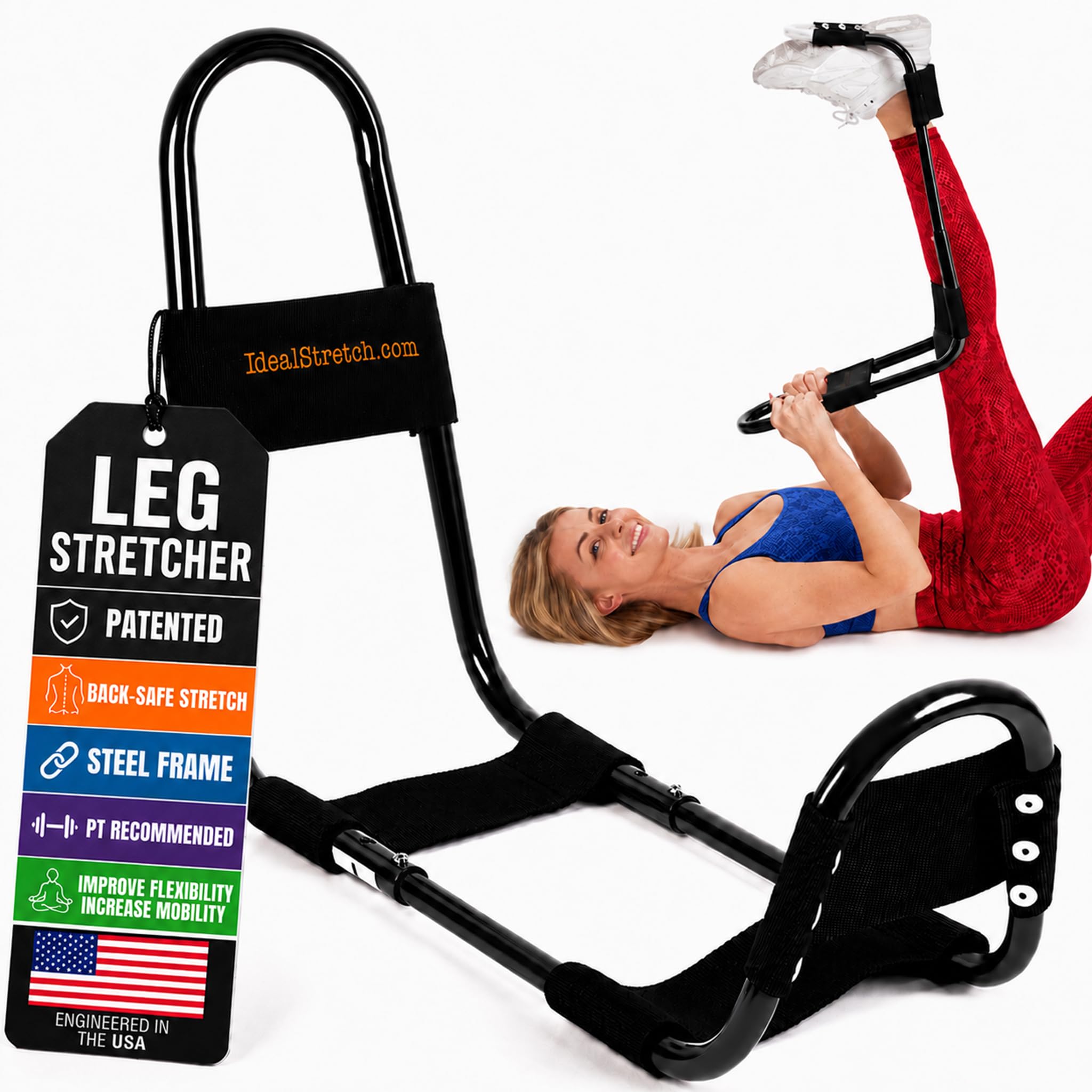
This is not a split machine, and it's worth being clear about that first. The IdealStretch works one leg at a time from a seated or lying position, holding your knee straight while you pull the leg toward you. That makes it a hamstring, calf, hip and lower-back tool rather than something that opens both legs into a side split.

For that narrower job, nothing here does it better. It holds the leg in the position you can't hold yourself, which is the reason partner stretching works so well, and it produces the most consistent results in this group for hamstring and lower-back tightness. At 2.3 pounds it goes in a gym bag and takes up less floor space than a chair.

Fit is the thing to check. The frame is sized for an average body, and taller users find it comes up roughly six inches short of where they want the stretch to reach. Value is the other question mark: it sits at the bottom of this group's price range, but it's a simple steel frame with a pad, and it can feel like a lot of money for two pieces of tube. The results are why we still recommend it.

Pros

  • Holds the leg where you cannot hold it
  • Stretches hamstring, calf, hip and lower back
  • 2.3 pounds, fits in a gym bag
  • Simple enough to use correctly first time

Cons

  • Runs about six inches short for tall users
  • Simple steel frame that feels expensive
Our verdict

Buy it for hamstring and hip length rather than splits; it is the most effective tool here for that job, though tall users should check the reach.

Check Latest Price
8

Stable Base

Rigel Leg Stretcher

82 /100
Peggy's Score Excellent

Key details

Dimensions
44"D x 20"W x 20"H
Item Weight
34.2 lb
Max User Weight
220 lb
Split Angle Range
Up to 200°
Check Details on Amazon

At 44 inches long, 20 inches wide and 15.5 kg, the Rigel is the biggest thing in this group, and the only one that looks like gym equipment rather than a folding chair. That's deliberate: a long spine and a wide base are how a machine stays put when you're working near your limit.

It does stay put. The seat sits you upright with your legs out front, the wheel moves smoothly and 200 degrees covers more than a full split, and it arrives 95 percent assembled so setup is a matter of attaching the backrest and handle. On carpet and on hard floor alike, it holds its position.

Fit is where it loses ground. The backrest is low and the leg pads are short, so a taller user can end up with pressure behind the knees before the hips get the stretch they came for. At 220 pounds it also carries the lowest weight rating here, which rules it out for heavier users regardless of how solid the steel feels.

So it's a machine for an average-height, average-weight user who wants a long, steady frame and has the floor to give it a permanent home. At its price it's a lot of steel for the money; it's simply not built for anyone much over six feet.

Pros

  • Range opens to 200 degrees
  • Long 44-inch spine keeps it steady
  • Arrives 95 percent assembled
  • Holds position on carpet or hard floor

Cons

  • Backrest and leg pads run short
  • Lowest weight rating here at 220 pounds
  • Wheels can work loose
Our verdict

A long, stable frame with 200 degrees of range for average-height users, held back by a short backrest and a 220-pound rating.

Check Latest Price

How We Tested Leg Stretcher Machines

We started with every leg stretcher we could find that shipped with an actual frame — steel or heavy aluminum rather than straps and foam wedges — then filtered by adjustment range, stated weight limit, pad thickness, and price, and read through customer reviews for the failures people actually report: feet that scoot across hardwood, locking pins that won't line up, padding that flattens in a month. Nine machines made the cut.

Each one lived on a living room floor or a basement mat and got used the way people really use them: a ten-minute hold before work, a longer session after an evening run, a quick one after a day at a desk. Two testers of very different flexibility — one who can palm the floor, one who can't reach past mid-shin — meant we could see how a machine behaved at the front of a range and near its edge. We leaned our weight into one side on hardwood and on carpet to watch for sliding feet and tipping frames, and we timed how long it took to reset the settings between the two of us, one-handed.

Then we sat in them. Ten-minute holds showed where the padding pressed — calf, back of the knee, ankle — and whether the leg support actually held the limb or just propped it. First-timers, including one tester with a temperamental knee, climbed in and out unassisted so we could count the steps and see where they hesitated, and we logged how far each of us settled into a hold from week to week. Over six months we checked welds, stitching, and adjustment knobs for wobble, folded and unfolded every frame more times than we'd admit, and weighed what each machine gives you — frame, padding, footprint — against what it costs.

How to Choose Leg Stretcher Machines

Crank, handwheel, or handbrake

The control is the whole machine. A crank or handwheel turns in small increments and holds wherever you leave it, which suits slow work and lets you count how far you've gone. A handbrake lever releases faster, which is easier for a beginner or for anyone sharing the machine with a less flexible partner.

If you stretch alone and want to hold a position for a minute at a time, pick the crank. If you get in and out quickly, or your confidence is low, the lever is kinder.

How much range you actually need

180 degrees is a full side split, so the machines claiming 200, 210 and 230 degrees are selling travel past the goal most people have. Extra range is genuinely useful for hip opening and over-splits, and it is the reason a heavier frame earns its weight.

Range also puts more load through the mechanism at the far end: a big number on a light machine asks more of the parts, not less. Buy the range you'll want in two years rather than the range you need this month.

Fit is where most machines fall short

The complaints that matter in this category are fit complaints: pads too short, a backrest that stops below the shoulder blades, a seat that cuts into wider hips. Sit on the floor with your legs spread and measure from your hip to the back of your knee; that is roughly the pad length you need.

Then check the machine's leg-length adjustment against the shortest and tallest people who'll use it. Two inches of range is the difference between a household machine and one person's machine.

Weight, footprint, and where it lives

Machines here run from about 5 pounds to 22, and that difference is mostly about storage. A light one slides under a bed or stands in a closet; a heavy one tends to live upright against a wall, assembled and ready.

Measure the gap under the bed or the closet width before you choose. The machine you have to move furniture to use is the machine that stops getting used.

Warranty, assembly, and the parts that wear

The gear, wheel or bearing is what fails first, so warranty length is a fair proxy for how much faith the maker has in the mechanism. One year is standard here, two is better, and one machine in this group carries none at all.

Assembly ranges from a few minutes to a genuinely confusing hour. If instructions frustrate you, favor a machine that arrives mostly built.

Frequently Asked Questions

Final Verdict

The seanleecore is the one we point most people to. Its geared crank lets you find a stretch, hold it and back off without a partner, and the frame is light enough that it doesn't turn into furniture.

Pay more for the MuscleForge if you're heavier or want extra margin in the frame. If your tightness sits in your hamstrings rather than your hips, the IdealStretch does that narrower job better than any split machine here.