Best Hot Yoga Mats of 2026

Downward dog is supposed to be a rest, but in a 95-degree room with sweat running down your forearms, it's mostly a trust exercise between you and your mat. I've had palms skate forward mid-pose and peeled myself off mats that went slick the second the heat kicked on. The right mat grips when you're wet, cushions knees and wrists without making balance poses wobbly, and doesn't smell like a tire for the first week.

Cushioning is what shoppers press a thumb into; grip is what decides your class, and the two fight each other — a plush mat can squirm underfoot the second you stand on one leg. My team and I spent six months with 12 mats, dragging them through heated classes and wiping them down more often than my kitchen counters. Odor, weight, and how the surface held up after dozens of cleanings mattered as much as price, and the picks below are the ones I'd carry back into a hot room tomorrow.

1

Best Overall

Liforme Classic Yoga Mat

92 /100
Peggy's Score Outstanding

Key details

Weight
5.5 lb
Material
Eco-polyurethane and rubber
Thickness
4.2 mm
Dimensions
72.83" x 26.77"
Check Details on Amazon

The first thing we check on a hot-yoga mat is what happens when your hands get damp, and the Liforme Classic is the one here that keeps its composure. Its GripForMe polyurethane top is designed for sweat, and the rubber base sits flat rather than sliding under a wide stance. We put it through heated flows and found the surface stayed usable as the room warmed, which is not something we can say for every mat on this page.

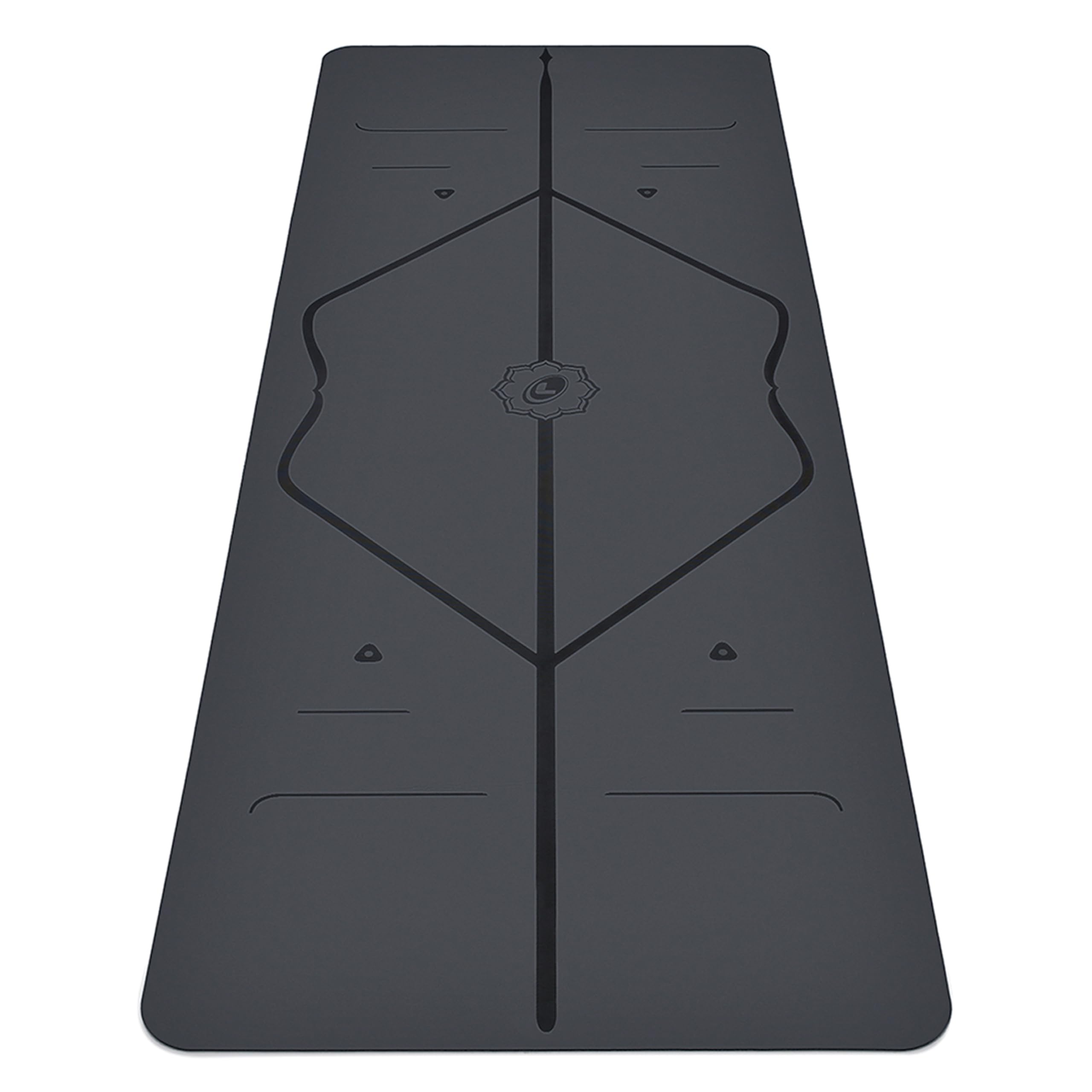
The alignment system is the second reason it earns the top spot. Laser-etched lines mark hand and foot placement without turning the mat into a grid, so they help in a rushed class when you are trying to square your hips and find your footing. At 4.2mm, the cushioning is firm enough for balance poses but still kind on knees; the 72.83-by-26.77-inch surface gives most practitioners room to move.

We also appreciate that the top is engineered for moisture rather than borrowed from a general-purpose mat. Sweat beads on the surface instead of sinking in, and a quick wipe with a damp cloth is enough between sessions. The trade-offs are real but straightforward: this is a premium mat, and at 5.5 pounds it is not the one we toss in a tote for a weekend trip. What stays with us is how little mental space the mat takes up in a heated class—you place your hands and forget the surface is there.

Pros

  • Sweat-resistant top keeps wet hands secure
  • Alignment lines help with hand and foot placement
  • Firm 4.2mm cushioning balances support and stability
  • Wide 26.77-inch surface leaves room for wide stances

Cons

  • Premium price
  • Heavier than travel mats
Our verdict

We recommend the Liforme Classic for sweaty hot-yoga practice because its grip holds up when hands get damp and its alignment lines make the mat easier to settle into.
Check Latest Price
2

Best Durability

Manduka PRO Yoga Mat

91 /100
Peggy's Score Outstanding

Key details

Weight
7.5 lb
Material
OEKO-TEX certified PVC
Thickness
6 mm
Dimensions
71" x 26"
Check Details on Amazon

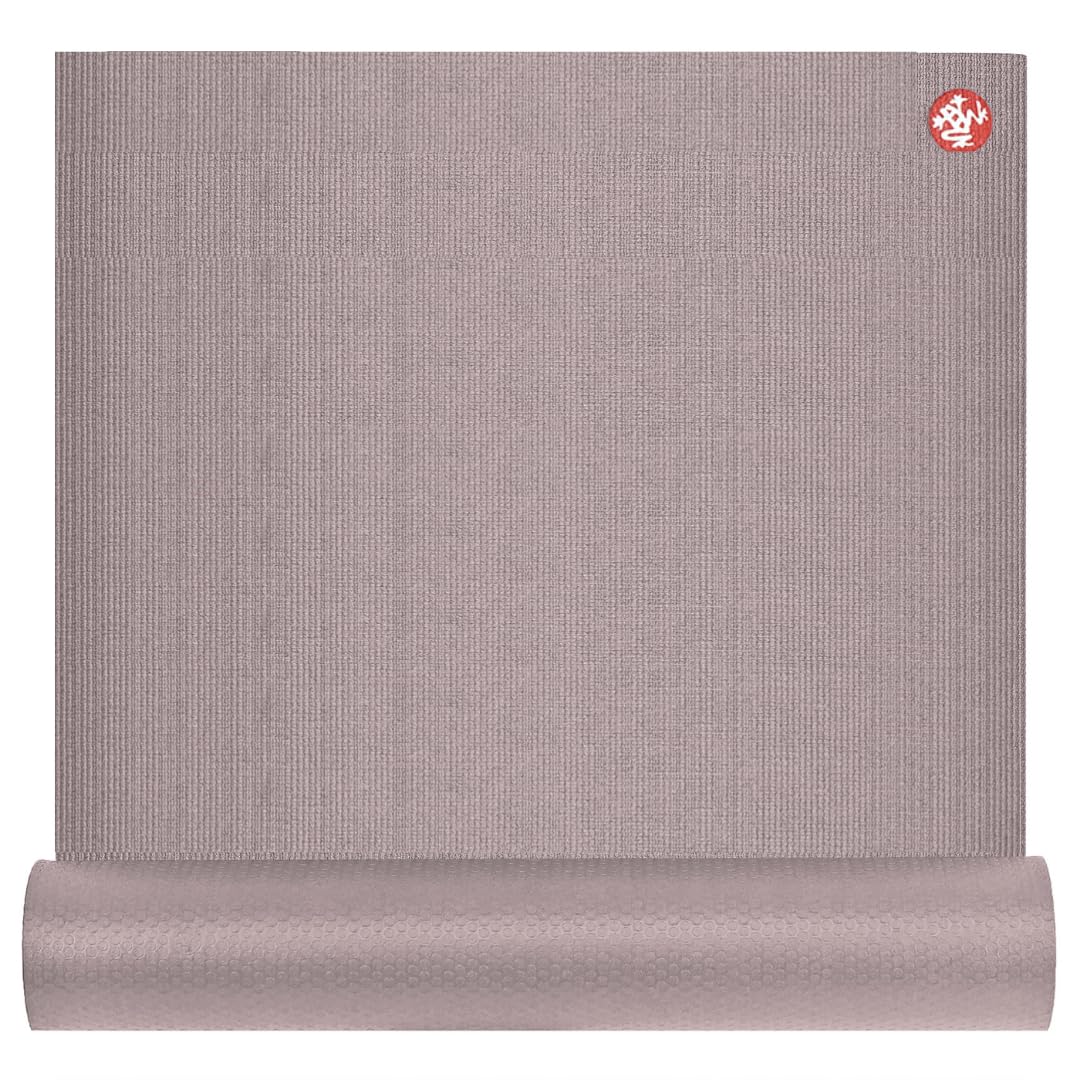
The Manduka PRO arrives feeling less like a mat than a rolled slab of studio floor, and that is the point. Its 6mm PVC cushion is dense rather than squishy, so standing poses feel planted and knees get support without the mat compressing into the floor. The no-slip dot pattern underneath keeps it from wandering, even on a smooth studio floor.

In a hot room, the surface is not instantly sticky. New, it has a finish that can make very sweaty palms skate, and it takes a few practices and a wipe-down before the grip settles; a thin towel at the top of the mat is the practical fix until then. Once broken in, the closed-cell surface keeps moisture out and wipes clean, which is why we choose it for a durable home practice or a studio mat that lives by the wall.

The 71-by-26-inch footprint is generous without being unwieldy, and the lifetime construction is the reason to consider it over a cheaper foam mat. It is also 7.5 pounds, so it is not the mat we carry on a long commute. Leave it where you practice, and it rewards you with stability and a surface that should keep going long after a budget mat has worn through. We see it as the long-haul pick rather than the travel companion.

Pros

  • Dense 6mm cushioning supports knees and balance
  • Closed-cell surface resists moisture
  • No-slip dot bottom keeps the mat planted
  • Built for long-term studio use

Cons

  • Heavy to carry to class
Our verdict

We choose the Manduka PRO when stability and long-term wear matter more than portability; it is a dense, closed-cell mat for a dedicated home studio.

Check Latest Price
3

Best Cushioned

Gaiam Premium 6mm Mat

95 /100
Peggy's Score Outstanding

Key details

Weight
3.1 lb
Material
7P-free PVC
Thickness
6 mm
Dimensions
68" x 24"
Check Details on Amazon

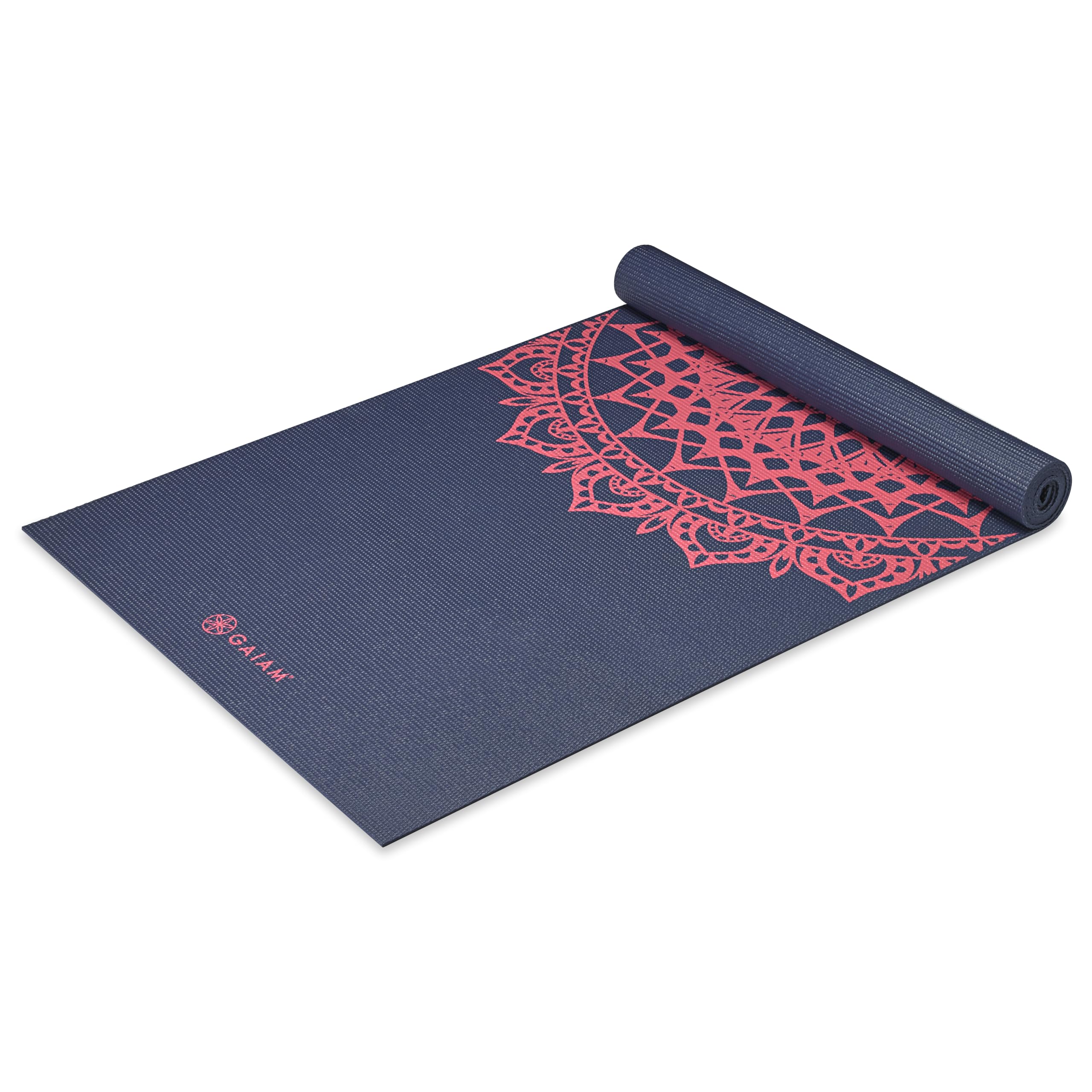
Cushioning is the reason we keep the Gaiam Premium in the conversation. Its 6mm PVC foam has a soft, forgiving feel under knees and wrists, and the print gives you something pleasant to look at during a long hold. The 68-by-24-inch surface is standard, but the texture has enough bite for dry hands.

That texture is not a hot-room specialist. Once sweat pools, the surface loses some of its grip, and we reach for a towel at the top of the mat for a power flow. The mat is also 3.1 pounds and rolls tightly, so it is easy to bring to a gentler class; the trade-off is that it is not as dense or as stable as the Manduka under a fast standing sequence.

We like it best for warm, slower sessions and for anyone who wants a little more cushion than a 4mm mat without moving into thick foam. The 7P-free PVC construction is a plus, though the mat may need a few days of airing before the initial odor fades. It is not the mat we hand to someone who sweats through a towel in the first ten minutes, but it is a comfortable, cheerful choice for everything short of that.

Pros

  • Soft 6mm cushioning for knees and wrists
  • Textured surface grips dry hands
  • Printed design adds visual appeal
  • 7P-free PVC construction

Cons

  • Initial odor needs airing out
Our verdict

We like the Gaiam Premium for cushioned, gentler flows, where its soft 6mm surface and cheerful print matter more than wet-grip security.

Check Latest Price
4

Best Budget

Gruper TPE Yoga Mat

89 /100
Peggy's Score Excellent

Key details

Weight
1.65 lb
Material
TPE
Thickness
6 mm
Dimensions
72" x 24"
Check Details on Amazon

The Gruper TPE is the budget mat that does not feel like a punishment. It is light at 0.75 kilograms, rolls up with the included strap and bag, and its 6mm TPE surface has a double-sided texture that gives you something to push against in downward dog. The 72-by-24-inch size is familiar and easy to fit into a studio bag.

We used it for everyday flows and found the grip dependable when hands were dry and reasonably comfortable once sweat started, though it is not the equal of the Liforme in a soaking-wet class. A hand towel at the top of the mat is the sensible add-on. The TPE surface also wipes clean without much fuss, and the mat is light enough to carry to class without thinking about it.

For the money, this is the pick we recommend to someone building a first hot-yoga kit or adding a second mat for travel. It gives up some durability and wet-grip security to the premium mats here, and the difference shows up over time rather than on the first practice. What it does well is make a heated class accessible without asking you to baby the mat between sessions.

Pros

  • Light and easy to carry
  • Double-sided texture for everyday grip
  • Includes strap and carry bag
  • Wipes clean easily

Cons

  • Durability is not premium-level
Our verdict

Our budget pick is the Gruper TPE: it is light, carries easily, and gives everyday heated practice a dependable surface without a premium outlay.

Check Latest Price
5

Tall and Wide

CAMBIVO Extra Long Mat

92 /100
Peggy's Score Outstanding

Key details

Weight
5 lb
Material
PVC
Thickness
6 mm
Dimensions
84" x 30"
Check Details on Amazon

The CAMBIVO is the mat for the person who has been folding a towel over the end of a standard mat. At 84 by 30 inches, it gives tall or wide-framed practitioners room to keep hands and feet inside the surface, and the 6mm PVC layer adds cushioning for knees and hips. The honeycomb bottom grips the floor, while the top has a textured pattern.

The size is the reason it earns a place, not the surface. In a hot room, the top can turn slick once sweat builds, and we keep a towel within reach for standing sequences. The mat is also 5 pounds and rolls into a long bundle, so it is not the one to carry on a crowded commute. For a tall yogi who practices at home or drives to the studio, those are manageable trade-offs.

We see it as a specialist rather than an all-rounder: buy it because the extra length and width change what your practice feels like, and accept that the wet grip is not the main event. The PVC wipes clean, the price is reasonable for the amount of mat you get, and the strap makes storage easier. It is a good answer to a specific fit problem, not a universal upgrade.

Pros

  • Extra-long 84-inch surface
  • Wide 30-inch footprint
  • 6mm PVC cushioning
  • Honeycomb bottom grips the floor

Cons

  • Bulky to carry and store
Our verdict

We recommend the CAMBIVO for tall or wide-framed yogis who need an 84-by-30-inch footprint and can trade away some wet-grip security for the fit.

Check Latest Price
6

Light Travel Mat

Gaiam Classic 4mm Mat

91 /100
Peggy's Score Outstanding

Key details

Weight
2.1 lb
Material
PVC
Thickness
4 mm
Dimensions
68" x 24"
Check Details on Amazon

At 4mm and 2.1 pounds, the Gaiam Classic is the mat we grab when the bag is already full. It rolls tightly, lays flat quickly, and the 68-by-24-inch surface is standard enough to fit most studio cubbies. The print gives it more personality than a plain PVC mat.

Thin does not mean unstable here; the mat stays put on a dry floor and gives you a close-to-the-ground feel that some experienced yogis prefer for balance poses. The cushioning is minimal, though, and knees or wrists will notice the difference in a long floor sequence. In a hot room, the textured surface can lose grip as sweat builds, so we treat it as a mat for lighter-sweat classes or pair it with a towel.

We recommend it as a travel or second mat, not as the one mat for a dedicated hot practice. Its low weight and low bulk are real advantages when you are carrying a change of clothes and a water bottle, and the price leaves room for a good towel. What it does not do is give you the secure, cushioned feel of the Liforme or the Manduka when the room is at its hottest.

Pros

  • Light 2.1-pound carry
  • Rolls tightly for travel
  • Low-profile feel for balance
  • Budget-friendly PVC mat

Cons

  • Minimal cushioning for knees and wrists
Our verdict

The Gaiam Classic is our lightweight travel pick: a thin, easy-to-carry mat for lighter-sweat classes, provided you bring a towel for the hottest stretches.

Check Latest Price

How We Tested 12 Hot Yoga Mats

We started by pulling every mat sold as sweat-friendly or built for hot classes, then narrowed by specs: a closed-cell or polyurethane top layer, 3 to 6 millimeters of thickness, a weight I could reasonably bike to class with, and prices spread from budget to premium. Reviews that mentioned slipping in a heated room became a checklist of things to verify in person. That left us with 12 mats.

Each mat came to at least a dozen heated vinyasa classes running 95 to 100 degrees and spent the rest of its life on my living room floor during at-home flows with a space heater going. I ran two back-to-back classes without cleaning a mat in between to see how it handled a second round of sweat, then wiped every one with the same cleaner afterward. Mats were weighed dry, weighed soaked, and sniffed fresh out of the box, at the end of week one, and again after a month of riding around in a warm car.

Grip was make-or-break: I tracked whether hands and feet stayed put through a full class and whether the surface turned slicker at minute 45 than at minute five. For cushioning, I noted how knees felt in camel, how wrists felt in plank, and whether extra thickness cost me stability in tree pose. Durability came down to the corners and top layer after repeated wiping; on color, light mats showed sweat rings and dark ones showed every scuff. Value had the last word — a mat at twice the price has to still grip and still look new at the six-month mark.

How to Choose Hot Yoga Mats

Start with the wet grip, not the thickness

The surface that saves you in hot yoga is usually a closed-cell or sweat-resistant top, not an open-cell foam that drinks moisture. A new PVC or rubber mat can also arrive with a factory film that needs a few practices and a wipe-down before it grips; if your palms still skate, add a thin towel at the top of the mat. We rank Liforme first here because its polyurethane top is built for damp hands, while a general NBR foam mat is better left to floor work.

Choose density and thickness for the poses you do

Four to six millimeters is the useful range for most heated flows: enough cushion for knees and wrists without the squish that makes balance poses feel vague. Extra-thick foam can be kind on joints, but it compresses under a standing leg and can make the mat feel unstable. If your knees are the priority, a denser 6mm mat beats a soft 10mm one; if you travel to class, a 4mm mat saves weight, though you may want a towel for sweaty hands.

Check the footprint and the carry weight

Length and width matter more in hot yoga than in a short home stretch: sweat makes hands and feet travel, and a 68-by-24-inch mat can feel narrow in a wide stance. Taller practitioners should look for 72 inches or more; a 30-inch width gives extra room for arm balances and wide-legged poses. Then pick the weight you will actually carry. A dense studio mat that stays planted at home may be the wrong choice for a daily commute.

Plan for odor, cleaning, and break-in

PVC and rubber mats often release a strong smell when new; unroll and air them out before the first hot class, and expect a few sessions before a glossy surface settles into its grip. Closed-cell tops wipe clean more easily than porous foam, but most mats still want a damp cloth and mild soap rather than a washing machine. If odor or maintenance is a dealbreaker, choose a mat whose care instructions match how often you practice.

Frequently Asked Questions

Final Verdict

We recommend the Liforme Classic if you want the surest wet grip in this group and do not mind paying for it. Its sweat-resistant surface and alignment lines make a heated flow feel calmer; the Manduka PRO is the better bet if you want a dense, closed-cell mat that stays planted and can live by your practice wall.

On a budget, the Gruper TPE gets you a light, capable mat with a towel nearby. The deciding question is simple: buy for wet grip first, then choose how much cushion, width, and carrying weight you need.