Best Fitness Trackers of 2026

Strip a fitness tracker down and it's a small optical sensor pressed against your wrist, reading your pulse through your skin. The guesswork is the ballgame: the difference between a tracker you keep wearing and one that ends up in a drawer is whether its numbers match how you feel — and whether it's comfortable enough to sleep in. I've worn these on and off for years, and the models people stick with are the ones that stay charged and stay synced.

Over the past six months, my team and I have worn 12 different trackers through training blocks, workdays, and a lot of restless nights. The good ones disappear: the band doesn't chafe, the app doesn't drop the connection mid-run, and the battery outlasts a long weekend. We also noted what's free and what hides behind a subscription, since a cheap tracker with a paywalled dashboard isn't a bargain. The picks below earned their spot.

1

Best Overall

Garmin vivoactive 5

88 /100
Peggy's Score Excellent

Key details

GPS
Built-in
Weight
1.31 oz
Battery Life
Up to 11 days
Sports Modes
30+ apps
Check Details on Amazon

Eleven days between charges, with GPS built into the case: that pairing is what makes the vivoactive 5 the tracker we recommend to most people. It is the only pick here that logs a run without your phone in your pocket and still has battery left at the end of the week. The 42 mm AMOLED case reads clearly at arm's length, and at 1.31 ounces we stopped noticing it, including overnight.

The training side runs deeper than the price tier hints. More than 30 indoor and GPS sport profiles cover everything from HIIT to golf to laps in the pool, Body Battery tells you whether to push or back off, and the sleep score arrives with coaching attached. We were also struck by the wheelchair mode, which counts pushes instead of steps and ships with preloaded strength, cardio, Pilates and yoga workouts, a detail almost nothing else in this guide bothers with.

Give the interface a week. The mix of buttons and touchscreen feels fussy at first, then becomes the reason you can start a workout with sweaty hands without looking down. Sleep is the softer spot: the overnight scores are the least convincing number the watch produces, and if staging your sleep is the main reason you are buying, a dedicated recovery band does that job better.

Pros

  • Built-in GPS for phone-free runs
  • Rated up to 11 days between charges
  • 30+ sport profiles plus a wheelchair mode
  • Light 1.31 oz case with AMOLED display

Cons

  • Sleep scores are the least dependable number
Our verdict

For most people this is the tracker to buy: built-in GPS, eleven days between charges, and a training toolkit that covers everything from laps to yoga.
Check Latest Price
2

Best Screenless

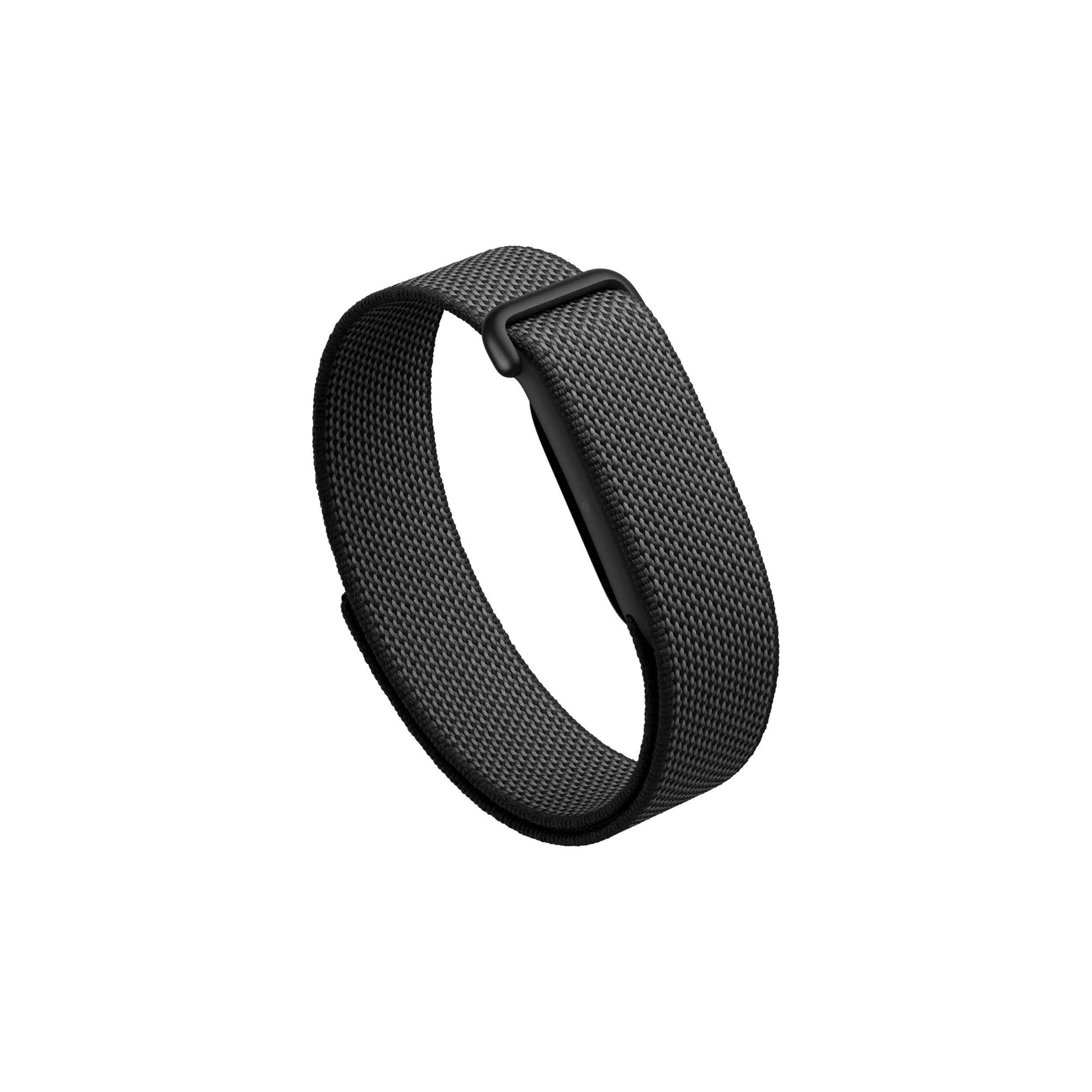
Google Fitbit Air

86 /100
Peggy's Score Excellent

Key details

Weight
0.18 oz
Display
None (screenless)
Battery Life
Up to 7 days
Water Resistance
50 meters
Check Details on Amazon

There is no screen on the Fitbit Air, and that is the point. At 5.07 grams it is the lightest thing in this guide, the band micro-adjusts instead of forcing you into preset holes, and the whole design is built around staying on through sleep, work and workouts without asking for attention. We wore it to bed and forgot it was there, which is the only test that matters for overnight tracking.

Five minutes on the charger buys a full day, and a full charge runs about a week, so forgetting to plug it in costs you a shower rather than a workout. The app is where the Air earns its keep: continuous heart rate, skin temperature and SpO2 feed readiness and sleep scores that read far better on a phone than on any wrist display.

Reliability is the open question. There are units that stop working inside the first week, so pair it, wear it hard for a few days, and do all of that while the return window is open. Everything else about the Air is a deliberate subtraction, and for the right person that is the appeal: nothing on your wrist asking to be looked at.

Pros

  • 5.07 grams, forgettable overnight
  • About a week per charge, five-minute top-ups
  • Swim-rated to 50 meters

Cons

  • No on-wrist stats during a workout
  • Sleep staging and step counts can drift
Our verdict

For anyone who wants tracking without a watch, this is the easiest yes here: light enough to sleep in, a week per charge, and nothing glowing at you overnight.

Check Latest Price
3

Best for iPhone

Apple Watch SE 3

94 /100
Peggy's Score Outstanding

Key details

GPS
Built-in
Case Size
40 mm
Battery Life
Up to 18 hours
Compatibility
iPhone
Check Details on Amazon

iPhone owners who want a watch rather than a band should start here. The SE 3 tracks workouts, sleep, steps and heart rate well enough to plan a week around, the temperature sensor feeds Apple's Vitals and Cycle Tracking apps, and fall and crash detection sit underneath all of it. It is the pick that does the most besides tracking, without the tracking feeling like an afterthought.

The catch is the battery, and it is a real one: 18 hours is a day, not a week, so the SE 3 joins the same nightly ritual as your phone. Fast charging takes the sting out of a top-up before dinner, but if you have been spoiled by a band that runs a fortnight, this will feel like a step backwards.

What we like most is how little ceremony the fitness side has. Start a workout, close your rings, read the summary; Apple does not bury the basics under menus, and Siri handles the small stuff mid-session. That polish is why the SE 3 stays on our wrist outside the gym as well as in it.

Pros

  • Health and workout tracking that holds up
  • Temperature sensing feeds Vitals and Cycle Tracking
  • Fall and crash detection built in

Cons

  • Pairing can stall on older iPhones
  • 40 mm case feels small on a larger wrist
Our verdict

The pick for iPhone owners who want a real watch: broad health and workout tracking, safety features, and an app that never gets in the way.

Check Latest Price
4

Best for Recovery

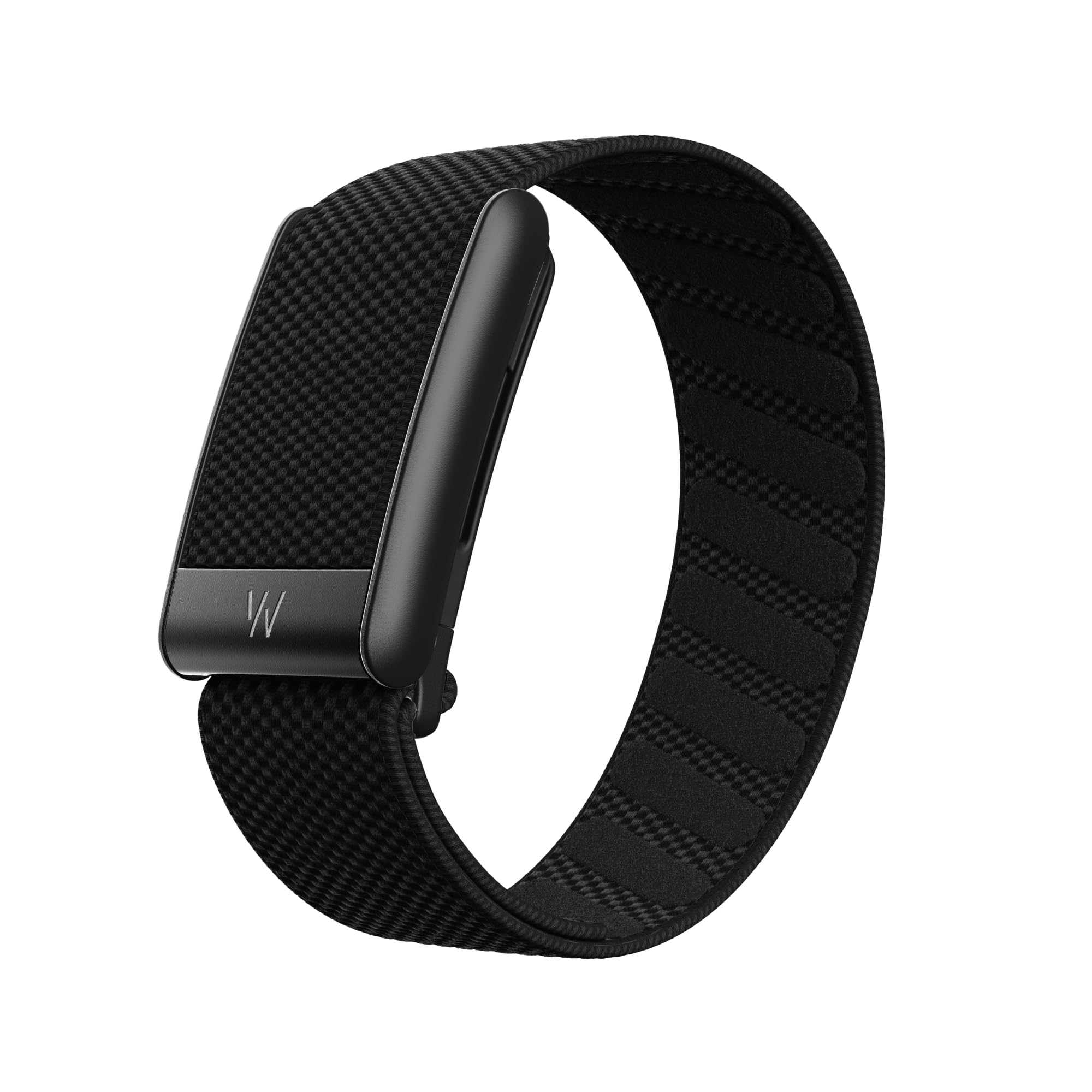
WHOOP 5.0

85 /100
Peggy's Score Excellent

Key details

Display
None (screenless)
Membership
12 months included
Battery Life
Up to 14 days
Water Resistance
IP68
Check Details on Amazon

WHOOP does not sell you a tracker so much as a year of coaching that comes with a band. The twelve-month Peak membership includes the 5.0 sensor and a battery pack you wear while it charges, and what you are paying for is the app: recovery, strain, sleep staging and an AI coach that turns a wall of metrics into one suggestion for the day.

Overnight is where it earns the money. The screenless band is light enough to sleep in, the breakdown runs all the way to REM, deep and awake time, and we kept coming back to the morning recovery number, the most actionable version of that job in this guide. Charging without taking it off matters more than it sounds, because the whole point is a full 24 hours of data, and WHOOP is the only pick here that does not ask you to break it.

The honest caveat is the subscription. The membership renews, and it renews whether or not you are still training hard. If you want step counts and a nudge to move, this is far more money and far more data than you will use; if you are already training to a plan and want to know when to back off, it is the sharpest tool here.

Pros

  • Light screenless band you can sleep in
  • Charges while you are wearing it
  • Recovery and strain coaching in one app

Cons

  • No screen for time or mid-workout stats
  • Recovery and strain readings can be inconsistent
Our verdict

The pick for anyone training to a plan who wants to know when to back off: recovery, strain and sleep coaching in one screenless band, on a yearly membership.

Check Latest Price
5

Best Battery Life

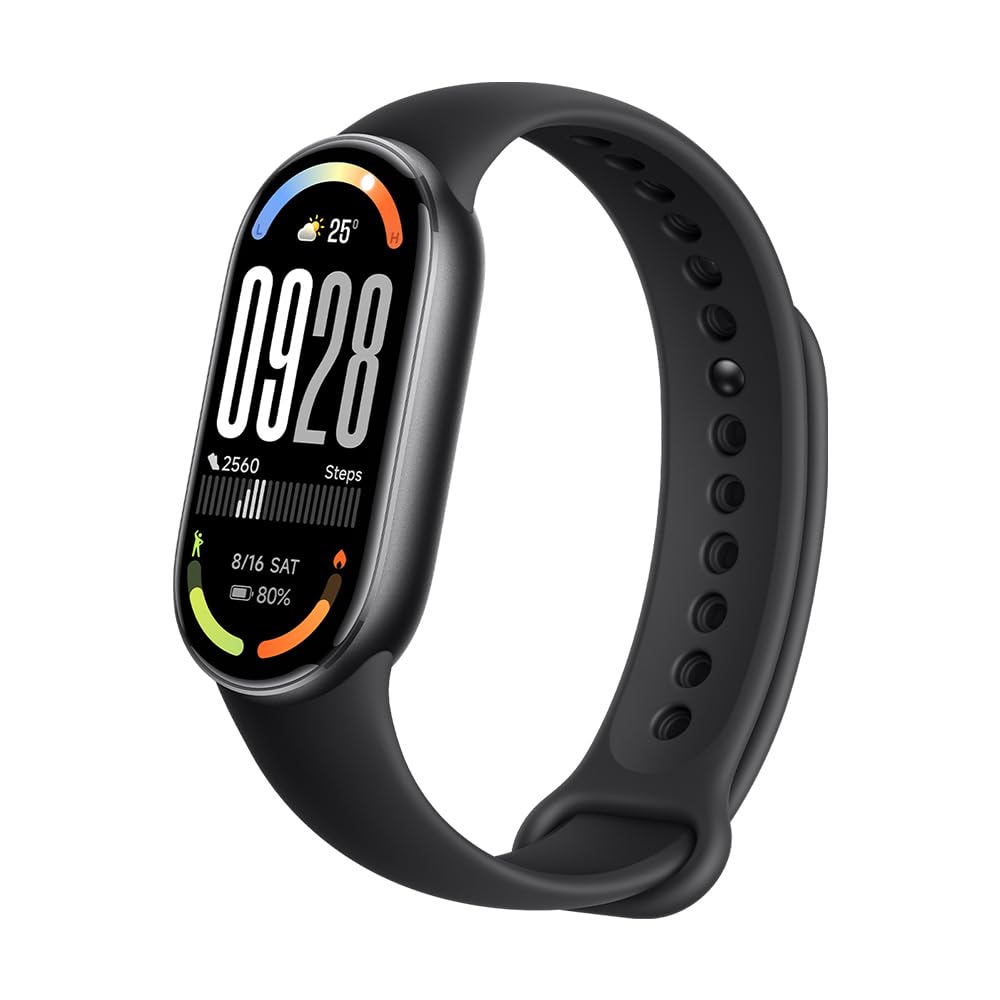
Xiaomi Smart Band 10

88 /100
Peggy's Score Excellent

Key details

Display
1.72-inch AMOLED
Brightness
1500 nits
Battery Life
Up to 21 days
Water Resistance
5ATM
Check Details on Amazon

The Xiaomi Smart Band 10 gets almost everything right for the money, and then it tells you your run was 5.2 kilometers with no way to switch to miles. If you think in miles, that is a daily irritation sitting on top of an otherwise excellent band, and it is the kind of detail no product page leads with.

Get past that and we think it is the value pick of the group. Twenty-one days on a charge means you will genuinely forget where the charger is, the 1.72-inch AMOLED hits 1,500 nits and stays readable in direct sun, and 5ATM means you can swim in it. At 30 grams it disappears on the wrist overnight, which is how the sleep tracking gets the data it needs to be useful.

Credit where it is due on the details: a compass aimed at open-water swim direction is a small, unexpected extra on a band this simple, and the sleep reporting is more detailed than the price suggests, with a smart wake alarm tied to your sleep cycle. For walks, gym sessions and swims, we did not want for anything.

Pros

  • Rated up to 21 days per charge
  • 1,500-nit AMOLED readable in sunlight
  • 5ATM rating for swimming

Cons

  • No built-in GPS
  • Bluetooth pairing can drop
Our verdict

The band to buy if you want the essentials without paying watch money: three weeks of battery, a screen that survives sunlight, and swimming covered.

Check Latest Price
6

Android Phones

Samsung Galaxy Fit 3

89 /100
Peggy's Score Excellent

Key details

Display
1.6-inch AMOLED
Battery Life
Up to 14 days
Workout Modes
101+
Water Resistance
5ATM and IP68
Check Details on Amazon

Auto-detection is what separates the Galaxy Fit 3 from the cheaper bands here. It picks up common workouts without you starting anything, and when you do want to be specific there are 101 modes to choose from. The 1.6-inch AMOLED is crisp at 320 x 320, and the aluminum case gives it a finish the plastic bands in this guide do not have.

Samsung's sleep coaching is the other reason to pick it: stages, SpO2 and heart rate overnight, turned into a coaching summary in the morning. Battery is rated at up to 14 days, though heavier use with the always-on display and overnight SpO2 will have you reaching for the charger sooner. It is comfortable enough to sleep in, which is the only way any of that works.

On a Galaxy phone, this is the band we hand over first. The auto-detection means you stop thinking about logging workouts at all, and the screen is a genuine pleasure for something this small. It is the software integration that makes it, though, and that is worth knowing before you compare it on specifications alone.

Pros

  • 101 workout modes with auto-detection
  • Crisp 1.6-inch AMOLED at 320 x 320
  • Sleep coaching with SpO2 and heart rate

Cons

  • Pairs with Android phones only
  • International model with no US warranty
Our verdict

A lot of band for Galaxy phone owners: 101 workout modes with auto-detection, a crisp AMOLED screen, and sleep coaching that is actually useful.

Check Latest Price
7

First Tracker

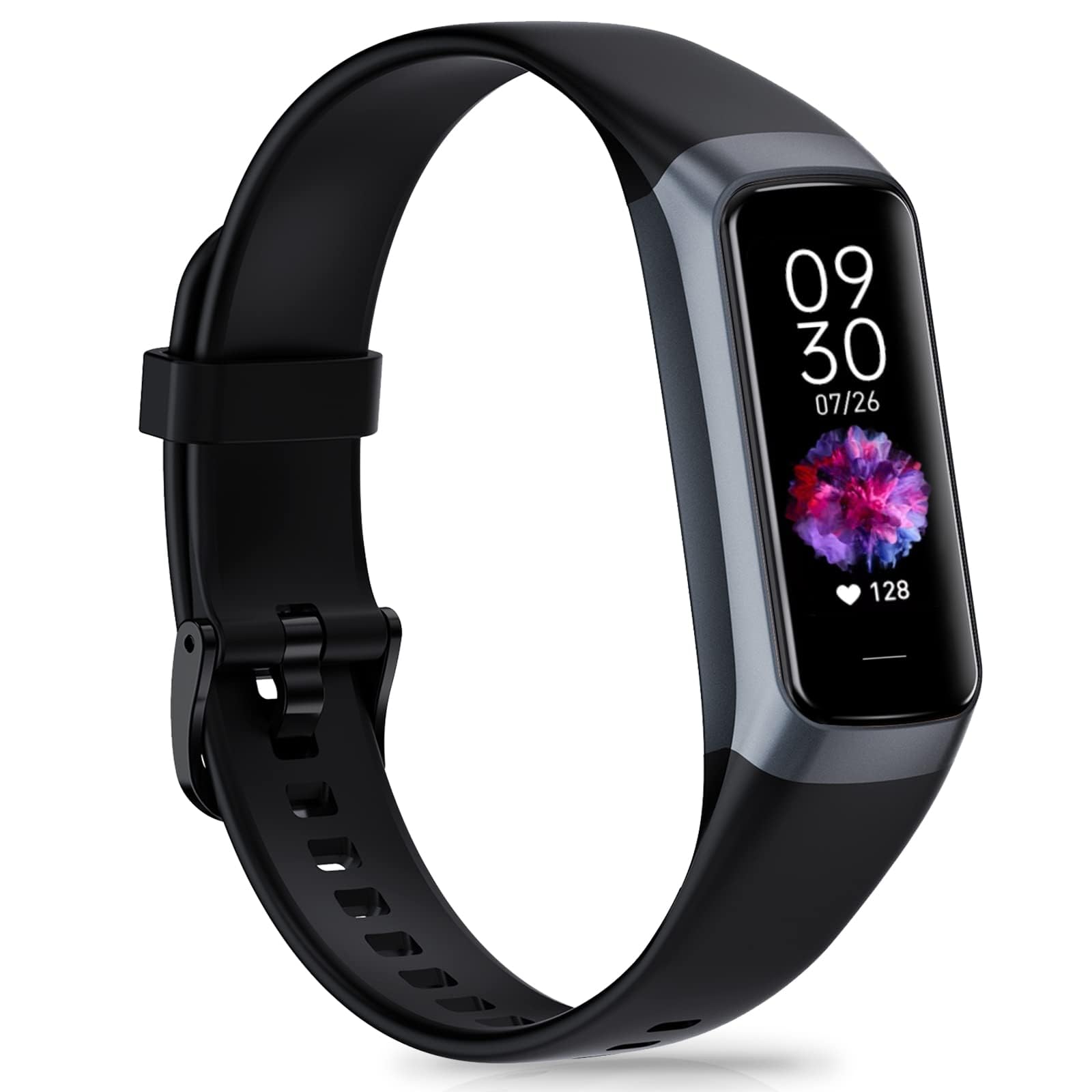
Bakoor Fitness Tracker

78 /100
Peggy's Score Very Good

Key details

Display
1.10-inch AMOLED
Sports Modes
25
Water Resistance
IP68
Check Details on Amazon

The Bakoor is the cheapest tracker here that still gives you a screen worth looking at: a 1.10-inch AMOLED, 25 sport modes and IP68 water resistance for less than most of this guide costs. If budget is the deciding factor, this is where it lands.

The daily picture is fuller than the price suggests: steps, distance, calories, heart rate and sleep stages all land in the Keep Heath app, and the watch faces are more tasteful than they have any right to be. We were surprised at how readable the screen stays outdoors.

Charging is the fault line. Units that stop taking a charge are the failure to watch for, so run it through two full cycles in the first week while you can still send it back, and keep the magnetic cable somewhere you will find it.

Buy it as a first tracker, a spare for the gym bag, or a watch for a kid who is not ready for anything expensive, and the maths works. Buy it expecting the polished feel of a pricier device and it will not hold up, but that was never the deal.

Pros

  • 1.10-inch AMOLED at the lowest tier
  • 25 sport modes and IP68 water resistance
  • Clear daily steps, sleep and heart rate

Cons

  • No stated warranty
  • Step and heart-rate readings run loose
Our verdict

The cheapest way into a bright AMOLED tracker with the basics covered, a fine first watch or gym-bag spare, as long as you are not expecting premium polish.

Check Latest Price

How We Tested the Best Fitness Trackers

We started by pulling together every tracker we could find between roughly $50 and $300, then narrowed the list by phone compatibility, stated battery life, and whether sleep tracking came standard rather than as an add-on. Anything that locked basic step or heart-rate data behind a subscription got flagged, not dropped. That left 12 units, each worn for at least two weeks across six months — on runs and gym sessions, through showers and dishwashing, on desk days and, crucially, overnight.

Comfort was judged honestly: whether the band left a mark after eight hours, whether the strap stayed put during intervals, whether we forgot it was there by day two. For accuracy, we counted steps by hand on a measured loop, compared heart rate against a chest strap during hard intervals, and checked whether sleep logs lined up with the times we actually woke up. Battery runs started with a stopwatch at full charge, plus a note of what a ten-minute top-up really bought us.

Reliability we tracked the boring way — every dropped sync, every phantom step spike, every morning the watch hadn't pushed data to the phone overnight. Each unit was handled by at least two people on different phones, which surfaced connectivity problems fast. Ease of use came down to setup time and how many taps it took to start a workout, and value was a plain judgment about what your money actually unlocks.

How to Choose Fitness Trackers

Start With the Charging Routine

Battery is the spec that quietly decides how a tracker fits into your life. Eighteen hours means a nightly ritual like your phone, a week means you charge it with the laundry, three weeks means you forget the cable exists. None of those is better in the abstract: an Apple Watch earns its daily charge with a bigger screen and deeper apps, and a Xiaomi band earns its three weeks by doing less.

Pick the routine you will actually keep, then compare features inside that group. If you travel or spend long days away from an outlet, a multi-day rating matters more than any sensor on the list.

Decide Whether You Need Built-In GPS

Built-in GPS is the difference between leaving your phone at home and carrying it on every run. A watch like the vivoactive 5 logs distance, pace and a route on its own; a band without a receiver borrows your phone's signal, which works fine until the phone is in a locker or a coat pocket.

Watch for the phrase GPS via smartphone in a listing. It means there is no receiver in the device, so the run only counts if the handset comes along. If you walk and lift rather than run outdoors, skip GPS entirely and put the money into battery or a better screen.

Pick the Screen You Can Live With at Night

Screens split this category in two. A bright AMOLED is a pleasure in the gym, and 1,500 nits on the Xiaomi band is readable in direct sun, but it is a nuisance in bed, where it lights up the room and adds bulk to your wrist. Screenless trackers such as the Fitbit Air and the WHOOP 5.0 trade glanceable stats for something you forget you are wearing.

If you have never worn a watch overnight, start with the smaller and lighter option. Sleep data is only as good as the nights you actually keep the thing on, and a big bright display is the most common reason people take theirs off.

Check the Phone, the App and the Subscription

Compatibility and running costs matter more than any single sensor. The Apple Watch needs an iPhone, some bands pair with Android only, and the WHOOP price is really a twelve-month membership that renews. A tracker that costs little up front can cost more over two years than one that does not, once a membership is in the total.

Before you compare anything else, add up the first year: device plus any subscription, plus whatever the app charges for the coaching you would genuinely use. Then check the app store listing for the companion app, because the software is where a cheap tracker usually shows its price.

Treat the Numbers as Trends

Wrist sensors are estimates. Step counts drift when your hands are on a cart, a sander or a set of dumbbells; sleep stages are inferred from movement and heart rate rather than measured; and a blood-pressure readout on a budget band is not a cuff. Use the weekly direction instead: resting heart rate creeping up, sleep getting shorter, recovery flat for days.

Do not chase a single day's score, and do not buy a tracker for the one metric you would act on medically. If a number is going to change what you do, it deserves a second source.

Frequently Asked Questions

Final Verdict

The Garmin vivoactive 5 is the fitness tracker we recommend without knowing anything else about you: it runs more than a week between charges, finds its own GPS signal, and covers enough sports that you will not outgrow it.

If you would rather not wear a screen to bed, the Fitbit Air is the better fit and costs less. And if your phone is an iPhone and you want a real watch on your wrist, the SE 3 does more, as long as you accept charging it nightly.