Best Cork Yoga Mats of 2026

The first time I swapped a rubber mat for a cork one, the difference showed up in the sweatiest part of a vinyasa class: my hands stopped sliding. Cork grips harder as it gets damp, which is why it appeals to anyone whose palms turn slippery twenty minutes in, and it doesn't carry that tire-store smell some foam mats do. What it fixes is simple — fewer micro-adjustments, less towel-dabbing, more of your attention on the pose.

Not every cork mat is a good one, though. Over six months I worked through 12 of them, from thin travel styles to thick cushioned ones, and the gap between a well-made mat and a cheap one shows up within a week — in the grain, the base layer, and whether the edges start curling. Thickness buys comfort but costs stability in balancing poses, and cork is heavier than foam once it's rolled. The picks below are the ones I kept reaching for.

1

Best Overall

Body By Yoga Cork Yoga Mat

89 /100
Peggy's Score Excellent

Key details

Weight
9.9 lb
Materials
Cork and natural rubber
Dimensions
80"L x 26"W x 0.25"Th
Alignment Lines
Optional
Check Details on Amazon

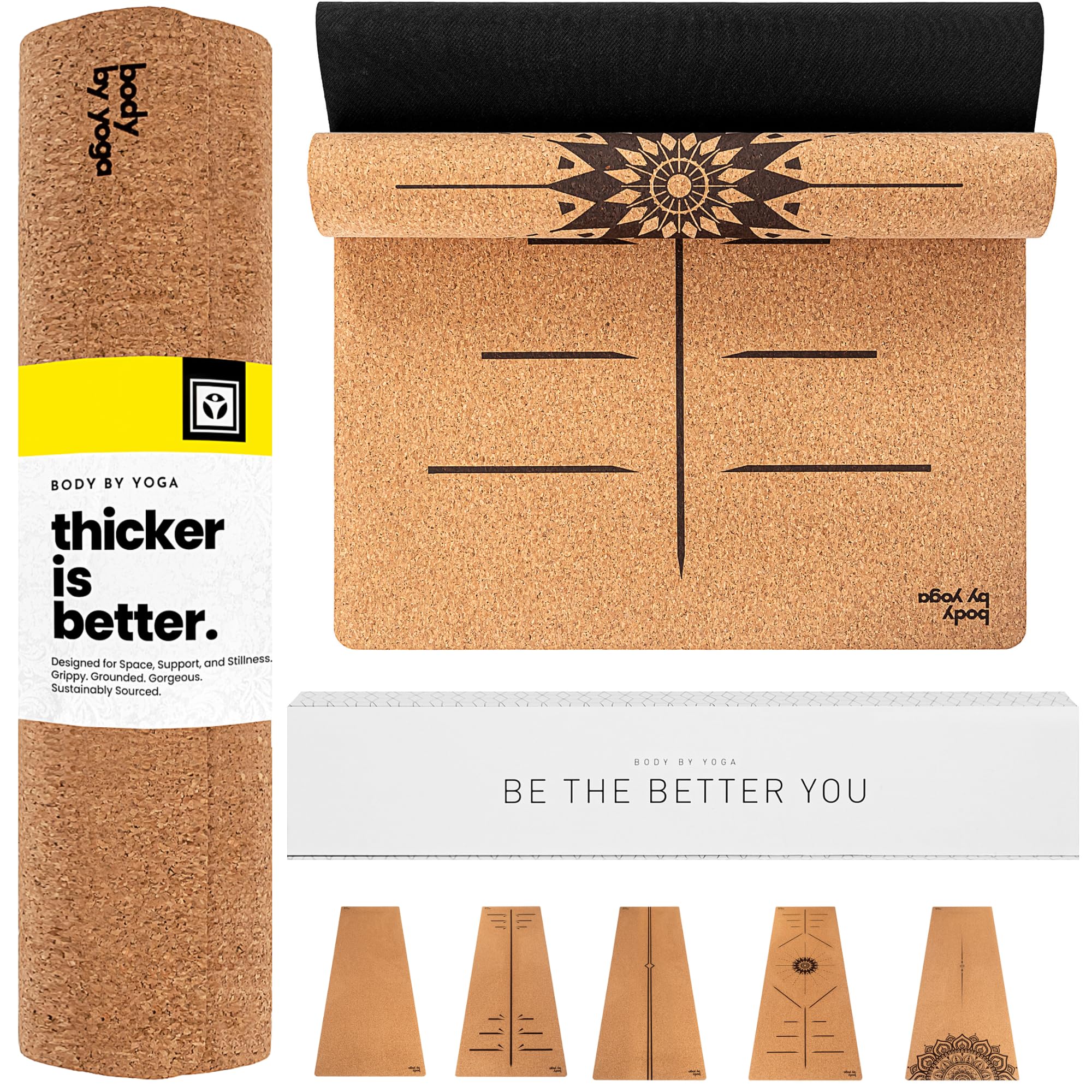
At 9.9 pounds, this is the heaviest mat in the group, and that weight is what you're buying: an 80-by-26-inch surface with a quarter inch of cork and natural rubber behind it, lying dead flat the moment you unroll it. It doesn't creep across the floor between poses and it doesn't bunch under a fast transition. Our top pick earns the spot on that combination — size, cushioning, and grip that shows up when it counts.

Cork gets tackier as it dampens, and this is the mat where the effect is most obvious. At the start of a cold practice the surface is merely secure; twenty minutes in, with damp palms, it grabs. A spray of water across the top gets you the same result at home. Cleaning is a wipe with a damp cloth rather than a scrub, because the cork sheds moisture instead of absorbing it.

A quarter inch is enough cushioning for knees, wrists, and the tops of the feet without turning the mat into a sponge. The rubber underneath is dense, so a standing balance still feels like it's happening on the floor rather than on a pad, and kneeling poses stop being something you brace for.

The surprise was the width. Twenty-six inches means a wide-legged forward fold keeps both wrists on cork, and a long down dog doesn't put your hands on bare floor. Shorter practitioners are paying for length they won't use; the width is the part everyone notices. The optional alignment lines, where your colorway has them, are printed rather than embossed, so they stay readable and leave nothing to feel under a palm.

Pros

  • Grip increases as the cork gets damp
  • 80 by 26 inches fits tall practitioners
  • Quarter-inch cork-and-rubber cushioning for knees
  • Stays flat and doesn't slide between poses

Cons

  • 9.9 pounds, so it stays home rather than traveling
Our verdict

Start here if your mat lives at home: 80 inches, a quarter inch of cork and rubber, and grip that improves as you sweat.
Check Latest Price
2

Best Extra-Large With a Strap

Satori Concept Cork Yoga Mat

85 /100
Peggy's Score Excellent

Key details

Weight
8 lb
Included
Carry strap
Materials
Cork and tree rubber
Dimensions
80"L x 26"W x 0.24"Th
Check Details on Amazon

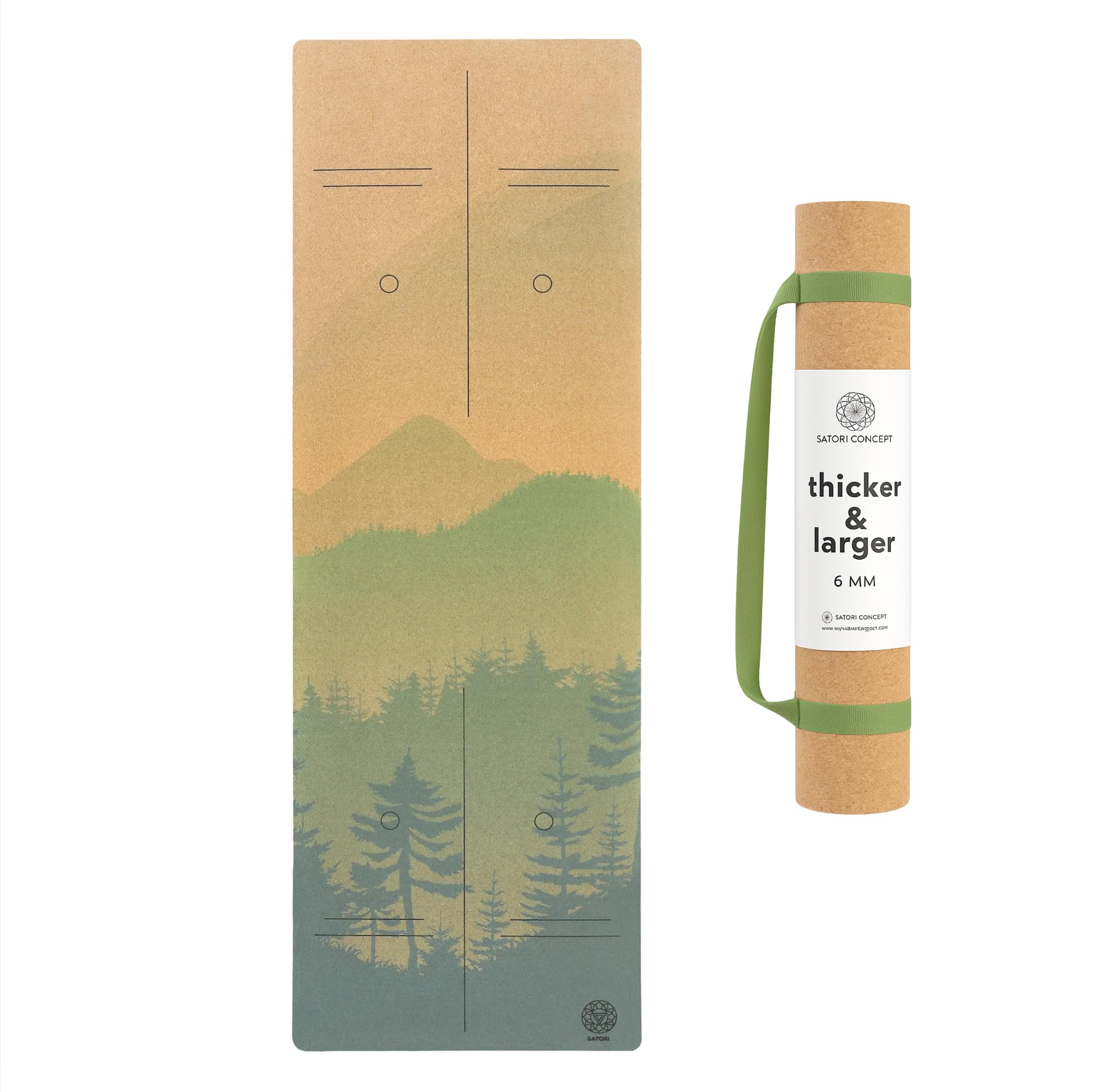
A printed mountain landscape runs across the cork, and a matching strap comes in the box. Plenty of cork mats look good; the strap is the part that changes how often the mat leaves the house.

This is the full-size mat we take out of the house. The footprint matches the top pick at 80 by 26 inches, the cork-and-rubber sandwich is a hair under a quarter inch, and it weighs 8 pounds against 9.9. Two pounds sounds trivial until you're the one holding it at a bus stop, and the strap turns a slippery roll into something you can carry with three fingers.

The surface is the softest in this group. Where the Body By Yoga cork feels dense and grabby, this one has a slight brushed give under the palms that knees appreciate in a long low lunge, and it still releases from the floor cleanly when you roll it up. Grip builds through a session the way cork should, and a damp cloth handles the rest.

What you give up is certainty about the long haul: the cork-to-rubber bond is the failure point on any mat like this, and this one has a shorter history with us than the top pick. The print is the other consideration — it's a mat people notice in a studio, and if you'd rather yours disappear into the room, the plain cork of the GURUS fits that better.

Pros

  • Carry strap included in the box
  • Full 80-by-26-inch practice area
  • Softest, most padded cork surface here

Cons

  • Eight pounds is still a car mat, not a commute mat
Our verdict

Our pick for a full-size mat you actually carry: the same 80-inch footprint as the top choice, nearly two pounds lighter, strap included.

Check Latest Price
3

Best for Alignment

Y O Gayo Cork Yoga Mat

87 /100
Peggy's Score Excellent

Key details

Weight
8.36 lb
Mat Size
72"L x 26"W
Materials
Cork and natural tree rubber
Alignment Lines
Included
Check Details on Amazon

Alignment lines are printed along the Y O Gayo mat, marking where hands and feet belong. If you're squaring your hips or setting up a plank without a mirror, that visual reference takes the guesswork out — and it's the detail that gives this mat a job the others here don't do.

The mat underneath is a dense one. Cork sits on a natural rubber base that rolls out flat and stays put through a standing sequence, and the 26-inch width matches the wide mats in this group. Cushioning is firm rather than plush, which we prefer for balance work and find a little austere in a long pigeon.

Nothing about it feels delicate. The cork has a fine, even grain, the edges are cut clean, and a damp cloth handles sweat and dust in one pass. A rubbery smell out of the packaging is common with cork-and-rubber mats and clears once the mat has aired in a spare room for a few days, so unroll it before your first session rather than after.

Seventy-two inches is shorter than the two 80-inch mats here, so if you're tall or you take a long stride, that's the number to check first; the shorter roll does store more easily in a closet. The alignment lines are the real argument, though — they answer a question a plain mat can't, which is whether your hand is actually where you think it is.

Pros

  • Printed alignment lines guide hand and foot placement
  • Dense rubber base rolls out flat and stays put
  • Wipes clean with a damp cloth

Cons

  • 3.79 kg is heavy for a 72-inch mat
Our verdict

The pick for anyone working on alignment — printed lines show where hands and feet land, on a dense cork surface that rolls out flat.

Check Latest Price
4

Best Budget

GURUS Cork Yoga Mat

86 /100
Peggy's Score Excellent

Key details

Care
Hand wash only
Size
72" x 25"
Weight
1.54 lb
Materials
Cork and natural tree rubber
Check Details on Amazon

Seven hundred grams is the number that separates this mat from everything else here — less than half the Yoga Design Lab's 1.75 kg and roughly a seventh of our 9.9-pound top pick. It's also the least expensive of the five. If the heft of a full-size cork mat is what has kept you on foam, this is the answer to that objection.

Light doesn't mean flimsy. The cork has a smooth, slightly grainy finish, the rubber base is dense enough to cushion a kneeling sequence, and grip arrives with moisture — secure at the start of class, properly tacky by the middle of a vinyasa. It's also the plainest mat here: pale cork, no print, nothing competing with the room, which we like more than we expected to.

Where it lands for us is a second mat rather than an only mat. It's the one that goes in a bag for a park session, a hotel room, or a borrowed studio floor, and it does that job better than the heavy mats do. Judge it on that, and the compromises are easy to live with.

It also smells like almost nothing out of the packaging, which isn't true of every cork mat in this group — one more reason it's the easy one to recommend for a small apartment where the mat lives in the open.

Pros

  • 700 g
  • Cushioned enough for yin and restorative work
  • Lowest price of the five

Cons

  • Cork layer can lift and peel away from the base
  • 25 inches wide, the narrowest mat here
Our verdict

Seven hundred grams, cushioned enough for a full class, and the least expensive of the five: our budget and travel pick.

Check Latest Price
5

Hot Classes, Travel

Yoga Design Lab Cork Mat

87 /100
Peggy's Score Excellent

Key details

Care
Hand wash only
Weight
3.86 lb
Included
Carrying strap
Materials
Cork and natural rubber
Check Details on Amazon

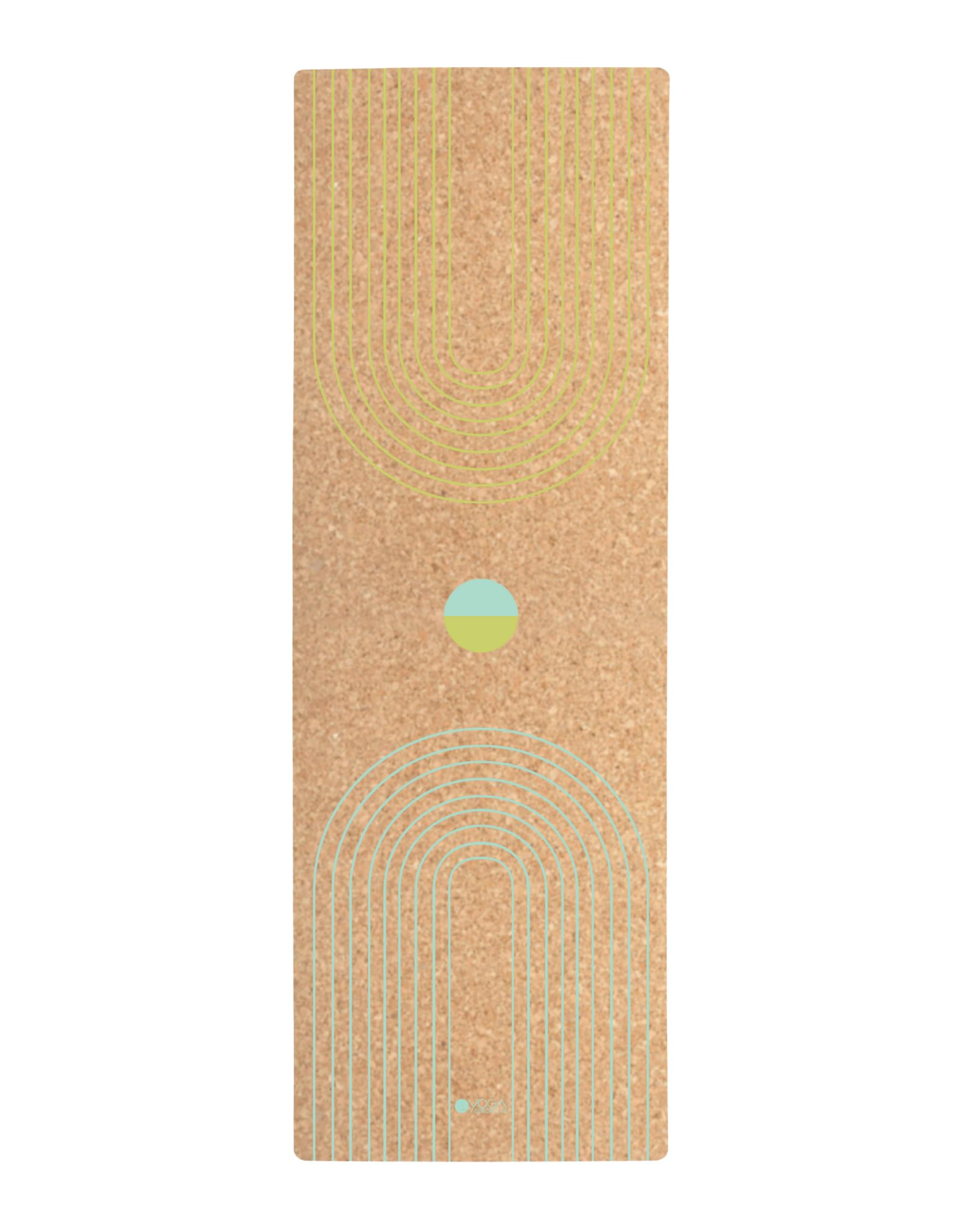
This is a topper, not a floor mat, and it's very good at being one. Lay it over a studio's communal mat for a hot class and the cork does exactly what cork is supposed to: it drinks the sweat off your hands and gets grippier as the room heats up. Put it straight on bare boards and you'll feel every knot in the floor through your knees.

Grip is the strongest part of the story. Hands stayed where we put them through a heated flow, and the surface absorbed sweat rather than pooling it the way a rubber mat does. The designs are the other draw — bold prints rather than plain cork, the kind of mat that gets noticed in a studio — and a carrying strap comes in the box.

At 1.75 kg it's light enough to carry every day, and it rolls tighter than anything here except the GURUS. What it gives up is cushioning, and it gives up nearly all of it. Over another mat the thinness stops being a problem, which is the way this one is meant to be used.

Plan for the smell. A rubbery scent out of the packaging is normal for cork-and-rubber mats and takes a few days to clear; unroll it in a spare room before your first class. Do that, and what's left is the best-looking mat here and the surest grip in a hot room.

Pros

  • Grip holds through heavy sweating
  • Bold prints instead of plain cork
  • Carrying strap in the box

Cons

  • Too thin to use alone on a hard floor
Our verdict

A hot-yoga topper rather than a floor mat, with superb wet grip and striking prints but almost no cushioning on its own.

Check Latest Price

How We Tested the Best Cork Yoga Mats

We started by rounding up every cork mat we could find that was actually in stock, then cut the list to 12 based on specs and price — a spread of thicknesses, lengths, and backing materials, from thin rollable travel mats to wide, heavy studio versions. Anything that shed cork dust or smelled strongly straight out of the box got sidelined before the first class.

Testing ran six months, mostly where mats actually live: a heated studio three mornings a week, the living room floor for daily flows, and the back of a car between classes. During downward dog and warrior sequences we watched for hands and feet creeping, then ran the same sequence again with damp palms and a light spray to see whether grip tightened or turned slick.

Every mat was rolled and unrolled at least three times a week to check for curling edges and for the cork lifting away from its rubber base; by month six a few were fraying at the corners while others looked untouched. We weighed each one on a kitchen scale and carried it to class, and we measured actual length and width against the listings, with taller and shorter testers flowing through a full class to see whether the surface felt cramped. Thicker mats were easier on knees but noticeably wobblier in balancing poses.

Appearance separated the field more than we expected — some surfaces scuffed and held sweat marks within weeks, others wiped clean with a damp cloth. Odor faded fast on most mats but lingered on two, which we noted. Value, in the end, came down to how the top layer looked and gripped at month six against what the mat cost.

How to Choose Cork Yoga Mats

Grip That Builds With Sweat

Cork is porous at a microscopic level, and moisture plumps those cells so the surface grabs instead of glides. That's why a cork mat can feel merely secure at the start of a cold practice and almost sticky twenty minutes in. If your practice is slow or the room runs cool, keep a spray bottle nearby and mist the top lightly before you start; you get wet-cork grip without waiting to sweat.

Every mat here makes the same claim about heat and sweat, so the difference that matters is how much cork you're actually standing on. The Body By Yoga's sheet is the most substantial of the five, which is part of why it grips the way it does.

Thickness: Cushioning Versus Stability

Thickness across these mats runs from a travel-mat sheet to roughly a quarter inch, and more isn't automatically better. Around a quarter inch — the Body By Yoga and the Satori — cushions knees and wrists while the dense rubber still lets the floor push back in a standing balance. Go thinner and the mat rolls smaller, but you trade away the padding.

The trap is buying a thin cork mat for a home practice on a hard floor. The Yoga Design Lab is built to lie over a studio mat; on bare boards it won't protect a knee. Buy thin for the bag, thick for the living room.

Length and Width

A conventional mat is about 68 by 24 inches, which is fine until a long stride or a deep forward fold puts a hand on bare floor. At 80 by 26, the Body By Yoga and the Satori give real margin; 72 inches is plenty for most practitioners under about 5 foot 10.

Width is the underrated number. An extra inch or two is what keeps a wrist on the mat in a wide-legged fold, and the GURUS at 25 inches is the tightest here.

Weight, Carrying, and Care

Weight is the biggest split in this group, from 700 grams to 9.9 pounds, and it decides where the mat lives. A cork mat over about 8 pounds is a home mat; no strap makes a 10-pound roll pleasant on a commute. If yours travels, shop under roughly 2 kg and check that a strap is included, because a rolled cork mat is slippery under an arm.

Care is identical across all five: wipe with a damp cloth, never soak or machine wash, and dry it unrolled before storing it away.

Frequently Asked Questions

Final Verdict

The Body By Yoga mat is the one to buy for a home practice: 80 inches of stable, cushioned cork that grips harder as you sweat, with the 9.9 pounds as the price of all that surface. If your mat leaves the house, the Satori trims nearly two pounds off the same footprint and throws in a strap.

On a tight budget or with a gym bag to fill, the 700-gram GURUS is the one that fits — just watch the cork edges, which is where budget cork mats give out first.