Best Backbend Trainers of 2026

A backbend trainer does one job: it holds your spine in a gentle arc so gravity can open your chest and mid-back without dumping all the work into your lower back. When the curve, the padding, and the footprint actually suit your body, you can relax into the stretch instead of bracing against it — and that's the difference between a wheel pose that slowly comes to you and a week of a cranky lumbar spine.

I've been chasing a decent backbend for years, and I've tried everything from a rolled-up blanket to a proper wooden arch. Over the past eight months, my team and I worked through 12 backbend trainers in daily morning stretches and longer evening sessions, and the pattern was consistent: the ones worth keeping felt stable the second you lay back on them. Size is the sneaky variable — an arch a couple of inches too tall turns a beginner's backbend into a lower-back grind. What follows are the trainers that survived the cut, sorted by who they suit best.

1

Best Overall

We Sell Mats Octagon Mat

94 /100
Peggy's Score Outstanding

Key details

Cover
Vinyl, wipe clean
Weight
11 lb
Handles
Two
Dimensions
20"L x 20"W x 24"Th
Check Details on Amazon

Two handles is the detail that keeps this mat in use. An octagon block is an awkward thing to move — 11 pounds of foam with nothing to grip — so a mat without handles tends to get left exactly where it lands. This one has a handle sewn into each side. We moved it from the living room to the hall and back more times than we can count, and it went one-handed every time, which is the difference between a training aid you own and a piece of furniture you walk around.

In use, the 24-inch height does the real work: it puts a curve under a child's back at the point where she would otherwise be scared to go backwards, and the foam is firm enough to hold that curve instead of letting her sink into it. The cover is a thick anti-tear vinyl that wipes clean with a damp cloth — chalky hands, dusty feet, a spilled drink, all gone in one pass.

The 20-inch octagon is the small one, though, and that decides who it suits. It is right for a preschooler up to a small 8-year-old; a tall 9- or 10-year-old will overhang it, and a mat that is too small under the shoulders makes the skill harder rather than easier. If your gymnast is already there, the 24-inch Matladin is the size up.

Pros

  • Two sewn handles make it easy to move
  • Firm foam holds a backbend curve
  • Anti-tear vinyl wipes clean fast

Cons

  • Pale pink panels show dirty footprints
Our verdict

The mat we point most families to: handles that make it easy to move, and a vinyl cover that takes daily tumbles without complaint.

Check Latest Price
2

Best Value

Matladin 24" x 26" Octagon

92 /100
Peggy's Score Outstanding

Key details

Cover
Thickened PU leather
Weight
11.5 lb
Dimensions
26"L x 22"W x 24"Th
Stated Age Range
5 to 8 years
Check Details on Amazon

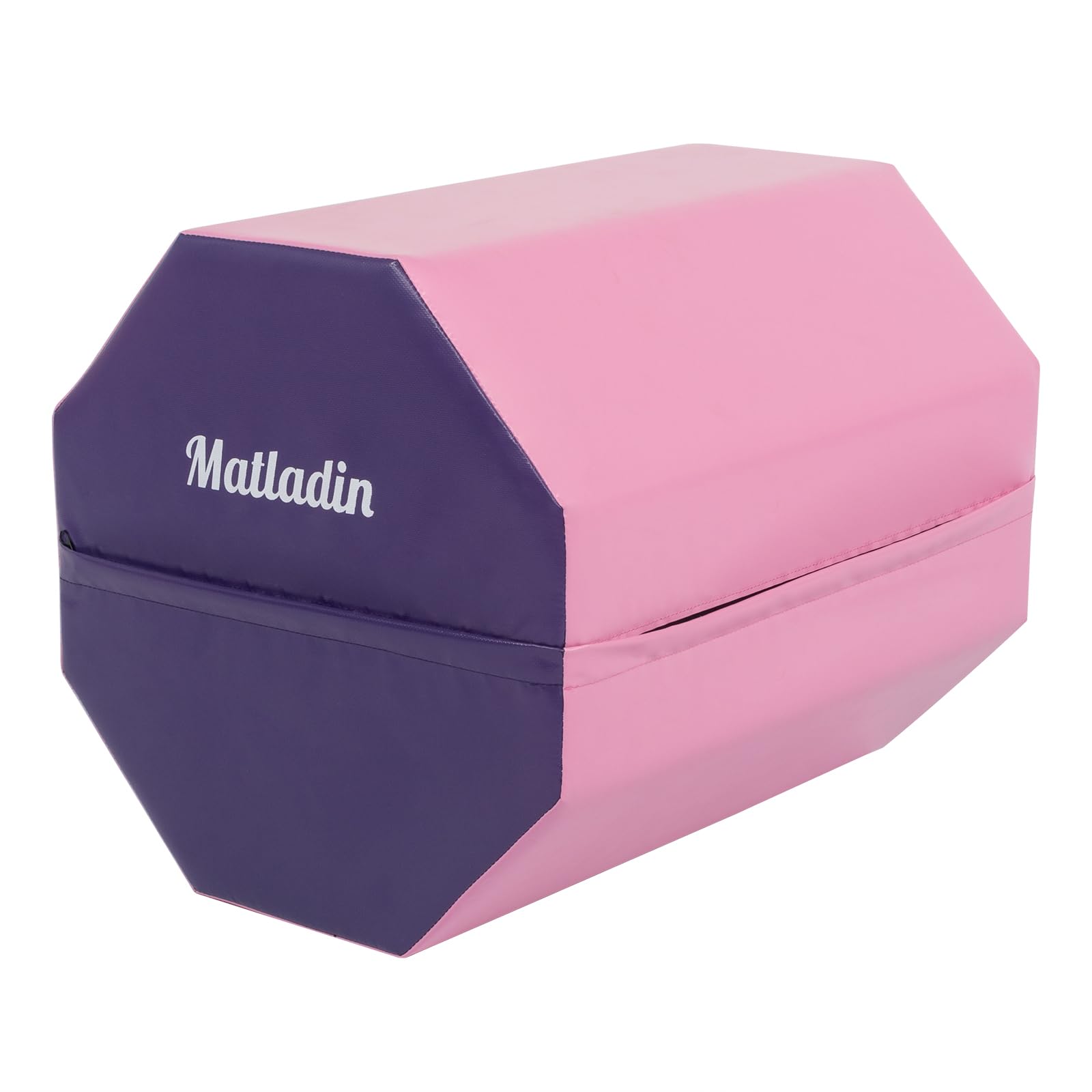
The cover is where a foam octagon ages first — seams give out long before the foam does. Matladin reinforces the stitching on all sides and wraps the block in a thickened PU leather that is non-slip, waterproof and crack-resistant, with a firm foam core inside. Nothing needs assembling: it comes out of the box, goes on the floor, and a kid can start walking over it.

We think it is the value pick of the guide. It is the cheapest octagon here, and it does not behave like the cheap one: the surface grips bare feet, the seams sit flat instead of puckering, and the whole block wipes down in under a minute. New foam carries a factory smell for a day or two, so stand it in a ventilated room before it moves into a bedroom.

Pros

  • Cheapest octagon in this guide
  • Reinforced stitching and non-slip PU cover
  • Wipes clean and needs no assembly

Cons

  • Stated age range stops around 8
Our verdict

The best-value octagon here: reinforced seams, a non-slip cover and a firm core for a family buying its first real skill-shape mat.

Check Latest Price
3

Best for Solo Practice

Xemz Back Bend Assist Trainer

85 /100
Peggy's Score Excellent

Key details

Weight
1.1 lb
Material
Polyester
Mounting
Over-door anchor and D-ring
Check Details on Amazon

Backbends are the stretch you cannot really do alone: your hands need somewhere to go, and a wall gives you nothing to hold. This strap solves that. The anchor drops over the top of a closed door, the strap feeds through the D-ring, and you have a pair of handles overhead to lower yourself back by. Once it is rigged, setup is a ten-second job, and it is the cheapest item in this guide.

We found it most useful for holding rather than for depth. Instead of bouncing in and out of a bridge and hoping it gets deeper, you take the strap, walk your hands down the door and stay there, letting your back open at its own pace. It is just as useful for legs: hook a foot in the loop and pull a split a little further than your hamstrings want to go on their own.

The door is the whole system. It needs to be solid, closed, and not about to be opened by somebody else — a hollow interior door flexes across the top when you load it, and a light bedroom door is the wrong place to hang your bodyweight. Rig it on the sturdiest door in the house, shut and locked, and check the top edge for give before you lean back.

Pros

  • Rigs in seconds on a closed door
  • Lets you hold a backbend without a spotter
  • Works for splits and leg stretches too
  • Cheapest item in this guide

Cons

  • Needs a sturdy door that stays shut while you load it
Our verdict

The one we hand to anyone practicing backbends without a spotter: it rigs in seconds and lets you hold the position long enough to change it.

Check Latest Price
4

Best for Small Spaces

Matladin 20" x 20" Octagon

90 /100
Peggy's Score Outstanding

Key details

Cover
Waterproof PU leather, zippered
Weight
7.1 lb
Warranty
9 months
Dimensions
20" x 24" x 20"
Check Details on Amazon

Twenty inches across is small for an octagon, and here that is the point. At 7.1 pounds it is the lightest mat in this guide — light enough to lift with one hand and slide into a closet — and it sits lower than the 24-inch blocks, which is what a four- or five-year-old needs under her: enough height to make the shape, not so much that going backwards is frightening.

We like it as a first mat, not a forever mat. For a preschooler working on her first backbend it is the right height and the right weight, and it is the one a parent can move without help. The cover unzips, too, so you can pull the foam out and wash the outside properly instead of spot-cleaning it forever — which matters more than it sounds when a mat lives on a playroom floor.

Pros

  • Lightest mat here at 7.1 pounds
  • Zippered cover comes off for washing
  • Low height suits preschoolers

Cons

  • Small enough that kids outgrow it early
Our verdict

Our pick for a small child and a small room: light enough to move every day and low enough that a preschooler is not scared of it.

Check Latest Price
5

Older Kids

Goplus Octagon Mat

90 /100
Peggy's Score Outstanding

Key details

Cover
Waterproof artificial leather
Weight
14 lb
Assembly
None required
Dimensions
24.5"L x 26"W x 24.5"Th
Check Details on Amazon

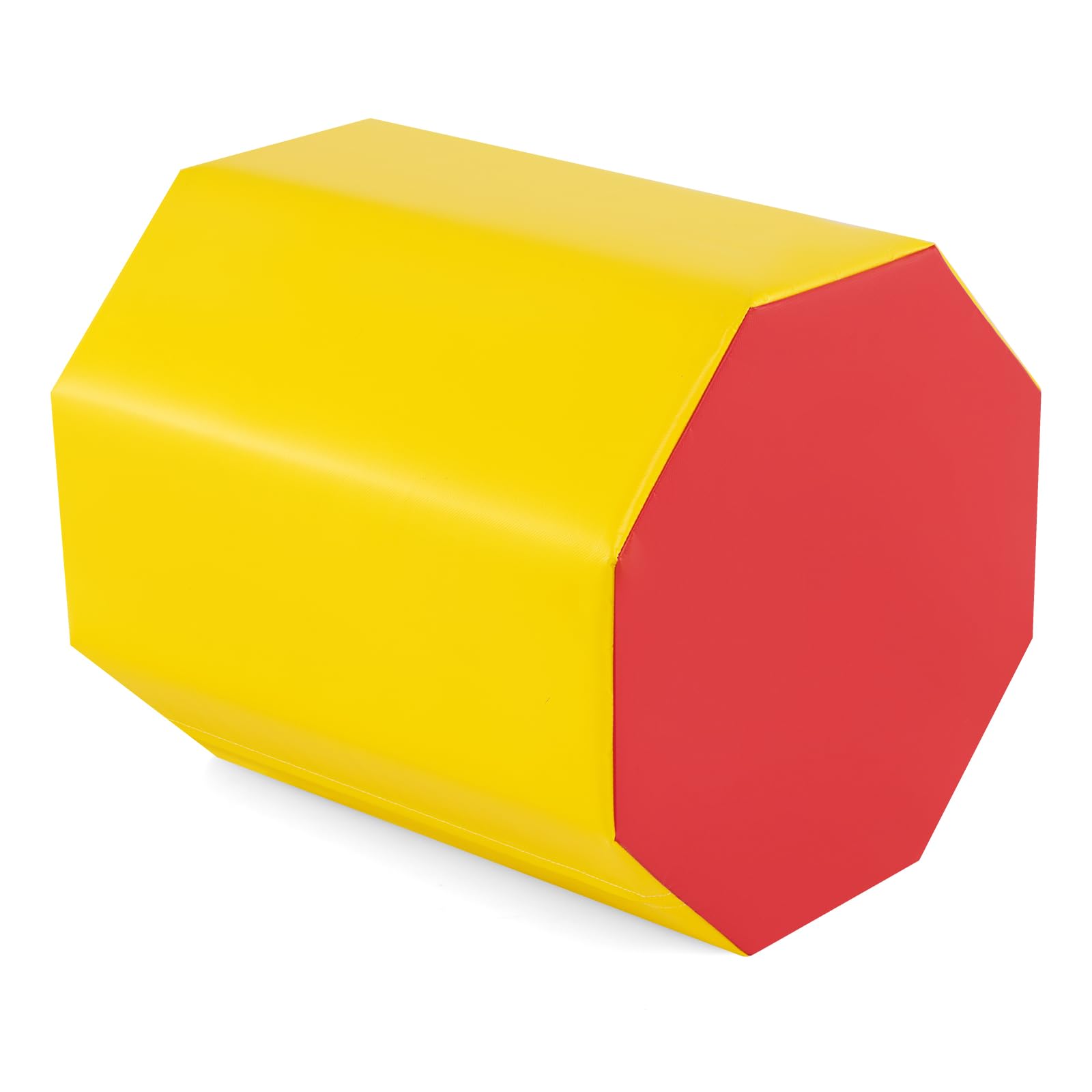
Dense is the word for this one. The EPE foam in the Goplus block is firmer than the We Sell Mats mat — press a thumb in and it gives a shallow dent rather than a soft squish — and for backbends that is mostly a virtue, because the mat's job is to hold a curve under a child rather than let her sink into it. Where it works against you is landings: a bony kid coming down on it repeatedly feels every bit of that density.

The block is a 24.5-inch octagon in a waterproof artificial-leather cover that wipes down after practice, and both the seams and the foam hold their shape under a tween's weight. It arrives fully assembled, so there is no cover to wrestle onto a foam core before the first session.

For a strong 8- to 11-year-old who needs a stable platform for back walkovers and back handsprings, this earns its spot: it is the firmest and heaviest mat here, and it takes the abuse an older kid gives it. For a nervous 5-year-old it is more mat than she needs, and the smaller Matladin fits a little body better. One small mercy — it is yellow, so it does not show dusty footprints the way the pale pink mats here do.

Pros

  • Firm foam holds a fixed backbend height
  • Waterproof leather cover wipes down
  • Arrives assembled and ready to use
  • Yellow cover hides dusty footprints

Cons

  • At 14 pounds it is a two-handed carry
Our verdict

Our pick for older kids who have outgrown the small blocks: dense foam, a cover that wipes clean, and enough mat to land on.

Check Latest Price
6

Controlled Rolling

M HI-Mat Octagon Mat

85 /100
Peggy's Score Excellent

Key details

Foam
High-density EPE
Cover
Waterproof PU leather
Weight
10 lb
Dimensions
29"L x 24.4"W x 24.4"Th
Check Details on Amazon

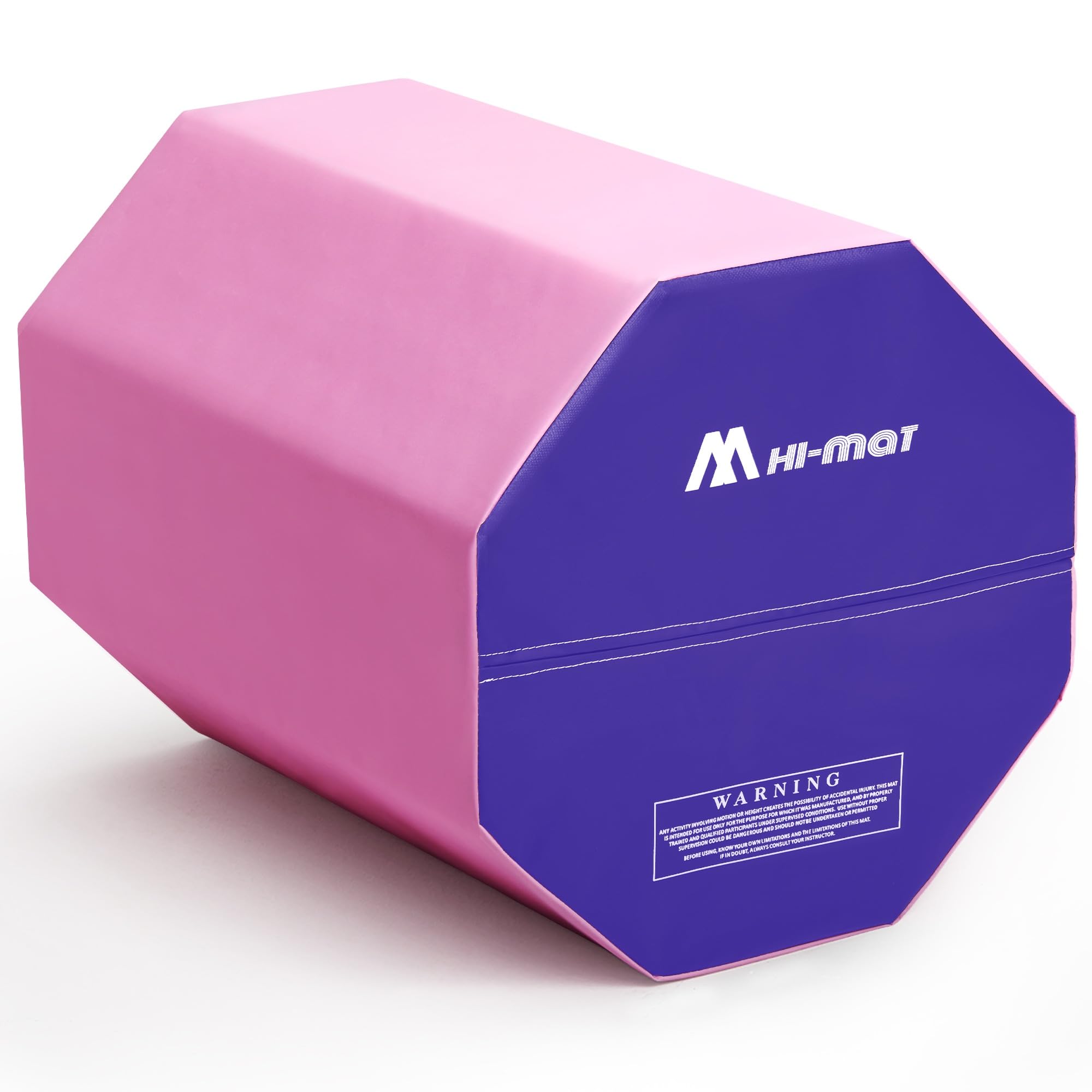
The eight flat panels are the idea here. A round barrel rolls in one continuous curve; an octagon rolls in a series of short, controlled flips, so a kid can stop halfway instead of committing to the whole roll. The flat faces also give her somewhere to put a hand as she comes over.

At 29 inches long and 10 pounds it is the biggest footprint in this group without being a two-person job to shift. The high-density EPE foam holds its shape, the PU leather cover is waterproof and wipes clean, and the stitching is the best-finished of the covers here.

Where it gets hard to justify is the price. This is the most expensive mat in the guide, and it is up against the Goplus and the 24-inch Matladin, both of which do the same core job. The foam is dense and the shape is genuinely well thought out, but nothing about using it feels a tier above the rest of this group.

Our take: buy it if you want the roomiest surface here, have the floor for it, and like the way the flat panels control a roll. If you are buying a first mat for a 6-year-old, the extra size and cost buy you very little.

Pros

  • Flat panels control the roll
  • Roomiest surface in this guide
  • Waterproof PU cover wipes clean
  • 10 pounds despite the size

Cons

  • Most expensive mat here
  • Takes up the most floor space
Our verdict

The best-shaped octagon here for controlled rolling, worth it if you have the floor space and want the roomiest surface, less so as a first mat.

Check Latest Price
7

Splits and Backbends

TOCO FREIDO Stretch Strap

80 /100
Peggy's Score Excellent

Key details

Weight
1.12 lb
Material
Nylon
Mounting
Over-door anchor
Strap Size
67"L x 60"W
Check Details on Amazon

Sixty-seven inches of nylon with a wide middle section is more strap than the door-strap norm, and that is the reason to consider this one. There is enough length to loop over a door and still have slack to hold, and the wide part spreads across a foot or a shoulder instead of biting in like thin webbing. It rolls down to about the size of a towel, so it goes in a gym bag.

In practice it is a stretching tool first and a backbend aid second — which is fine, because the leg and hip work is what most people need before a backbend happens anyway. Foot in the loop, lie back, pull. The door anchor does the same job as the Xemz's, with the same requirement that the door be solid and stay shut.

Where we come down: this is a strap for an adult who wants one tool for splits, shoulders and backbends, and who will rig it carefully on a door that can take the load. It is the second-best strap here, and the gap is not in comfort — the padding and the length are the nicer end of the two. For a child practicing alone, the Xemz is the safer pick.

Pros

  • Long 67-inch strap with a wide middle
  • Comfortable for foot and shoulder work
  • Packs small for a gym bag

Cons

  • ⚠️ Adjusters can work loose mid-stretch
  • Wide edges curl and narrow the strap
Our verdict

A long, wide strap that is genuinely comfortable for splits and shoulder work, with the caveat that it is the one to check over before every session.

Check Latest Price

How We Chose and Tested 12 Backbend Trainers

We started by rounding up every backbend trainer we could find — foam arches, wooden rockers, adjustable multi-height designs, and a couple of padded wheels — then narrowed the field by arch height, weight limit, materials, and price. Twelve made the final cut, spanning budget foam through solid wood construction.

For eight months, testers of different heights and flexibility levels used them at home: on a living room rug before work, on hardwood in the evening, and on a yoga mat during longer weekend sessions. Everyone measured the arch against their own torso first and noted where the curve landed — a trainer that presses into the lower back instead of the mid-back is the wrong size, no matter how nice it feels. We watched whether the base stayed put as they rolled on and off, how quickly they could get into position and adjust it, and whether the whole thing rocked or tipped when they reached their arms overhead.

Firmness and comfort prompted the most disagreement. We pressed a palm into every pad, logged pressure points along the spine, and compared the first minute to the tenth. Stability came down to base width and surface grip — one model slid a full inch on hardwood, while another held through a full supported bridge without a wobble. To judge weight retention, we weighed each trainer at the start and again at month eight, checking for foam that had collapsed or an arc that had flattened, then inspected seams, straps, and hinges for wear. We also tracked whether testers could hold a supported bridge longer and whether their floor-to-hands gap had closed, and set the price of each against how well it had aged by the end.

How to Choose Backbend Trainers

Mat or Strap? Start With the Skill

An octagon block puts a firm curve under a gymnast's back so she can walk over backwards without her feet dropping, which is how a backbend and then a back walkover get learned. A door strap does the opposite job: it holds your hands overhead so you can lower into a bridge and stay there.

If a child is learning the skill, buy the mat. If an adult is chasing back flexibility alone, buy the strap. A mat will not hold your hands, and a strap will not support a child's spine. Our top pick handles the first job; the Xemz handles the second.

Match the Mat to the Child, Not to the Future

Sizing is where most of these purchases go wrong. A 20-inch octagon suits a preschooler, a 24- to 26-inch block fits roughly ages 5 to 8, and taller kids need more mat under the shoulders. The tempting move is to buy big so it lasts, but a block that is too tall means she climbs onto it instead of walking over it, and the skill gets harder rather than easier.

Buy for the child in front of you and expect to size up once. Measure the floor spot first, too: even the small blocks are about two feet across and none of them fold.

Firm Foam, Clean Cover

What you are paying for is foam that holds its shape. A soft block squashes under a child's back and offers no support at the exact moment she needs it, which is why every mat here is built around dense EPE or polyethylene. A dense mat feels hard the first time you press it; that is the point.

Look at the cover next. Vinyl or PU leather wipes clean in a minute, and a zippered cover can be pulled off and washed properly — worth having on a mat that lives on a playroom floor. Pale colors show every footprint; darker covers hide them.

Weight, Handles and Where It Lives

An octagon is 7 to 15 pounds of solid foam taking up roughly two feet of floor, so decide where it lives before you order. Handles sound trivial and are not: a mat you can shift one-handed gets used every day, and one you have to wrestle into a corner gets left in it.

Under 10 pounds is manageable for a kid to drag; 14 pounds is an adult's job. If the mat has to move between a bedroom and a living room each session, weight and a handle matter more than an extra inch of surface.

Your Door Is the Equipment

A door-anchored strap is only as good as what it is anchored to. Loop the anchor over a solid door, close it, and check the top edge for flex before you put bodyweight through it — hollow interior doors and light bedroom doors give noticeably, and a door that opens while you are hanging is a fall.

Use the heaviest door in the house, lock it, and tell everyone else in the house what you are doing. Check the adjusters and the stitching each time before you load them, and retire the strap at the first sign of fraying.

Frequently Asked Questions

Final Verdict

For most families the We Sell Mats octagon is the one to buy. The handles are the difference between a mat that gets used and one that lives in a corner, and the anti-tear vinyl has shrugged off everything we have put it through.

If the budget is the deciding factor, the 24-inch Matladin does the same job for less. And if you are the one working on your own back rather than spotting a kid, skip the foam entirely and buy the Xemz strap.