Best Push-Up Handles of 2026

Push-up handles are supposed to take pressure off your wrists, but a wobbly pair just moves the ache from your palms to your forearms. I learned that with a discount set that spun mid-set and left me gripping harder than I did on the floor. The right pair keeps your wrists neutral, holds steady when your hands get sweaty, and lets you think about your chest and shoulders instead of the handles beneath you.

Over the past three months, my team and I put 14 pairs through regular push-up sessions, and the differences came down to grip, wrist comfort, rotation, and how solid the bases felt under load. We paid attention to quality at the joints, whether the height could be changed without tools, and whether the design still felt functional after a sweaty set. One thing I've learned: if you only train on carpet, a fixed pair can be fine; if you move between floors and hand positions, rotation and adjustability earn their keep. The picks below are the ones that stayed stable and comfortable enough to leave beside my mat.

1

Best Overall

Perfect Pushup Elite

95 /100
Peggy's Score Outstanding

Key details

Weight
1.8 lb
Handle Type
Rotating, steel ball bearings
Maximum Load
400 lb
Base Diameter
8 inches
Check Details on Amazon

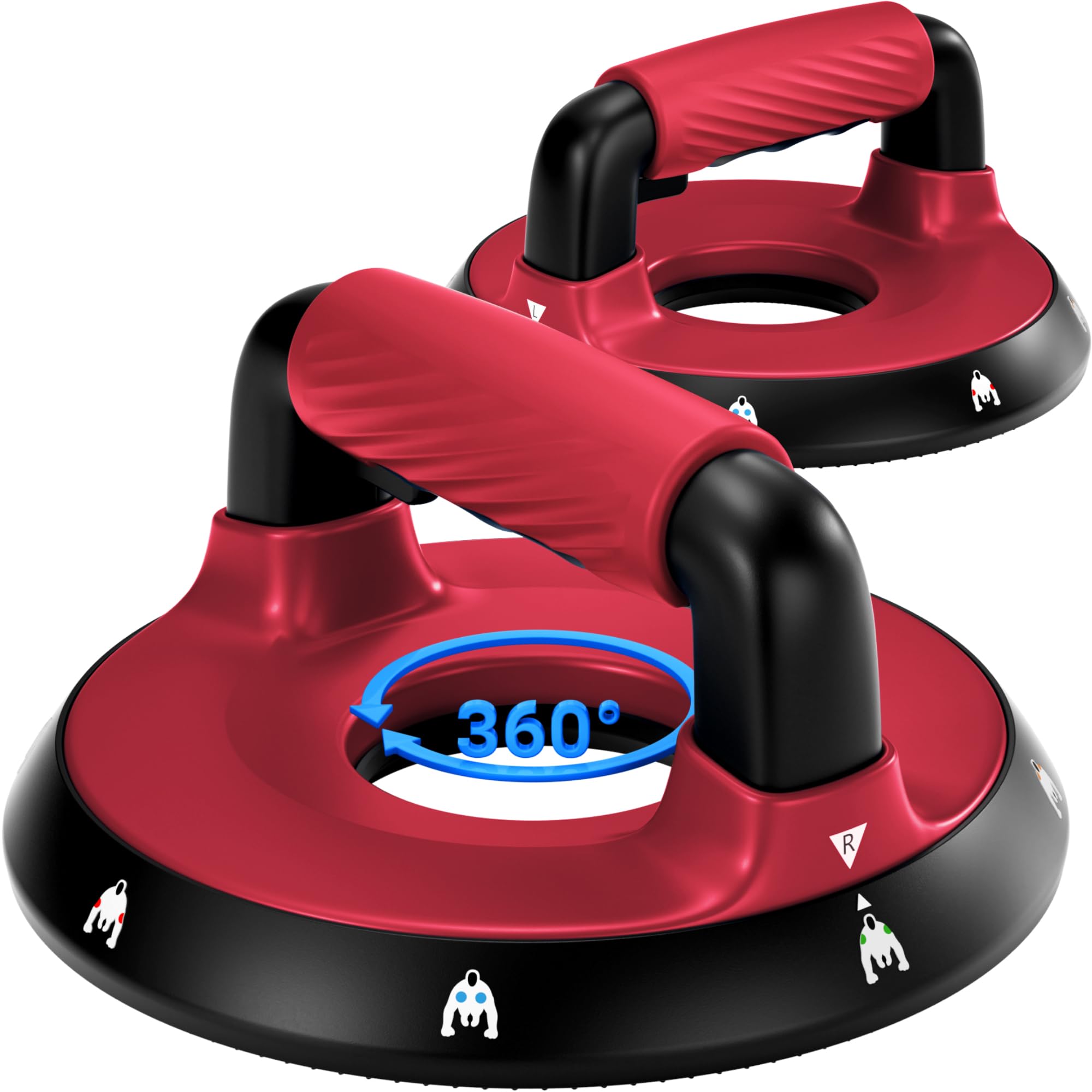
The rotating handles are the whole idea here, and they're the reason we point anyone with aching wrists at the Elite first. Each handle turns on steel ball bearings, so your hands follow your forearms through the bottom of the rep instead of staying pinned flat to the floor. On a fixed bar the wrist absorbs that angle; here it doesn't have to. The 8-inch base under each stand is among the widest in this group, and that width is why the pair stays planted when you lean forward or walk your hands out wider.

The rest of the build covers more than a bodyweight routine needs. The stated limit is 400 pounds, the highest of the rotating pairs we cover, so a weighted vest isn't a question. The TPE grips are soft and textured rather than slick plastic, and the pair weighs 1.8 pounds, which makes moving them between rooms easy.

Rotation is also something you can use deliberately. Turn the handles out for a wider press, in for a narrow one, and the same pair works for shallow dips off a bench — the movement is smooth enough that you're not fighting it. Give yourself a session or two to adjust; hands used to a fixed bar notice the extra freedom at first.

Pros

  • Rotation eases wrist strain through the rep
  • 400-pound stated limit covers a weighted vest
  • Wide 8-inch base stays planted
  • Soft TPE grips, not slick plastic

Cons

  • Handles can stiffen as grit reaches the bearings
  • Doesn't nest, so it takes more bag space
Our verdict

We recommend the Elite to anyone whose wrists complain during floor push-ups: the rotating handles take the strain out of the bottom position, and the 400-pound rating covers weighted work.

Check Latest Price
2

Best Fixed Handles

Kipika Push Up Bars

91 /100
Peggy's Score Outstanding

Key details

Base Pad
5 1/2 x 7 9/10 inches
Handle Type
Fixed, angled
Maximum Load
1000 lb
Grip Diameter
1 3/5 inches
Check Details on Amazon

Nothing on the Kipika turns, and that's the argument for it. Where our top pick asks you to look after a bearing, this is one moulded body on a rubber pad, with no mechanism to stiffen or work loose.

The handle isn't flat, and that's the detail we appreciated most. It sits at a slight angle, which tips the palm a few degrees back and moves the wrist away from the end of its range — the position where a floor push-up usually starts to ache. A 1 3/5-inch grip diameter fills an average hand without pressing a hard edge into the palm, and the soft plastic has enough give to be comfortable bare-handed.

The base does the rest: a rubber pad measuring 5 1/2 by 7 9/10 inches, which is a lot of contact area for a stand this compact. The listing claims 1,000 pounds, and we read that as the maker's ceiling rather than a tested figure, but the point holds — the body doesn't flex the way thin plastic does under a normal set. With nothing in it to wear, it's also the pair that asks the least of you over time.

Pros

  • Angled handle takes pressure off the wrist
  • Wide rubber pad holds hard floors
  • Soft grip at a generous 1 3/5 inches
  • One-piece body with nothing to loosen

Cons

  • Fixed angle with no rotation option
Our verdict

For a fixed bar that simply works, we take the Kipika: the angled handle spares the wrist, the wide pad holds its ground, and there's no mechanism to wear out.

Check Latest Price
3

Best Grip Comfort

SELEWARE Push Up Bars

91 /100
Peggy's Score Outstanding

Key details

Weight
1.94 lb
Dimensions
8 x 5 x 4 inches
Handle Type
Fixed, soft rubber
Maximum Load
500 lb
Check Details on Amazon

The grip is what sells these: a soft rubber sleeve, round rather than flattened, that fills the palm with no hard edge anywhere. We reach for them on bare floors in socks, where a hard plastic handle starts to dig in after twenty reps and these don't.

Underneath, the non-slip pads cover more floor than the stand's own footprint, which is the detail that keeps the pair still and keeps hardwood unmarked. The stated capacity is 500 pounds, and the body around the grips feels dense rather than hollow — the sort of plastic that doesn't announce itself with a creak at the top of a rep.

At 880 grams for the pair they're the heaviest fixed stands here, which is a strange thing to praise until you've watched a light pair skitter across laminate mid-set. Weight low down is stability, and these have it.

Pros

  • Soft rubber grips with no hard edges
  • Oversized pads protect hard floors
  • 500-pound stated capacity
  • Dense body that doesn't creak under load

Cons

  • Handles are fixed and don't rotate
Our verdict

The SELEWARE pair is the one we hand over when grip comfort is the complaint: soft round handles, a floor-friendly base, and a 500-pound rating that suits most home training.

Check Latest Price
4

Best Budget Pair

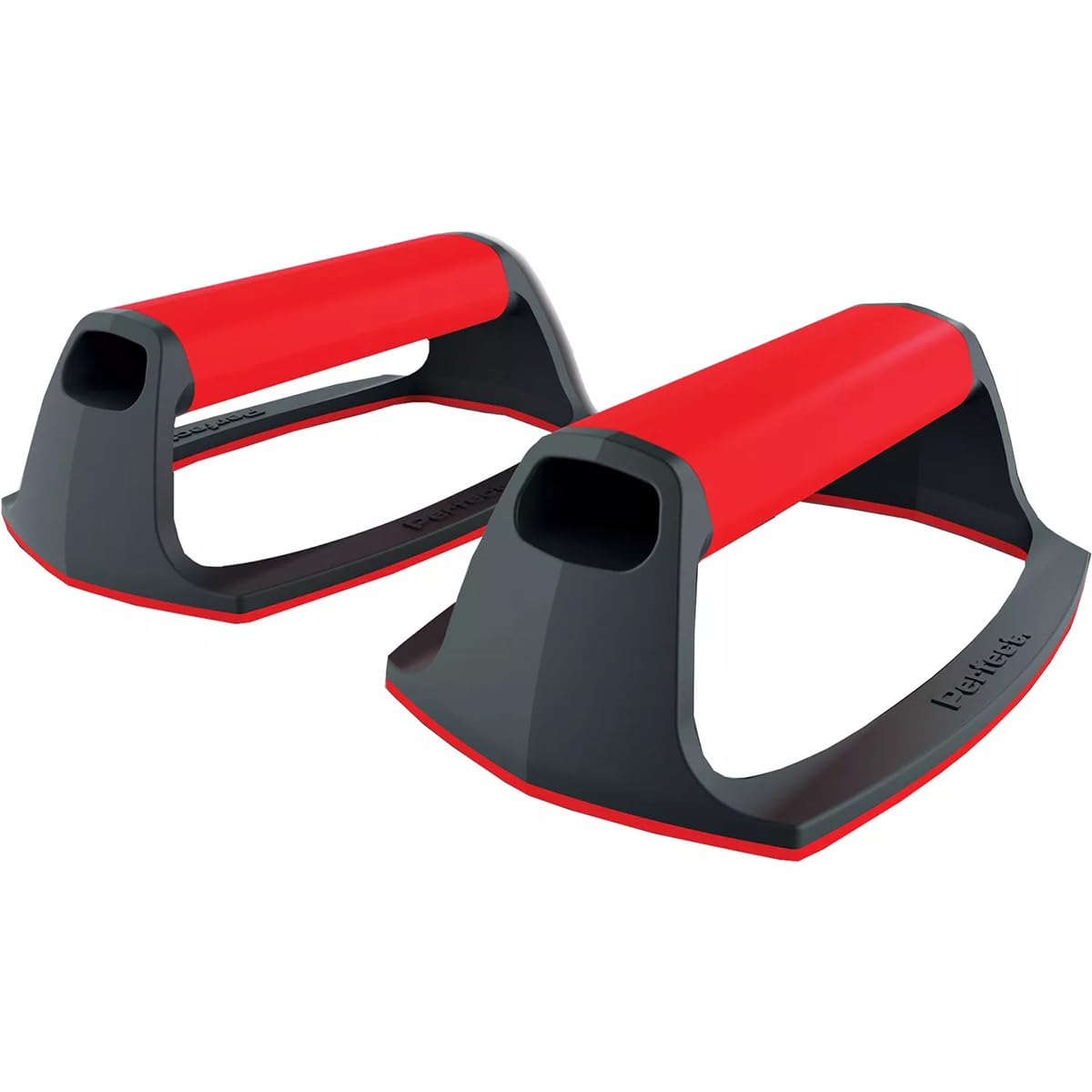
Perfect Fitness Pushup Stands

93 /100
Peggy's Score Outstanding

Key details

Storage
Stacking pair
Dimensions
8 x 5 x 5 inches
Handle Type
Fixed, padded
Maximum Load
264.6 lb
Check Details on Amazon

Two stands that nest into each other is a small thing that turns out to matter. The pair lives in a drawer, a gym bag pocket, or the gap beside the fridge rather than on the floor, and equipment you can put away in two seconds is equipment you actually use on a busy day.

The rest is straightforward: a padded grip that holds the wrist in neutral, a non-skid platform, and a light body. What it isn't is heavy-duty — the stated limit is 120 kg, about 265 pounds, which is the lowest of anything here. Train with a vest, or weigh more than that, and the Kipika or the SELEWARE pair covers you with room to spare.

For a beginner, a teenager, or anyone comfortably under that ceiling, the limit never comes up. The platform sits low, so you get less extra range than the tall rotating stands give, but your chest still travels deeper than it does with flat palms. That combination — cheap, small, and maintenance-free — is why this is the pair we suggest for a first home setup.

Pros

  • Nests into a drawer or bag
  • Padded grips keep wrists neutral
  • Non-skid platform on tile or carpet

Cons

  • Grip coating is thin, not cushioned
Our verdict

Beginners and apartment workouts get pointed to these: they nest into a drawer, hold the wrist in neutral, and do the job without a mechanism to maintain.

Check Latest Price
5

Best Wooden

airogym Wooden Push-Up Bars

91 /100
Peggy's Score Outstanding

Key details

Material
Pine wood
Dimensions
11.8 x 5.3 x 3.9 inches
Bar Diameter
4 cm (1.57 in)
Maximum Load
500 lb
Check Details on Amazon

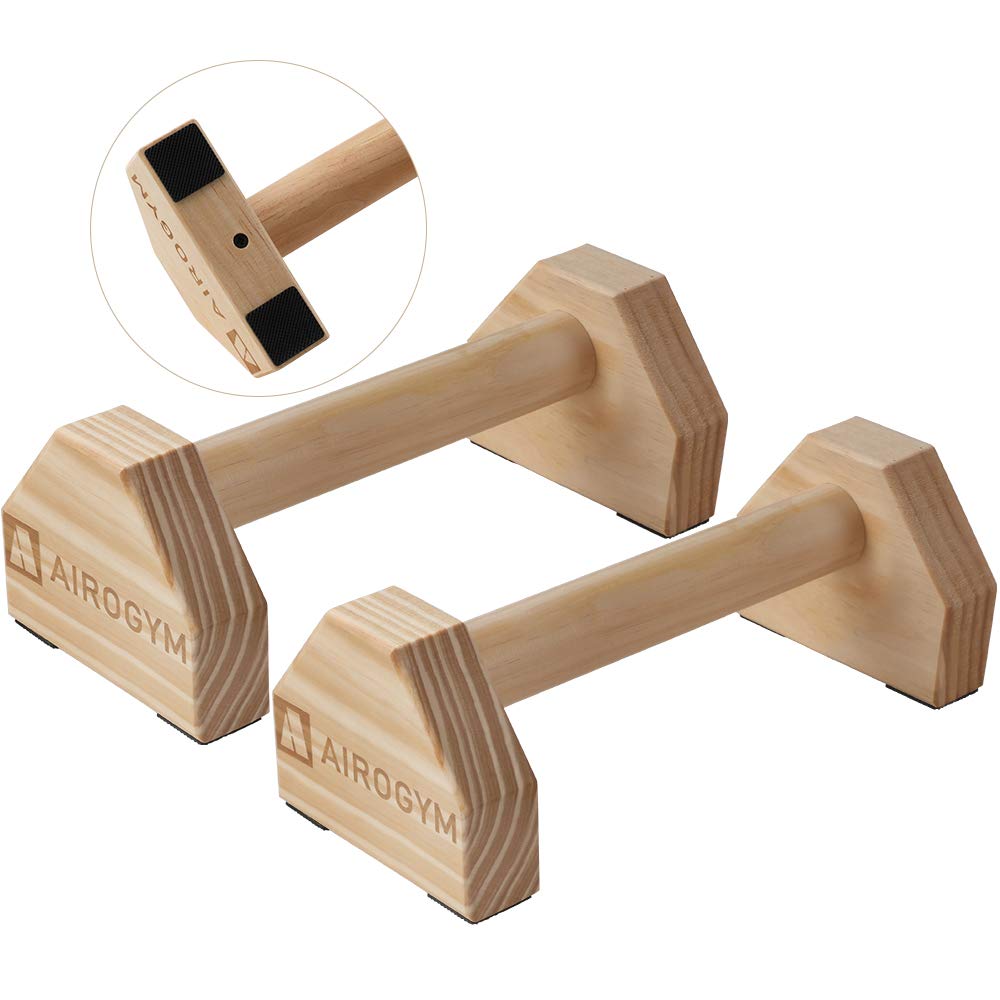
Pine, sanded smooth, on a 1.57-inch round bar: the airogym pair feels more like furniture than gym equipment. Each bar is 11.8 inches long and 3.9 inches tall, which is a low, wide stance — the geometry calisthenics athletes want for L-sits, handstand holds, and deep push-ups.

We rate them highest for handstand and plank work, where a low, planted bar and bare hands matter more than padding. The wood doesn't skate on tile or carpet, and the round profile lets the palm shift as you load it instead of catching on a seam. The 500-pound stated limit is generous for pine, and the bars take load without the creak that comes from hollow plastic.

What you don't get is cushioning. Bare wood is unforgiving over a high-rep set, and if your palms are the sensitive part, the rubber grips on the SELEWARE pair are kinder. The 11.8-inch length also asks for a little more clear floor than a compact stand does, so measure before you commit a corner of the room to them.

Pros

  • Solid pine bars with a smooth finish
  • Low, wide stance for handstand work
  • 500-pound stated capacity

Cons

  • Bare wood, with no grip padding
  • 11.8-inch bars need clear floor space
Our verdict

Calisthenics-minded buyers should start with the wooden airogym bars: low, stable, and built for push-ups, handstands, and L-sits alike.

Check Latest Price
6

Travel and Hotels

5BILLION Push Up Bars

89 /100
Peggy's Score Excellent

Key details

Assembly
Breaks down for storage
Material
PVC
Dimensions
8.7 x 5.5 x 5 inches
Maximum Load
330 lb
Check Details on Amazon

A pair of bars that comes apart into short tubes is the only kind that reliably makes it into a suitcase, and that's why this 5BILLION set is here. It breaks down quickly, reassembles the same way, and the whole thing is light enough that you forget it's in the bag.

Everything else is ordinary: an I-shaped plastic frame, a fixed handle, a stated 330-pound limit. What the light weight buys you is a workout in a hotel room, a rented apartment, or a park, and the tubes are short enough to pack around clothes rather than instead of them.

The trade is the floor. Treads that hold on carpet can skate on smooth tile, and a hotel bathroom is the worst case; a thin rubber mat underneath fixes it and takes no room in a bag. Set up on carpet and they feel far more planted than their weight suggests, which is what keeps a routine going while you're away.

Pros

  • Breaks down into a suitcase
  • Very light to carry
  • 330-pound stated limit suits bodyweight work

Cons

  • Push-fit joints can work loose under load
Our verdict

For travel we take the 5BILLION pair: it breaks down into a bag, weighs next to nothing, and handles a trip workout without asking for suitcase space.

Check Latest Price
7

Budget Rotation

Elite Sportz Push Up Bars

86 /100
Peggy's Score Excellent

Key details

Material
Alloy steel
Handle Type
Rotating
Maximum Load
400 lb
Check Details on Amazon

A jump rope comes in the box, which tells you who this pair is aimed at: someone building a warm-up-then-push-ups routine rather than furnishing a gym. The handles rotate on an alloy steel frame, and the set arrives fully assembled.

Rotation at this end of the range is a compromise. The handles turn, and a smooth pair takes real pressure off the wrist, but the motion isn't as consistent as the Elite's bearings, and the grips are narrow and hard next to the padded and rubber handles elsewhere here.

The base is stable enough for standard push-ups on a hard floor, though wood is where it's least convincing — use a mat and it's fine.

As a first rotating pair, or a warm-up set that lives in a bag, it earns its place. It's also the least expensive way here to find out whether rotation helps your wrists at all before you spend more on a pair with better bearings.

Pros

  • Rotating handles at the lowest price here
  • Jump rope included
  • Alloy steel frame, ready to use

Cons

  • Narrow, hard grips
  • Rotation can feel uneven
Our verdict

These are the cheapest rotating pair here and a fine warm-up set, as long as you accept narrow, hard grips.

Check Latest Price
8

Locked Hand Angles

READAEER Rotating Push Up Bars

88 /100
Peggy's Score Excellent

Key details

Weight
2.34 lb
Handle Type
Rotating, lockable
Maximum Load
400 lb
Base Diameter
8.2 inches
Check Details on Amazon

A button on each handle lets you lock the grip at set angles or release it to spin, which is more control than any other rotating pair here offers.

The idea is good: lock a neutral grip for standard push-ups, release it for a set where you want the hands to travel. That kind of control matters if you're working around a shoulder or chasing one specific variation, and no other pair on this list gives it to you.

The 8.2-inch base and 400-pound rating are both solid, and the rubber underneath holds a hard floor well. At 1,060 grams the pair is substantial, which helps stability and costs you portability in equal measure — it's a stay-at-home pair, not one for a gym bag.

Where it earns a place is specificity. A locked palm-up or palm-forward grip is genuinely useful for shoulder-friendly pressing variations, and for ordinary push-ups the Elite's freer rotation feels better under the hand. Buy this one for the lock, not for the rotation.

Pros

  • Locks the handle at set angles
  • Wide 8.2-inch base with rubber underside
  • 400-pound stated capacity

Cons

  • Lock button is awkward to hold mid-set
  • Grips are harder than described
Our verdict

When you need a locked hand angle, this is the only pair in this group that gives you one, though the button and hard grips keep it off the top spot.

Check Latest Price

How We Tested 14 Pairs of Push-Up Handles

We started by gathering handles sold in pairs and filtering out those with vague weight ratings, bases that looked narrower than the handle, or rotation joints that needed tools to adjust. That left 14 pairs, which we used for three months.

They lived beside my mat in the living room, moved to the garage floor for weekend sessions, and came with me on a few overnight trips. I did standard push-ups, decline sets with my feet on a step, and slow negative reps, noting whether my palms slid on the handle or the handle slid on the floor. I checked whether my wrists stayed neutral or collapsed inward after 10 reps, and on rotating models I paid attention to whether the handle turned smoothly under load or developed a loose, grindy feel. I changed height settings barehanded and timed it, then rechecked base wobble, joint play, and whether the grip surface had smoothed or peeled after each week.

Quality showed up in small ways: seams stayed tight, bases stayed flat, and the handles did not rock when weight shifted to one side. The pairs that scored best were not always the most complicated; they were the ones whose design matched how people actually use them, with quick sets, sweaty hands, and mixed floor surfaces. I am still using the top performers weekly and will update if anything loosens.

How to Choose Push-Up Handles

Fixed, Angled, or Rotating Handles

A fixed bar holds your hand still; a rotating one lets it follow your forearm through the rep. Rotation is the more convincing answer for wrist pain, because the wrist never has to absorb the angle between forearm and floor. The trap is buying rotation for its own sake: a stiff or wobbly bearing drags your wrist through a wobble, which is worse than a solid bar that doesn't move at all. If you go rotating, pay for a mechanism that turns cleanly — our top pick and the budget Elite Sportz pair sit at opposite ends of that range.

An angled fixed handle, like the Kipika's, splits the difference: the palm tips back a few degrees, which is often enough to quiet a complaining wrist, with no mechanism to maintain.

Wrist Angle and Grip Diameter

Height is what buys the relief. Lifting your palm 4 to 6 inches off the floor keeps the wrist closer to neutral and lets your chest travel further down. Grip diameter decides whether that position is comfortable: around 1 1/2 inches fills an average hand, and going much thinner concentrates the load on a narrow strip of palm.

Match the grip to your hand rather than to the marketing. Large hands do better with thicker rubber sleeves; small hands can find a fat grip harder to hold than a slim one, and no amount of cushioning fixes a handle you can't close around.

Weight Limits, Materials, and Your Floor

Every stand here states a maximum, and the sensible way to read it is as a ceiling that includes anything you're wearing. A 400-pound rating covers a heavy lifter in a weighted vest; a 120 kg limit does not, and that number is the first thing to check if you train loaded. Material sits behind it: a one-piece moulded body, a steel tube, or a solid wood bar takes load quietly, while thin plastic flexes and creaks.

Then look down. Treads that grip carpet can skate on tile, and a rubber mat under the pair fixes it for the cost of a mat. The other common mistake is assuming a high weight rating means stability — it doesn't; base area and pad size do.

Storage and Footprint

The pair you use is the pair you can reach. Stackable stands nest into each other and disappear into a drawer; break-down bars separate into short tubes for a suitcase; a one-piece pair with an 8-inch base needs a shelf or a spot on the floor and doesn't compress.

Measure the gap you have in mind before ordering. Two stands with 8- to 10-inch bases take up roughly the footprint of a doormat when set out, and a little more than a shoebox when stacked.

Frequently Asked Questions

Final Verdict

We went looking for the pair that makes floor push-ups kinder on the wrist without giving up stability, and the Perfect Pushup Elite is the one we come back to. The rotating handles do what fixed bars can't, the 8-inch base keeps it planted, and the 400-pound rating leaves room for a vest.

If you want nothing to maintain, take the Kipika: its angled fixed handle gets most wrists to the same comfortable place, with a wide rubber pad and no bearing to look after. Choose the wooden airogym bars only if handstands and L-sits are part of your training, because bare wood is the wrong surface for high-rep pressing.