Best Foam Rollers of 2026

Here's the uncomfortable truth about foam rollers: the ones that feel best on the first roll are rarely the ones that help most by week three. A soft, squishy roller is a kind place to start, but it mostly just sits there, while a rock-hard one can hurt enough that you quit after two sessions. The right pick comes down to density, diameter, and how much body weight the surface can take; get it right and the knot in your calf lets go after a long run.

I've kept one under my desk for years, so I'm suspicious of any roller that feels amazing the first time. My team spent four months with 14 of them — on living room rugs, a cold garage floor, gym carpet, a hotel room at midnight — comparing day-one feel with week six. Textured, hollow-core models concentrate pressure; wider, smoother ones spread it out, which is why the best beginner roller and the best 'make it hurt' roller are different purchases. The picks below include both, plus the ones that actually fit in a duffel.

1

Best Overall

TriggerPoint GRID 1.0 Foam Roller

95 /100
Peggy's Score Outstanding

Key details

Length
13 inches
Weight
1.1 lb
Surface
Multi-density GRID zones
Diameter
5.12 inches
Check Details on Amazon

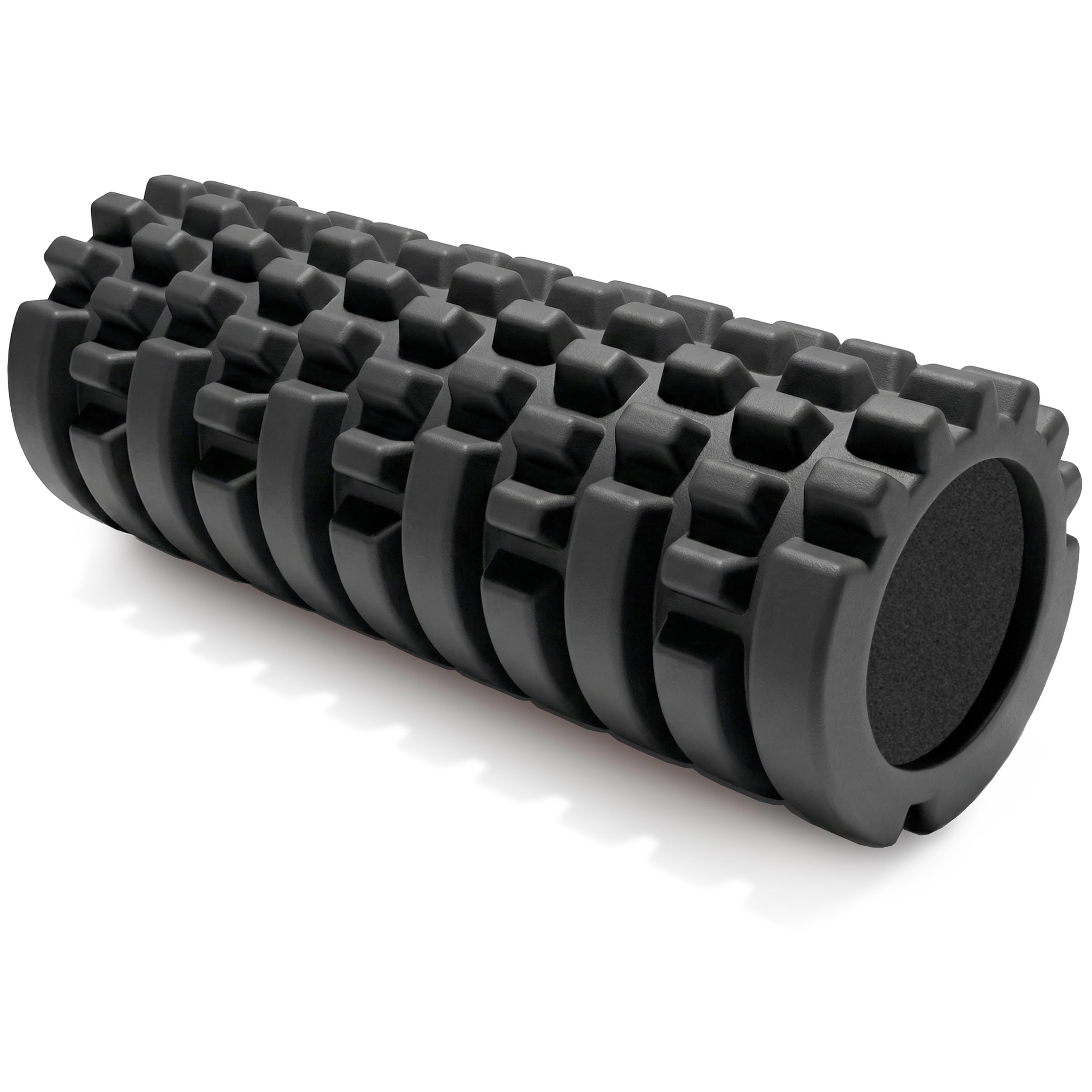
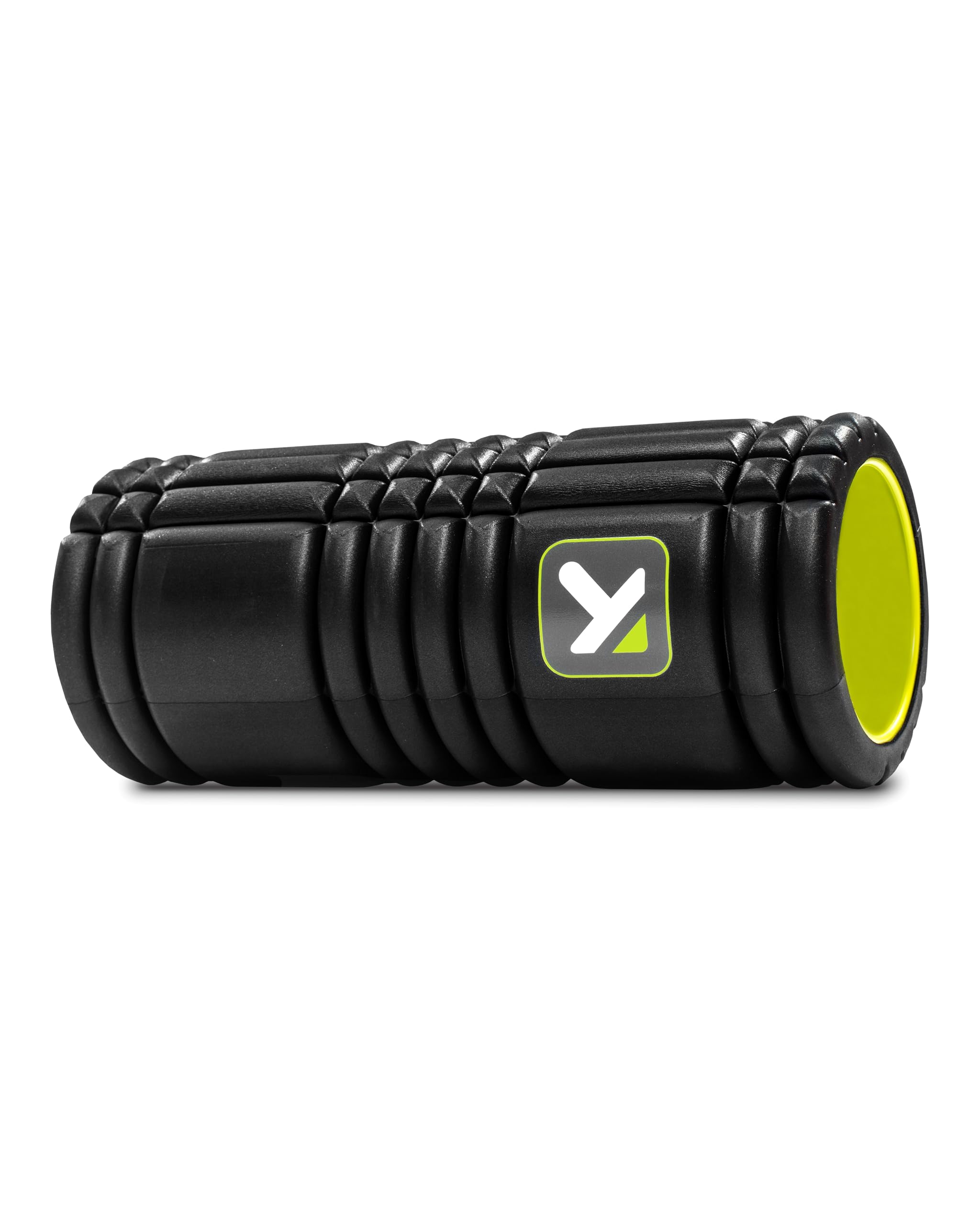
The GRID 1.0's surface is the reason it holds the top spot. Three textures sit on one 13-inch cylinder — wide flat ridges, narrower tubes, firm knobs — so the same roller feels different depending on where you lie on it. Under a shoulder blade the ridges spread the load; on a tight quad the knobs dig in. A smooth foam tube gives you one pressure and one pressure only.

What's underneath the foam is what convinced us to keep recommending it. A rigid hollow plastic core runs the full length, so it doesn't collapse under your hips the way solid foam eventually does. At 1.1 pounds it disappears into a gym bag, which is more than most of the long rollers here can claim.

The surface asks for some patience. Ridges concentrate pressure, and the first few sessions can feel sharper than expected, particularly over the IT band or the bones of the lower back. Start with light body weight and don't chase a stubborn knot on day one; the pressure that feels aggressive at first turns useful within a week.

Thirteen inches also turns out to be the right size for the awkward spots: calves, glutes, the outside of a hip. A 36-inch roller is better when you want to lie along your spine, but it's clumsy when the job is leaning into one hamstring.

Pros

  • Three textures in a single compact roller
  • Rigid hollow core resists collapsing
  • Light enough for a gym bag at 1.1 pounds
  • Reaches calves, glutes and hips easily

Cons

  • 13 inches cannot span both sides of the spine
Our verdict

We tell most people to start here: three textures on one 13-inch roller find knots a smooth tube slides past, and the hollow core keeps its shape under your hips.

Check Latest Price
2

Best Full-Length on a Budget

Amazon Basics High-Density Foam Roller

93 /100
Peggy's Score Outstanding

Key details

Length
36 inches
Cleanup
Wipes clean
Diameter
6 inches
Material
Polypropylene
Check Details on Amazon

Thirty-six inches changes what rolling can do. Lie along a roller this long and both sides of your back work at once, and this Amazon Basics version delivers that full length in dense polypropylene for a fraction of what the pro-style 36-inch rollers here cost. Full coverage, no texture, modest money — that combination is why we point budget-minded buyers here first.

Dense is the right word. The polypropylene is firm, noticeably firmer than the EVA rollers in this set, and the molded edges round off so the ends don't bite into your hands. It holds its shape under a hip or a full set of shoulders, and the surface wipes clean with a damp cloth instead of soaking up sweat.

At 36 inches it doesn't travel; it lives against a wall or under the bed, and that's the honest cost of the length. The smooth surface is the other half of the trade: it spreads pressure evenly across a broad area, which makes it the better roller here for balance drills and Pilates work, and the wrong one for chasing a single stubborn knot.

Pros

  • Full 36-inch coverage for back work
  • Firm polypropylene keeps its shape
  • Wipes clean with a damp cloth
  • A fraction of pro full-length roller prices

Cons

  • Firmer than most beginners want
  • Too long for a gym bag
Our verdict

The one we point to when you want a full 36 inches under your spine without pro-roller money — just know it's the firmest foam here.

Check Latest Price
3

Best for Gentle Pressure

OPTP PRO-Roller Soft

95 /100
Peggy's Score Outstanding

Key details

Length
36 inches
Density
Soft
Diameter
6 inches
Material
Closed-cell EVA foam
Check Details on Amazon

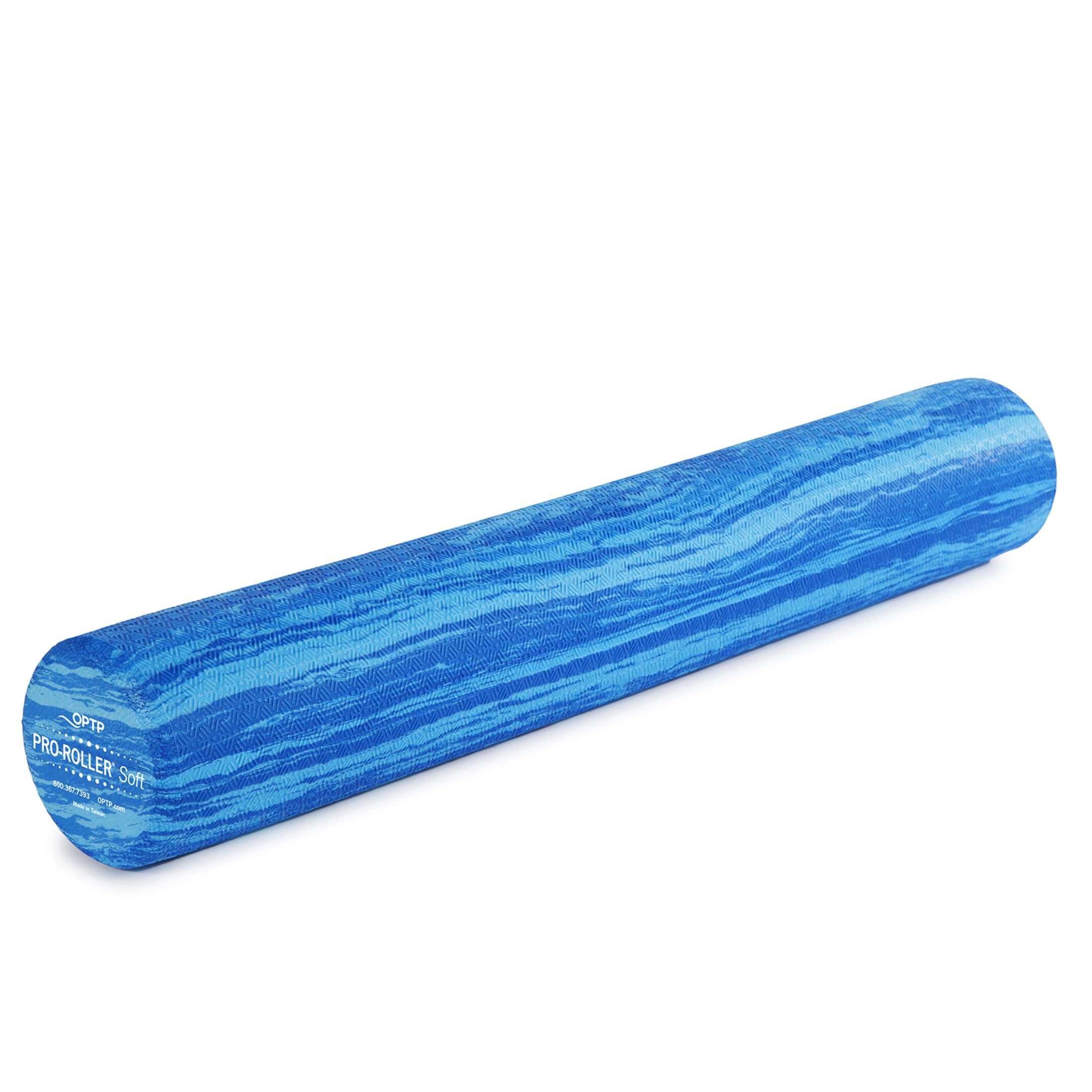
If your first attempt at foam rolling ended with you holding your breath instead of letting go, the roller was probably the problem. The OPTP PRO-Roller Soft is a 36-inch EVA roller built for people who need pressure they can breathe through: it gives under a shoulder or a hip rather than pushing back.

Soft doesn't mean squishy. The closed-cell, heat-molded EVA holds its shape and wipes clean, which matters whether it lives on a studio floor or in a clinic. It's also the roller here best suited to Pilates and MELT-style positioning work, where the roller sits under the spine or pelvis as a prop rather than being ground into a knot.

We think it earns its place for that specific job — rehab, gentle daily maintenance, anyone whose back objects to firm pressure — and it's the clearest exception here to the idea that deeper is always better.

Fifteen ounces is light for a roller this size, so carrying it to a class isn't a chore, and the surface has enough traction to stay put on a mat rather than skating. Buy it for the days you need to move gently; keep a firmer roller for the days you don't.

Pros

  • Soft enough to relax into
  • 36 inches for back and positioning work
  • Closed-cell EVA wipes clean and holds shape
  • Light for its size at 15 ounces

Cons

  • Premium price for a foam cylinder
  • Too soft for deep-tissue pressure
Our verdict

Our pick for anyone who tenses up on a hard roller: this soft EVA gives under a shoulder blade so you can stay on the spot and breathe.

Check Latest Price
4

Best for Deep Tissue

RumbleRoller Original Midsize

93 /100
Peggy's Score Outstanding

Key details

Length
22 inches
Surface
Textured bumps
Material
EVA and polyolefin
Check Details on Amazon

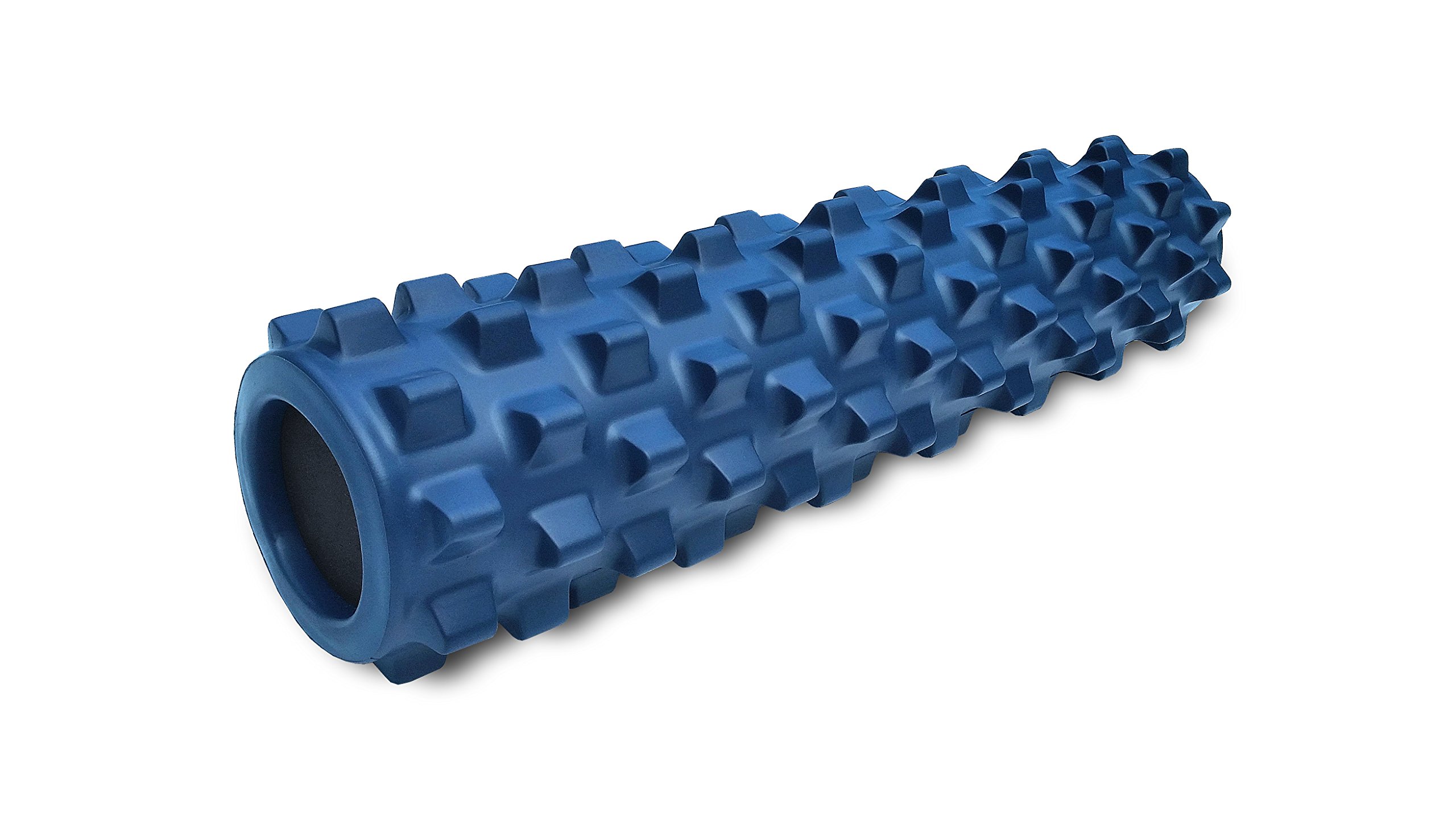
This is not the roller to hand someone who has never rolled before. The RumbleRoller's bumps stand out from the barrel like a knuckle tread, and lying on them the first time is closer to a deep-tissue appointment than a stretch.

That's the point. The bumps are molded from dense EVA and polyolefin, and rather than folding over they press into the muscle and let it release around them. For a tight IT band, a locked piriformis, or the outside of a quad after a long run, it gets deeper into the tissue than the ridged rollers here — the ones we think of as merely textured. This is a different category of pressure.

Twenty-two inches is what makes it practical rather than specialist: long enough to lie along for back work, short enough to fit in a duffel. The technique that makes it usable is to start standing, with the roller against a wall and your body weight shared with your hands, and only then move to the floor. Going straight to lying on it is how people decide they hate it.

We rate it the most effective deep-tissue roller in this set and the narrowest in who it suits: athletes, lifters, runners with one specific problem area. Between this and the GRID 2.0, the RumbleRoller is the more aggressive of the two by a clear margin, and the one that rewards a little caution.

Pros

  • Deepest pressure of any roller here
  • Bumps hold their shape instead of folding
  • 22 inches fits in a duffel

Cons

  • Premium price
  • Punishing on bony areas and healing tissue
Our verdict

We hand this to athletes and nobody else: the knuckle-like bumps go deeper than any other roller here, and they don't apologize for it.

Check Latest Price
5

Best for Full-Spine Sessions

TriggerPoint GRID 2.0 Foam Roller

93 /100
Peggy's Score Outstanding

Key details

Core
Rigid hollow core
Length
26 inches
Diameter
5.51 inches
Weight Capacity
500 lb
Check Details on Amazon

The GRID 2.0 is the 13-inch GRID stretched to 26 inches, and that extra length is the entire argument: lie along it and the three textures work both sides of your back at once. For anyone whose main use is a long, slow session on the back and legs, we think it's the better of the two TriggerPoint picks. For anyone who wants to throw it in a bag, it isn't.

Underneath, it keeps the rigid hollow core, now rated to 500 pounds, wrapped in EVA foam, so the surface doesn't sag when your full weight goes through it. The 5.5-inch diameter is on the wide side of this set: stable under a spine, slightly more to manage when you're balancing on it for one calf.

Twenty-six inches is also a friendlier length for a small apartment than 36 — it fits along a doorway and stows upright. If you mostly roll a limb at a time, the 13-inch GRID does the same job for considerably less, and length is the only thing you give up.

Pros

  • 26 inches covers both sides of the back
  • 500-pound-rated hollow core holds firm
  • Stows upright in a small space

Cons

  • Highest price in this set
Our verdict

We like it best for long back sessions: the GRID surface at 26 inches works both sides of your spine at once and holds firm under a full body weight.

Check Latest Price
6

Best Compact Budget Roller

ProsourceFit High Density Foam Roller

93 /100
Peggy's Score Outstanding

Key details

Length
12 inches
Diameter
6 inches
Material
EPP foam
Weight Capacity
300 lb
Check Details on Amazon

There's nothing clever about the ProsourceFit roller. It's a 12-inch cylinder of dense EPP foam with a smooth surface, rounded enough at the edges to be comfortable and firm enough that it doesn't flatten under a hip.

That plainness is exactly why we like it as a cheap second roller. It does the unglamorous work — calves, quads, the arch of a foot, one glute at a time — with no texture to argue with, and it carries a stated 300-pound weight capacity, which is unusual at this end of the set. If you already own a long roller and want something for targeted work, this is the one to add.

The limits show up as soon as you hold it. Twelve inches won't span your back, so this is a supplement rather than a complete setup. Dense EPP also has a hard, almost plastic feel under a hip bone. It comes in four lengths, too, so measure before ordering if the 12-inch version isn't what you pictured.

Pros

  • Lowest price in this set
  • Stated 300-pound weight capacity
  • Smooth surface takes no getting used to

Cons

  • Smooth surface gives no focused pressure
  • Firm EPP feels hard on bony spots
Our verdict

A plain, firm 12-inch roller for the spots a long one can't reach — we think it's the smart cheap add-on if you already own a 36-inch roller.

Check Latest Price
7

Travel Massage Work

321 STRONG 3-Zone Massage Roller

91 /100
Peggy's Score Outstanding

Key details

Zones
Three massage zones
Length
12.5 inches
Density
Medium
Diameter
4.75 inches
Check Details on Amazon

A 12.5-inch roller that weighs about three-quarters of a pound is the kind you actually carry, and that's the case for the 321 STRONG: it goes to the gym in the same bag as your shoes and comes out for five minutes on a calf between sets.

The three zones are the same idea the TriggerPoint rollers use — a flat palm-like band, finger-like tubes, firmer thumb-like knobs — in a medium-density EVA that's solid enough to resist bending. The knobs are the useful part: rotate the roller and you go from broad pressure on a quad to something much more specific on a glute without changing tools.

Light enough to live in a gym bag, firm enough to be worth unpacking. Give the texture a week of short sessions before you judge it, and start on the flat band. The EVA holds its shape under a heel, and the compact body is the reason this one travels while the 36-inch rollers stay home.

Pros

  • Three massage zones in one small roller
  • Light enough to live in a gym bag
  • Solid EVA resists bending

Cons

  • Short for rolling the back
  • Knobs feel harsh on a first session
Our verdict

Our travel pick for people who already know they want texture: light enough to live in a gym bag, firm enough to be worth unpacking.

Check Latest Price
8

Higher Weight Support

Gimme 10 Massage Roller

93 /100
Peggy's Score Outstanding

Key details

Length
12.5 inches
Density
Medium
Diameter
5.25 inches
Weight Capacity
485 lb
Check Details on Amazon

The number that stands out on the Gimme 10 is its 485-pound stated weight capacity, well above the other compact rollers here that publish a figure at all. If you've flattened a foam roller before, or you're buying for someone much heavier than the average class-goer, that's the number to start with.

The rest is a familiar shape: 12.5 inches long, 5.25 inches across, medium-density foam with three zones running around the barrel — flat, tubular, and knobby. At 1.04 pounds it's light enough to keep in a locker, and the diameter is wide enough to feel stable under a shoulder.

What it doesn't have is length. At 12.5 inches it's a targeted tool: one calf, one glute, one shoulder at a time, with no chance of lying along it for a full back session. That's the honest limit of every compact roller here, and it's why pairing it with a 36-inch roller makes more sense than making it your only one.

As a second roller or a travel one, it's easy to recommend. Where it earns its keep is a shared household: one roller that a heavier lifter and a lighter partner can both use without worrying about the foam giving way under one of them.

Pros

  • 485-pound stated weight capacity
  • Three zones on a compact barrel
  • Light enough to keep in a locker

Cons

  • Short for full-back rolling
  • Knobs are a lot on the lower back
Our verdict

Pick it if capacity is your worry — 485 pounds is the highest rating on a compact roller here, and the three zones still work a calf or a glute properly.

Check Latest Price

How We Tested 14 Foam Rollers Over Four Months

We started by rounding up more than 40 rollers sold everywhere from big-box sporting goods aisles to the brands a physical therapist hands you, then cut the list down by density, diameter, surface texture, and price. The final 14 covered what's actually on shelves: smooth single-density foam, molded EVA, hollow-core with a hard shell, grid-textured, and a couple of vibrating models.

Each one lived in our homes for four months and went through the same routine: two minutes per area on calves, quads, IT bands, and upper back, three or four times a week, on a living room rug, a cold garage floor, gym carpet, and hotel carpet after late flights. We said our discomfort out loud while rolling and rated it again the next morning, because the real question with a roller is whether the soreness that night bought any looseness the following day. By the third session we could tell which ones would stay in rotation and which would end up in the closet.

We also measured each roller against a duffel and a carry-on, pressed a thumb into the surface and timed how long the dent took to spring back, and weighed them — the hollow ones are the ones you'll realistically take to the gym. At the end of four months we checked for flattening, foam crumbs on the floor, smoothed-out texture, and cracking at the ends. Anything that went soft in the middle or lost its grip on hardwood got cut, no matter how good week one felt.

How to Choose Foam Rollers

Density Comes Before Everything Else

Firmness decides whether you keep rolling, and it's the spec packaging explains worst. High-density isn't a standard, it's a marketing phrase, so judge by material and construction instead: solid polypropylene and EPP feel board-hard, closed-cell EVA feels firm but forgiving, and a soft-density EVA roller gives under a shoulder blade so you can stay on a spot and breathe.

If you're new to rolling, sore, or working around an injury, start softer than you think you need, because you can always add body weight. If you want real pressure, go firm, but don't make the firmest roller here your first one.

Length and Diameter Decide What You Can Reach

A 36-inch roller lets you lie along it and work both sides of your back at once. Twelve or 13 inches is a targeted tool for a calf, a glute, or a shoulder, and it travels. Diameter matters too: a 6-inch barrel lifts you further off the floor and feels more stable under the spine, while a narrower one concentrates pressure and is easier to steer with your hips.

Two things to check before ordering: the length against your own back, and the stated weight capacity if you're heavy or sharing the roller. A published capacity of 300 pounds or more is a sturdier bet than foam with no rating at all.

Smooth or Textured, and What Texture Actually Does

Texture doesn't add pressure evenly — it concentrates it into ridges and knobs. That's why a textured roller can reach a knot a smooth tube slides past, and also why it can feel like too much over an IT band or the bones of your lower back.

Textured rollers suit people who already know they like deep work and want to target small areas. Smooth rollers suit full-back work, balance and Pilates drills, and anyone who wants to control pressure entirely with body weight. A good middle option puts a flat band beside the knobs so you can rotate to the gentler side.

Construction, Cleaning, and How Long It Lasts

Two builds dominate. A rigid hollow core wrapped in foam keeps its shape session after session and carries a stated weight rating; solid foam is simpler and cheaper but softens where you press hardest. Closed-cell foam wipes clean and won't soak up sweat, while open-cell foam starts shedding pellets once it's worn out — that's your cue to replace it, not a reason to keep going.

Store a roller upright against a wall rather than under a heavy bag, and keep it out of a hot car. Heat is what deforms foam, and a warped roller rolls like a warped roller.

Frequently Asked Questions

Final Verdict

Our pick for most people is the TriggerPoint GRID 1.0. It's small enough to keep in a gym bag, textured enough to find a knot a smooth tube misses, and built around a hard core that won't flatten under your hips — which is more than we can say for a plainer foam cylinder.

If you mainly want to lie along a roller and work your whole back, buy the 36-inch Amazon Basics instead. If rolling makes you brace rather than breathe, the OPTP soft roller is the one that lets you relax into it.