The Best Ankle Braces for Workouts

Ankle braces for workouts are caught in a tug of war: the ones that hold your joint steady on a cut or a landing tend to feel like a stiff sock full of cardboard, and the comfortable ones barely do anything. The good ones lock down side-to-side wobble without wrecking your push-off, fit inside a sneaker, and stay put for a full session. Sizing matters more than most people expect — a brace half a size off will bunch under your arch or slide down mid-run.

I've rolled my ankle more times than I care to count, so I'm picky about what goes on my foot before a run. Over three months, we put 12 braces through lifting sessions, treadmill miles, and a mediocre season of pickup basketball, noting how each one felt once it was on, how quickly we could get it on over a sock, and whether the ache eased or lingered the next morning. The ones below are the braces we kept reaching for.

1

Best Overall

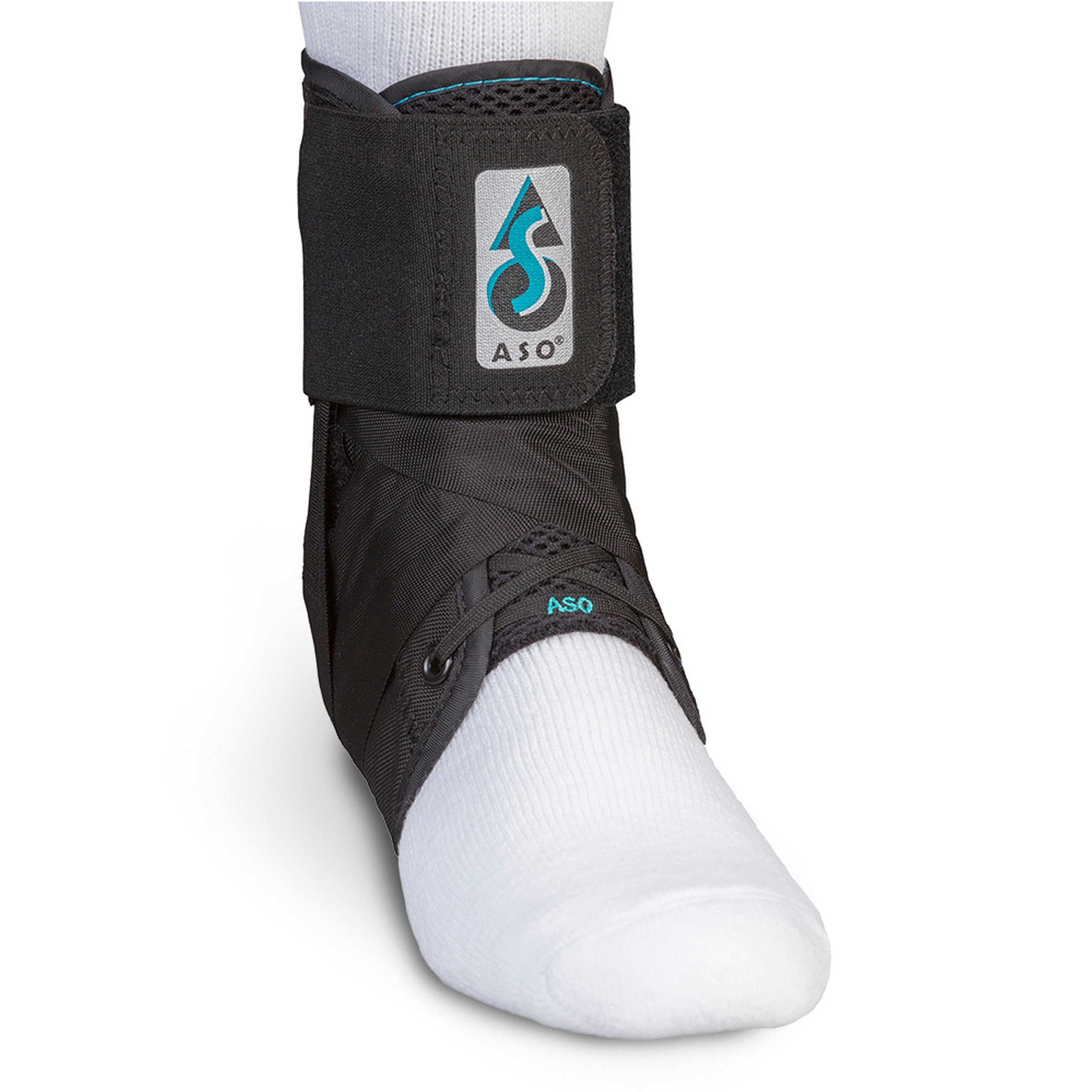
Med Spec ASO Ankle Stabilizer

89 /100
Peggy's Score Excellent

Key details

Care
Machine wash
Size
Medium
Closure
Lace-up with figure-8 straps
Material
Nylon with CoolFlex padding
Check Details on Amazon

Two straps cross under the heel, wrap the instep in a figure eight, and lock down under the laces. That layout is the whole argument for the ASO: it resists the inward collapse that rolls an ankle, and it does it without the rigid shell that makes some braces feel like a ski boot. We wore it through lifting sessions, treadmill intervals, and a couple of gym runs, and the ankle felt braced rather than frozen.

The low profile is what makes it livable. It slid inside every training shoe we paired it with, the CoolFlex padding and nylon tongue keep laces and seams off bare skin, and there is no plastic shell pressing on the ankle bone when you cinch it down.

Getting it on takes two hands and a little practice. Loosen every lace before you slide the foot in, then snug the figure-8 straps and work back up from the bottom — after a few sessions it is a thirty-second job. It is fussier over a swollen ankle than a wrap, and it is not the brace to fiddle with between sets.

The last detail is one we did not expect to care about: it is machine washable, which the other lace-up here is not. A brace you sweat into four times a week gets sour fast, and being able to toss it in with the towels instead of scrubbing it by hand means it actually gets cleaned.

Pros

  • Figure-8 straps resist the roll that sprains ankles
  • Slim enough to wear inside training shoes
  • Padding keeps laces and seams off bare skin
  • Machine washable, unlike the other lace-up here

Cons

  • Sizing runs generous, so measure your arch first
Our verdict

Our default for most workouts: the ASO braces against rolling without bulk inside a shoe, and the figure-8 lacing lets you set tension exactly where you want it.
Check Latest Price
2

Best for Court Sports

McDavid Lace-Up Ankle Brace

91 /100
Peggy's Score Outstanding

Key details

Size
Large
Weight
3.2 oz
Closure
Lace-up with hook-and-loop straps
Stabilizers
Rigid side stabilizers
Check Details on Amazon

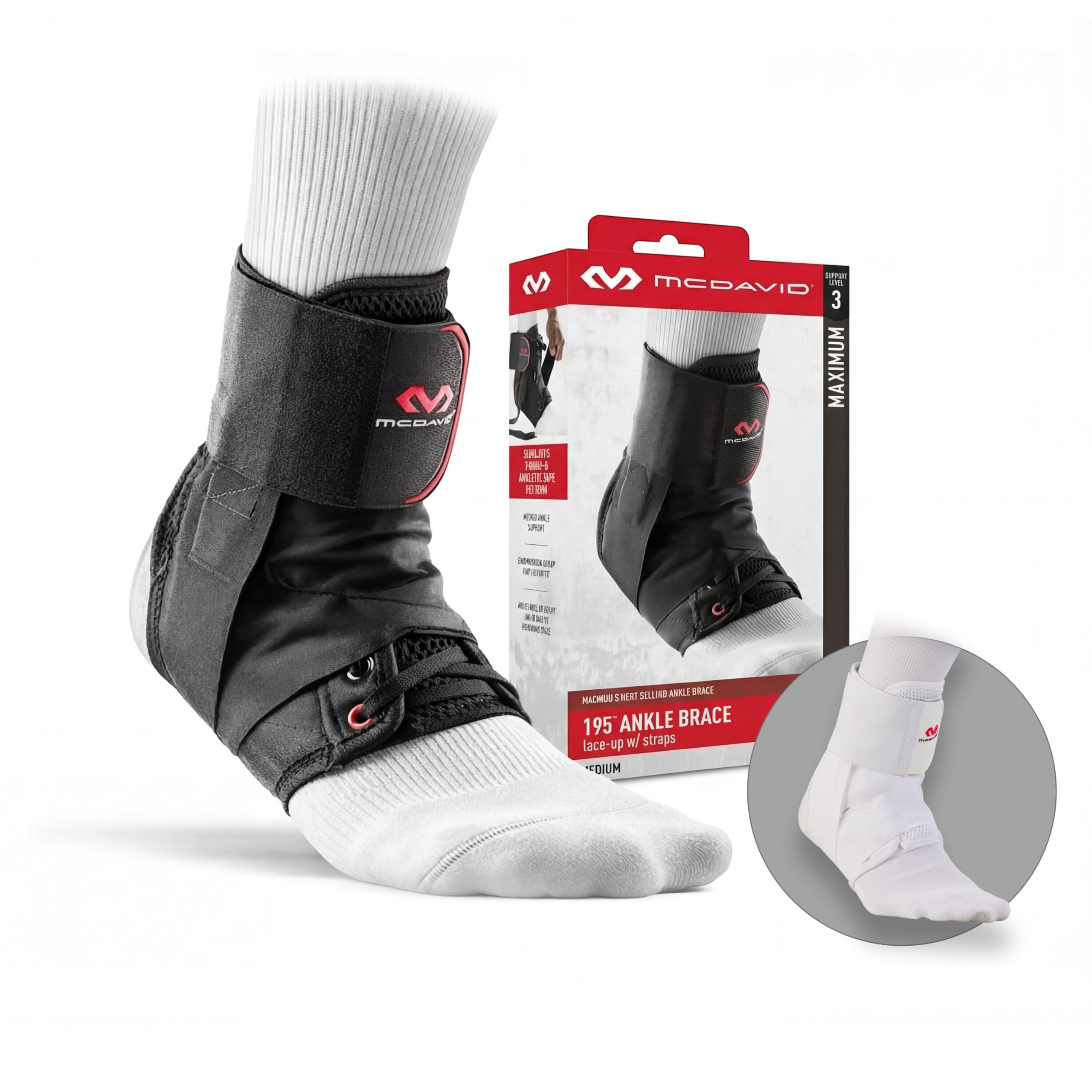
Where the ASO relies on straps and lacing alone, the McDavid adds a pair of rigid side stabilizers that run up either side of the ankle. You notice them as soon as you lace up: the ankle still flexes forward and back, but the side-to-side slop that ends in a rolled ankle is largely gone.

For volleyball, basketball, tennis, or anything built on cutting and jumping, that is the version of support we trust most in this group. It does what a stiff shell does without the bulk of one, and it still slid into a low-top court shoe. On a straight-line run or a lifting session, the extra rigidity buys you less than it does on a court.

The cost is on and off. The first few wears took real effort to get over the heel, and the fix is to loosen the laces all the way down and use the side straps as handles rather than hauling on the tongue. Once it is on, it stays exactly where you put it, and that is the trade for the extra minute at the start.

Pros

  • Rigid side stabilizers limit side-to-side roll
  • Figure-8 straps and lacing lock the heel down
  • Low-profile enough for low-top court shoes
  • Holds position through hard sessions

Cons

  • Runs tight across the instep for wide feet
  • Hand wash only
Our verdict

We reach for the McDavid whenever a session involves cutting and jumping; the rigid side stabilizers resist rolling in a way the strap-and-lace braces here cannot match.

Check Latest Price
3

Best Budget

Bodyprox Ankle Support Brace

88 /100
Peggy's Score Excellent

Key details

Care
Hand wash
Closure
Hook-and-loop wrap
Material
Neoprene, nylon, polyester, spandex
Fits Arch Circumference
7.8 to 11 inches
Check Details on Amazon

At the bottom of the price range sits a neoprene wrap with a different approach: it compresses the ankle and arch, leaves the heel open, and fastens with hook-and-loop in a couple of seconds. It is the one we reach for on lifting days and for gym sessions where a locked-down ankle is more than we want.

The open heel is the design detail that earns it a place. You can squat, lunge, and get on a bike without fighting the brace, and because the tension is set by hand, easing it off between sets takes a second. One size covers an arch circumference of 7.8 to 11 inches, which is a wide span but not an unlimited one.

Neoprene has costs. It traps heat, so the ankle is damp by the end of a long session, and a single size means the fit is a compromise at both ends of the range — slack on narrow feet, snug on wide ones.

Pros

  • One wrap fits either foot
  • Open heel keeps the ankle free to move
  • Adjusts in seconds between sets
  • Cheapest pick in this group

Cons

  • Hand wash only
  • No lateral bracing for an unstable ankle
Our verdict

The cheapest brace here and the easiest to live with: it compresses without locking the ankle, which suits lifting days and mild instability.

Check Latest Price
4

Best Quick-Fasten

WHCOOL Slim-Fit Ankle Brace

89 /100
Peggy's Score Excellent

Key details

Pads
Two auto-shaped pads
Size
M (Ankle size: 12"-13")
Closure
Quick lace-up with hook-and-loop
Material
Nylon
Check Details on Amazon

The first time we put this on, it was done before our shoes were tied: loosen the hook-and-loop lacing, slide the foot in, pull the cord across, press it down. No threading, no re-lacing, no bench required.

Underneath the convenience is a real brace. Non-stretch strapping runs in a figure eight for 360 degrees of wrap, and two auto-shaped pads sit over the bony points on either side of the ankle — the spots a plain lace-up leaves exposed. The fabric is thin, and the heel section runs down toward the sole so it does not bunch under the arch.

This is the one we hand to someone who stopped wearing a brace because lacing took too long. You get most of the anti-roll control of the ASO with a fraction of the setup, and it disappears inside a training shoe. What we have not seen yet is how the fastening holds up over a full season of twice-weekly use; it is the newest design in this group.

Pros

  • Fastens in one pull without lacing
  • Non-stretch figure-8 wrap resists rolling
  • Two pads cushion the bony points of the ankle
  • Thin fabric disappears inside a shoe

Cons

  • Sizing runs on ankle circumference, not shoe size
  • Side straps can press inside snug cleats
Our verdict

Our pick when you want lace-up stability without the lacing: one pull, a firm figure-8 wrap, and a slim profile that fits game shoes.

Check Latest Price
5

Best Compression Sleeve

Crucial Compression Ankle Sleeves

88 /100
Peggy's Score Excellent

Key details

Pack
Pair of two sleeves
Size
Large (men's 10-13 / women's 11 and up)
Closure
Pull-on
Material
Nylon and spandex
Check Details on Amazon

There is nothing here that resists a roll — no straps, no stays, no lacing. It is a knit sleeve that compresses the ankle and arch, and the honest way to judge it is as compression.

Judged that way, it is the one that stayed in rotation. The pair means one is always clean, the knit is thin enough to wear under a sock and a shoe without changing how the shoe fits, and the pressure runs evenly from the ankle down through the arch instead of bunching in one spot.

Sizing comes in ranges rather than exact figures, so measure your arch before you order — the large is listed for men's 10 to 13 and women's 11 and up. Wearing it overnight is the other reason people buy it, and it is comfortable enough for that.

Pros

  • Pair means one is always clean
  • Thin knit fits under socks and shoes
  • Even compression from ankle through arch
  • Comfortable enough to wear overnight

Cons

  • Hand wash only
  • Fit runs loose for some foot shapes
Our verdict

A compression sleeve rather than a brace: we buy it for a swollen or achy ankle that needs steady pressure through a workout.

Check Latest Price
6

Best Sleeve With a Strap

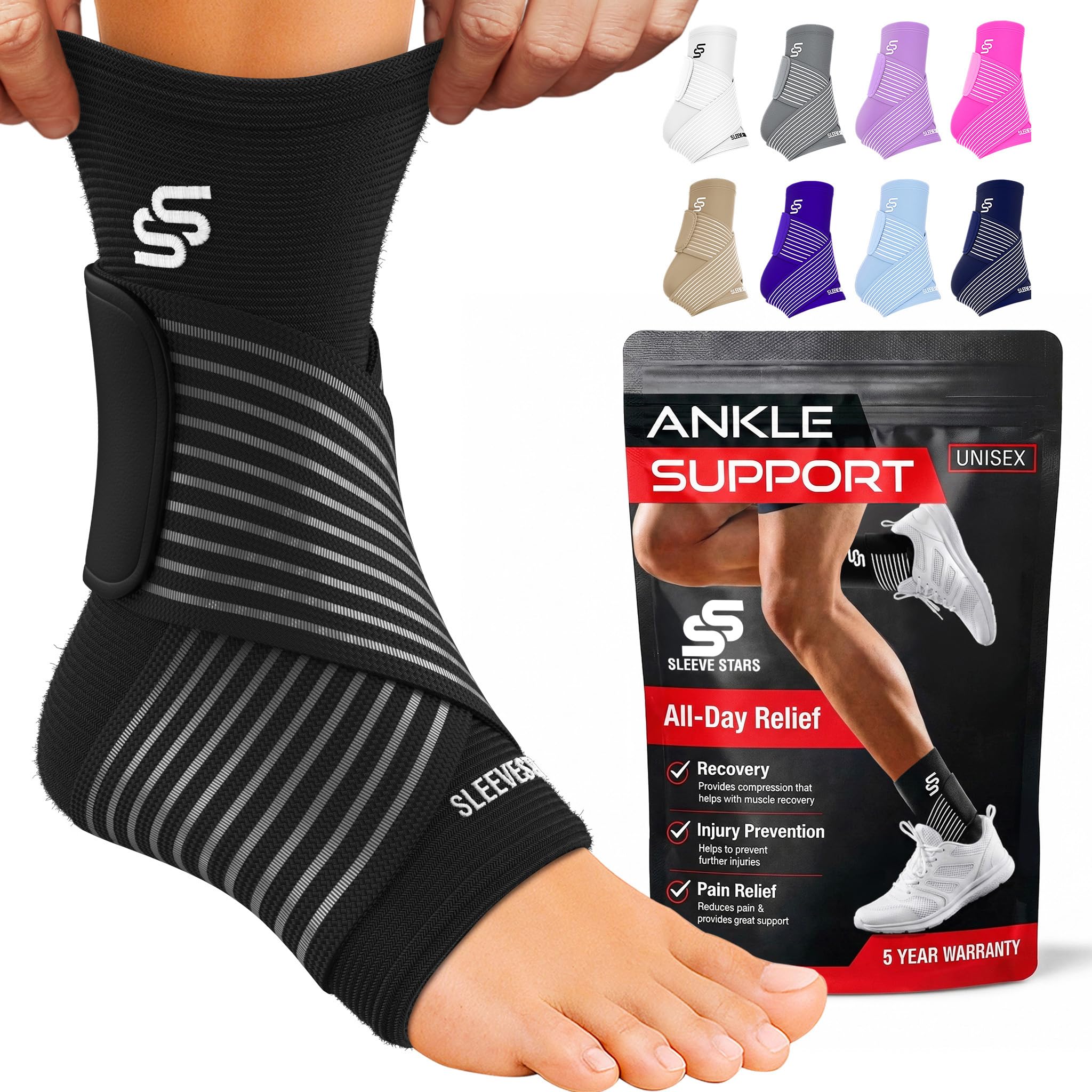
Sleeve Stars Ankle Brace

88 /100
Peggy's Score Excellent

Key details

Size
M (10"-12")
Design
Sleeve with adjustable support strap
Weight
2.4 oz
Check Details on Amazon

Not every workout calls for a brace. On days when the ankle is stiff rather than unstable, a sleeve you can pull on and forget about is the better tool, and this one comes with a second piece that makes it more adjustable than a plain sleeve.

That second piece is a strap that wraps over the sleeve and adds compression across the front of the ankle, so one purchase gives you two levels: sleeve alone on a light day, sleeve plus strap when you want it snugger. The fabric is breathable, it wicks sweat, and it is slim enough to wear under a sock and shoe.

It earns its place as the light-support option in a bag — faster than a lace-up, more adjustable than a plain sleeve, and comfortable enough to leave on for a whole session. The strap is what does it; without that second piece this would be one more compression sock.

Pros

  • Sleeve and strap give two support levels
  • Slim enough to wear under shoes
  • Breathable, sweat-wicking fabric
  • Comfortable for a full session

Cons

  • Runs small against the listed size chart
Our verdict

For light support and adjustable compression, this sleeve-and-strap pair is the one we keep in the gym bag for everyday training.

Check Latest Price
7

Rotation and Recovery

INDEEMAX Copper Ankle Sleeves

89 /100
Peggy's Score Excellent

Key details

Pack
Two sleeves with two straps
Size
Medium
Closure
Pull-on
Material
Copper-infused nylon
Check Details on Amazon

Two sleeves and two straps in one pack is the pitch, and it holds up: you get a spare to rotate through the wash, which matters for something you sweat into most days.

The sleeves are a copper-infused knit with a pull-on fit and a separate strap for extra compression. The 3D knit is soft against the skin and thin enough to wear under a sock, and the strap adds a noticeable amount of pressure across the front of the ankle when the sleeve alone is not enough.

Fit is the thing to get right. The sizing runs snug, and a sleeve that feels fine for the first hour can be too tight by the second, so measure the arch and go by the chart rather than your shoe size — size up if you are between sizes or if the ankle is still swollen.

We buy it as cheap, comfortable compression for the gym and for the rest of the day afterward. It supports an ankle; it does not brace one, and it is not pretending to.

Pros

  • Two sleeves and two straps in one pack
  • Soft knit sits comfortably under socks
  • Strap adds adjustable compression
  • Pulls on in seconds

Cons

  • Seams can fray with regular use
Our verdict

A two-pack of soft compression sleeves for everyday gym wear and the hours after; it supports a grumbly ankle without bracing it.

Check Latest Price
8

Mild Tweaks

ACE Deluxe Ankle Stabilizer

89 /100
Peggy's Score Excellent

Key details

Weight
3.6 oz
Closure
Adjustable hook-and-loop
Dimensions
2 x 3.75 x 9 inches
Stabilizers
Reinforced side stabilizers
Check Details on Amazon

The detail worth knowing is that the two hook-and-loop straps run over the top of the foot and around the ankle, so you can set the compression after the brace is on your foot instead of fighting it into place. Pull both snug, take a few steps, adjust again.

Reinforced side stabilizers run up either side, the material breathes, and it goes on over a sock and under most shoes without complaint. It comes off just as quickly, which makes it an easy brace to keep in a locker or a pack.

Where it gives ground is rigidity. The stabilizers flex under load, so this is light support: it settles a chronically grumbly ankle and takes the edge off a mild tweak, but it will not lock down an ankle that rolls hard.

For the gym bag, a long shift on your feet, or a hike where you would rather not think about your ankle, that trade is a fair one. It is simply not the brace for a court game.

Pros

  • Straps let you set compression after it is on
  • Reinforced side stabilizers add light anti-roll
  • Breathable over a sock
  • Quick to put on and take off

Cons

  • Sizing runs inconsistent against shoe size
Our verdict

An adjustable, lightweight stabilizer we keep around for mild tweaks and long days on our feet, not for hard cutting sports.

Check Latest Price

How We Chose and Tested Ankle Braces for Workouts

We started with more than 50 braces sold at major retailers and narrowed the list by reading sizing charts, strap configurations, and material specs. Anything listed as a single one-size-fits-most got dropped, since ankle circumference varies too much for that to be honest. That left 12 braces across lace-up, strap, and compression sleeve styles, which we tested over three months.

Every brace went on real feet before real workouts. We measured each one flat with a tape measure and compared the actual range to the company's chart, then timed how long it took to put on over a sock, including one attempt using only one hand. Testers wore them through 45-minute lifting sessions, three-mile treadmill runs, a weekly pickup basketball game, and a few weekend hikes, checking after each session for slipping inside the shoe, edges that curled or pinched behind the heel, and straps that needed re-tightening mid-workout.

We judged support and effectiveness by how stable the ankle felt during side-to-side drills and landing work, and by whether testers reported less ache the following morning. Durability came from three washes per brace plus a close look at stitching, elastic recovery, and whether the hook-and-loop still grabbed. The braces that scored best were the ones testers forgot they had on, right up until they needed them.

How to Choose Ankle Braces for Workouts

Decide between bracing and compression

A lace-up with figure-8 straps or side stabilizers resists the inward roll that sprains an ankle. A knit sleeve compresses swelling and soreness without limiting motion. If you have rolled the same ankle more than once, or you play something built on cutting and jumping, buy the brace. If the ankle is stiff or puffy after training, buy the sleeve.

The middle ground is worth knowing about. A wrap like the Bodyprox compresses and gives a little support while leaving the heel free, and a sleeve with an added strap like the Sleeve Stars lets you dial compression up for a hard session and back down for an easy one.

Size by ankle and arch circumference, not shoe size

Most fit complaints in this category start with ordering by shoe size. Measure your arch circumference at its widest point, and for a lace-up also measure around the ankle just above the bony bumps. Those two numbers often land you in different sizes, and the brace's own chart wins every time.

Watch the direction each style drifts in. The lace-ups here run generous and the sleeves run small, so between sizes you go down in a lace-up and up in a sleeve — unless the ankle is still swollen, in which case fit the ankle you have this week rather than the one you had before the injury.

Check the shoe before the brace

Bulk decides whether a brace gets worn. A thin sleeve disappears under almost any shoe; a lace-up with side stays or pads can turn a snug cleat into a painful one. Check the volume over the instep first, because that is where pressure shows up, and try the brace with the sock you actually train in.

You have two workable routes: pick a slim brace and keep your game shoe, or pick the brace you trust and go up half a size in the shoe you wear it with. Either beats a brace that lives in the bag because it ruined the fit of your favorite shoes.

Think about how you put it on

The best brace is the one you actually wear, and in practice that comes down to seconds. Lace-ups take two hands, a bench, and some practice; wraps and sleeves go on standing up. If you train before work or between sets, a quick-fasten design like the WHCOOL or a pull-on sleeve is the difference between wearing it and leaving it at home.

Ask a second question too: can you adjust it once it is on? Straps you can re-tighten over the brace, the way the ACE works, suit sessions where the ankle swells as you go. Laces are set-and-forget by comparison.

Frequently Asked Questions

Final Verdict

The Med Spec ASO is the brace we buy first. Figure-8 lacing and a low profile handle lifting, running, and the occasional court game without turning your shoe into a problem, and it is the one lace-up here that goes in the washing machine.

If your sport is built on cutting — basketball, volleyball, tennis — the McDavid's rigid side stabilizers are worth the extra money and the slower on-and-off. On a tight budget, or for lifting days when compression is the point, the Bodyprox wrap is the one we reach for.